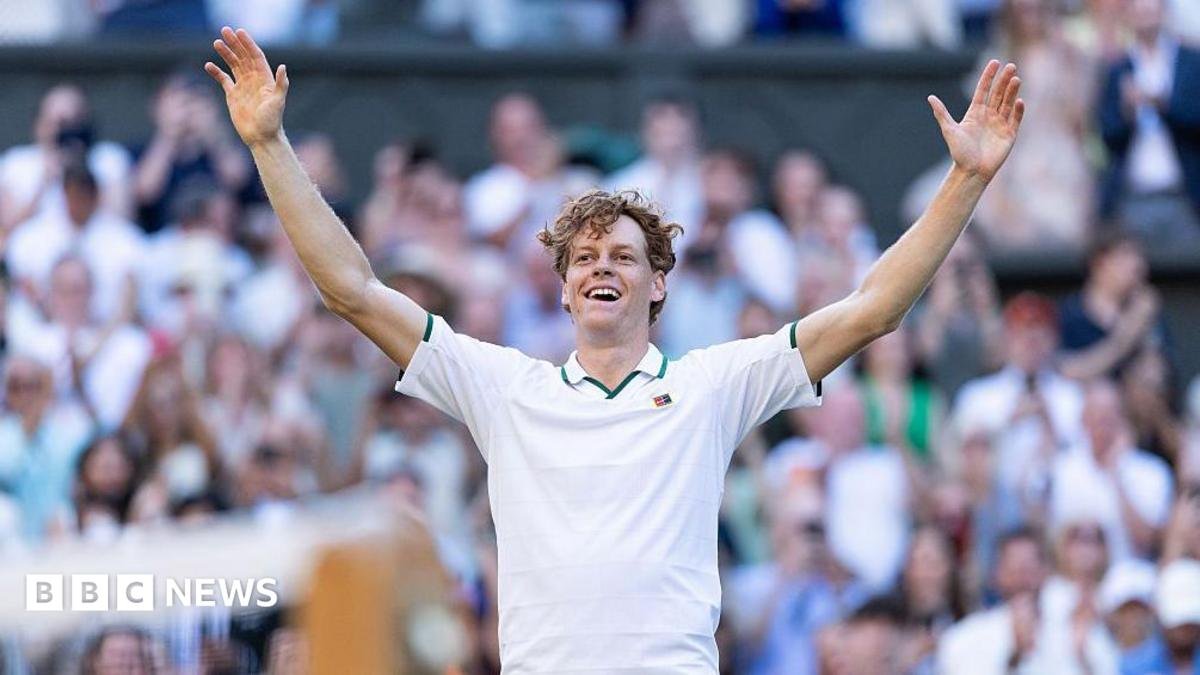
Wimbledon’s push to win India is strategic and not accidental, Darshana Bhalla, a sports branding expert told the BBC.
India is already Wimbledon’s largest international audience by reach, and 2026 is a particularly important year with Arnav Paparkar becoming the first Indian in 36 years to reach the under-18 boys singles quarter finals.
“India is also seeing a stronger pipeline of young talent across both ATP and ITF circuits than it has in nearly a decade, and premium urban sports consumption is expanding rapidly beyond cricket, with streaming platforms able to target niche audiences at scale,” says Bhalla.
The organisers of the game are capitalising on these shifts.
Sally Bolton, chief executive of the All England Lawn Tennis Club, Wimbledon’s governing body, earlier told the Financial Times, external, that India has joined the US as a “main focus” for growing the grand slam’s audience.
But with the country likely to become the world’s most important growth market for sport in the coming years – the sector is estimated to grow at a compounded 12-14% rate to 2030, nearly double the global average according to KPMG, external – tournaments like Wimbledon are having to be more culturally specific in the way they engage Indian audiences.
“Wimbledon has understood one of the biggest shifts in global marketing. For decades, premium brands believed exclusivity came from distance. However, today they understand that exclusivity comes from belonging,” says Bhalla.
“What they’ve changed is the entry point, instead of asking young Indians to first understand Wimbledon…they are allowing Indians to discover Wimbledon through familiar cultural cues. Like the kulfi collaboration, Punjabi, Bollywood and Tamil music infusion and Indian creators.”
This, she says, is not just tactical social media engagement, but the creation of a cultural bridge for a vast potential audience currently focused on cricket.
For many younger Indians to whom Wimbledon can feel aspirational but also distant, “reducing this cultural distance” is important, Upasna Dash, founder of the Jajabor Brand Consultancy, told the BBC.
Its focus on social media led marketing is also rooted in how people discover events these days, she adds.
“Younger audiences often encounter global events through social media before they engage with the event itself. Instead of asking consumers to enter Wimbledon’s world, the campaign briefly enters theirs.”
For streaming platforms like JioStar too, the tournament offers a chance to broaden engagement with a new demographic, create calendar events and move away from focusing on a single sport.
It has been widely reported that JioStar was seeking to renegotiate, external its $3bn broadcast rights contract with the International Cricket Council for 2024-2027 due to financial losses.
The partnership still remains in force, but in such a scenario of uncertainty, increasing investment in tennis makes strategic sense, say experts.
“For JioStar, tennis broadens the engagement calendar, attracts affluent urban audiences and diversifies advertiser categories beyond cricket,” says Bhalla.
“In India, cricket gives scale, tennis gives premium audiences…Wimbledon brings something cricket cannot – a premium, affluent, English-speaking, urban audience that brands in luxury, automotive, banking, fintech, travel and premium consumer goods actively.”