





Just after classes finish for the day in Malabon City, in the Philippines, a corner shop begins to fill. Mothers arrive with their children, handing over empty bottles to be refilled with soy sauce and cooking oil. Plastic tubs that previously held ice-cream or biscuits are weighed and filled with flour or sugar. The kids get some sweets and banana chips bagged in brown kraft paper.
This store, Tingi Tindahan, offers a different experience from other small independent shops in the country. It retains the accessibility of micro-retail, colloquially known as tingi, while reintroducing reuse and refill methods instead of selling products in sachets and plastic packaging that too quickly becomes discarded waste.
In the Philippines, buying goods in affordable, piecemeal quantities is woven into daily life. Decades before plastics became ubiquitous, Filipinos brought used glass jars and bottles to buy household essentials and often carried locally woven wicker bags for bulkier goods.
The introduction of sachets into the market – convenient, cheap and pre-packed in small volumes – quickly changed this dynamic. It wasn’t long until landfills were overwhelmed with these multi-layered pouches that refused to break down, eventually leaking into waterways and out to the ocean. Every year, the country produces at least 2.7m tons of plastic waste; some estimates suggest a staggering 164m sachets are used daily. Waste management policies have tried but so far failed to keep up.
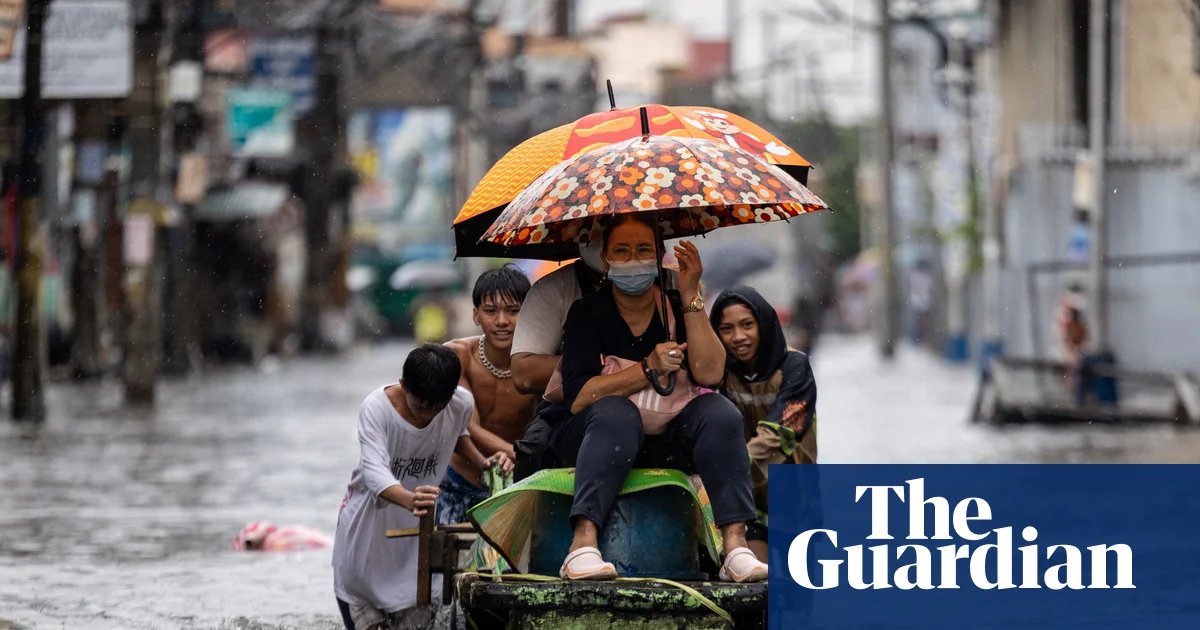
Khate Nolasco, a councillor in Potrero, a barangay (district) in Malabon, feels this problem acutely. Every typhoon season – at least 20 storms barrel through the country each year – the low-lying, flood-prone city is awash in rubbish, clogging estuaries and drains. Clearing operations can take as long as a month, she says, and it is mismanaged plastic waste that gets left behind: soy sauce and vinegar packets, detergent pouches and shampoo sachets that are often produced by multinational brands.
“Even if we collect waste every day, it feels never-ending,” says Nolasco, 32, a vice-chair of the district environment committee.
In July 2024, with the support of the barangay leader, she spearheaded Tingi Tindahan, converting a vacant space in front of their office. Modelled after the sari-sari (variety) stores that dot Filipino neighbourhoods, they stock up on household goods with a simple difference: no plastic packaging. They store products in big glass jars with handwritten labels. Kitchen essentials such as oils and liquid condiments flow from spouts, while dry goods such as cornstarch and salt are scooped and weighed on a scale. Customers bring their own containers to fill, which can range from empty water bottles to old biscuit tins.
While there are a few other zero-waste shops in the country, Tingi Tindahan is the first of its kind to be set up and funded by a barangay. The store is run by women who work as Potrero’s waste monitors, patrolling every morning to inspect whether households are practising proper segregation. The women also make liquid cleaning products sold in the store, using ingredients bought from the city’s factories.
When Tingi Tindahan opened last year, residents were quite hesitant about the idea, says Nolasco. “They were no longer used to not seeing sachets and plastics. But eventually, more people started coming because they realised our products are cheaper than supermarkets.”
For instance, a sachet containing 100ml of vinegar that costs 8 Philippine pesos (9 pence) in grocery shops is 3 pesos cheaper at Tingi Tindahan. Because they can refill in smaller volumes, residents need only a few pesos to buy exactly what they need. Through the environmental group Mother Earth Foundation (MEF), the shop has also set up a retrofitted vending machine that dispenses liquid cleaning products and condiments even when the shop is closed in the evenings.
This contrasts with the global perception that zero-waste and refill shops cater only to the affluent, says Regine Nayve, an MEF campaigner who oversees community solutions to plastic waste. MEF helped set up Tingi Tindahan, providing some products for the opening.
“Perhaps people get intimidated because of how these stores look, and because they are usually located in richer areas where people can buy in bulk,” she says. “We want to challenge the notion that refilling is expensive – it’s not. It makes choices more accessible.”
A year since its opening, Nolasco says Tingi Tindahan continues to garner mixed reactions from Potrero’s residents, who are mainly from low-income households. So far, it’s been mostly positive.
“Our elderly customers find it very appealing. They appreciate that we are bringing back a practice that they used to do when they were younger,” she says. “The children and younger people tell us they find it quite cool since the concept is new to them.”
While their efforts have not completely solved their plastic waste problem, Nolasco says she and the waste workers in their district feel they make an important contribution. They estimate their initiative has helped divert at least 145,000 sachets from landfill.
Deo Florence Onda, a marine scientist who leads research on plastics and microplastics, says the country’s plastic waste problem should be shouldered not by communities alone but also by corporations that produce the products sold in sachets.
“The burden of responsibility is always on communities, but a large industry is profiting from it,” he says. “We should have solutions at every step of the life cycle of plastic, from raw material, production, redesign, distribution, consumption, up to disposal.”
In 2022, the Philippines passed a law requiring large companies to recover plastic packaging waste that they produce or face penalties of at least 5m Philippine pesos (£60,000). It was the first law that amended the country’s 26-year-old solid waste management policy. But campaigners say its implementation remains lacking, with corporations refusing to cooperate.
In the absence of a strong nationwide policy, some cities and provinces have stepped up. Some had been successful in prohibiting or regulating single-use plastics, while others have faced roadblocks. In 2013, Malabon attempted a citywide ban on plastic packaging, but this has since been withdrawn due to concerns from industry and other stakeholders. The city is home to several plastics manufacturers.
Nolasco says they cannot afford to wait for policies to be perfected to address their plastic problem. As this year’s typhoon season is under way, she and her office have been busy preparing for floods and the expected deluge of plastic waste from neighbouring districts and cities.
“Our ultimate goal is that our store can be replicated by other barangays across the country,” she says. “We want to send a message that even a district like us that faces this plastics problem can do something about it.”