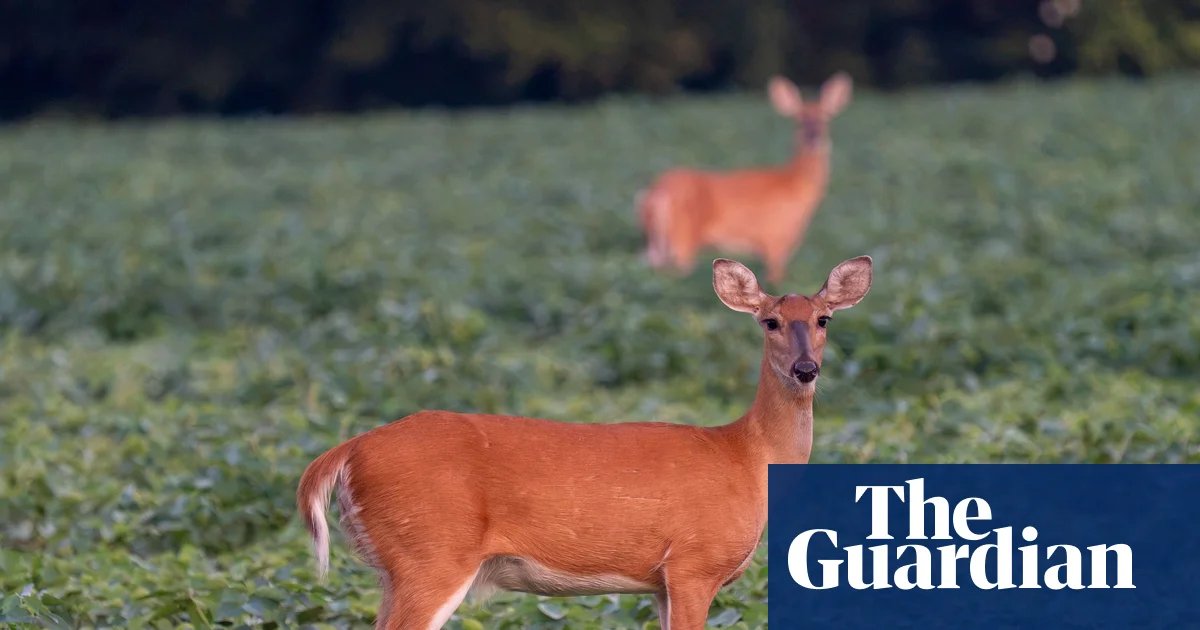
When cows belch and fart they release methane, which is warming the planet, but how does this compare with the digestive gases emitted by wild animals? A new study shows that deer add the greatest amount of methane to the atmosphere, but compared with domesticated livestock their total contribution is minuscule.
Methane is a potent greenhouse gas, which has been rising rapidly in recent years, but it is hard to pin down exactly where it is coming from. Like domesticated cows, wild ruminants such as deer, moose and llamas rely on bacteria to help them break down the fibrous plants they eat, releasing methane as they go. To understand how much methane wild ruminants release, Theresia Yazbeck, from the Max Planck Institute for Biogeochemistry in Jena, Germany, and colleagues used recent estimates of global wild animal populations and combined these with methane emission estimates based on body mass and diet.
Their calculations, published in the Journal of Geophysical Research: Biogeosciences, suggest wild ruminants release around 3m tonnes of methane into the atmosphere every year, with more than half of this coming from just six species of deer. It’s a small but persistent fraction of the more than 600m tonnes of annual global methane emissions, and some 38 times less than the amount emitted by domesticated livestock.