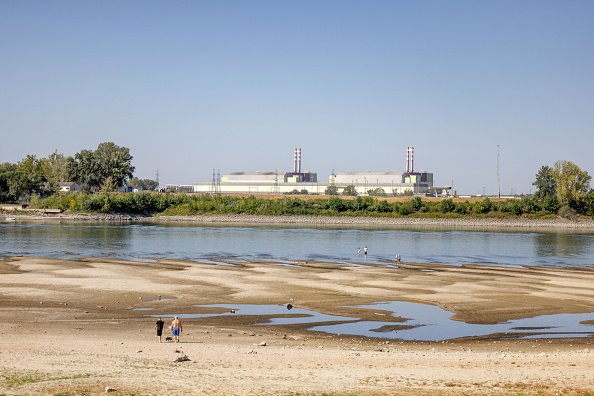
After years of under-investment, leaking infrastructure, sewage pollution and over-abstraction, the water industry now faces the enormous challenge of building new reservoirs, water transfers, recycling schemes and other infrastructure to secure future water supplies. That investment is desperately needed. Climate change, population growth and decades of political short-sightedness mean England is facing a growing water crisis.
So, when Water UK (a trade association representing all of the water and wastewater companies across Scotland, England, Wales and Northern Ireland) publishes a report calling for faster delivery of water infrastructure, there should be much we agree with. Regulators should be properly resourced. Planning decisions should be timely. Government should provide strategic leadership and projects should not be trapped in endless administrative delays.
But rather than asking how we can build infrastructure while protecting rivers and wildlife, the report repeatedly argues that environmental protections themselves are the problem.
Its proposed solutions include:
- Weakening the Habitats Regulations (which serves to protect and
conserve the UK’s rare and vulnerable sites and species). - Reducing Biodiversity Net Gain requirements.
- Raising the threshold for judicial review, making it harder for communities and conservation organisations to challenge unlawful decisions including ones that threaten protected rivers.
- Giving major water projects greater protection from legal challenge.
- Amending international environmental conventions or even withdrawing from them entirely, if they are considered obstacles to development.
These are not minor procedural reforms. They represent a fundamental attempt to weaken the legal safeguards that protect some of our most important rivers, wetlands and endangered species, such as Atlantic salmon.
The wrong diagnosis
The report is right about one thing. Britain urgently needs new water infrastructure. But it is profoundly wrong about why delivery has become so difficult.
The UK’s water crisis was not caused by environmental law. It was created by decades of failure to invest in critical infrastructure and maintenance while rivers were treated as an endless source of water and an unlimited sink for pollution. Though not wholly to blame (successive governments and weak regulators play a big role in the water catastrophe), water companies need to own up to their failures. Water companies continued paying billions to shareholders while reservoirs were delayed, leakage remained stubbornly high and abstraction continued to damage sensitive rivers.
The regulators failed over many years to force the water companies to stick to definable and clear timetables for building long-term solutions, including reservoirs and allowed the water companies to avoid investing in these schemes.
Now, faced with the consequences of those decisions in which it was complicit, the industry argues that nature protections should be weakened so infrastructure can be built more quickly. The report presents environmental regulation almost entirely as a barrier to growth, describing the Habitats Regulations, Biodiversity Net Gain and environmental assessment as obstacles that increase costs and delay projects. But these laws exist for a reason. In fact, the government has already introduced measures to weaken safeguards for planning projects by allowing parts of the Habitats law to be expunged (see our blog on the Planning & Infrastructure Act 2025). So water company complaints are entirely misplaced and certainly fail to consider the real reasons for the present situation of water shortage and a lack of resilience.
England has some of the most degraded rivers in Europe. Only a small proportion achieve good ecological health, while many internationally protected rivers continue to decline because of pollution and over-abstraction.
Without strong environmental laws there would be little to prevent those pressures becoming even worse.
Environmental protection and infrastructure are not opposing goals
The report repeatedly presents a false choice between economic growth and environmental protection. In reality, the two depend upon one another.
Healthy rivers provide drinking water, reduce treatment costs, improve drought resilience, support fisheries, sustain tourism and help communities adapt to climate change.
Weakening protections may speed up individual projects in the short term. But allowing further degradation of rivers simply creates greater environmental and financial costs in the future. You cannot solve a water crisis by further damaging the ecosystems that provide water.
Turning over a new leaf?
The water industry often says it wants to rebuild public trust. It speaks about restoring rivers and reducing pollution. Yet this report points in precisely the opposite direction.
When faced with the challenge of delivering infrastructure after decades of under-investment, its answer is not to improve planning, strengthen environmental science or invest earlier in better project design. Instead, it proposes weakening the very laws that protect our rivers, restricting access to environmental justice and even questioning whether the UK should remain bound by international environmental agreements.
If the water industry genuinely wants to turn over a new leaf, it should champion smarter regulation, better planning and investment that works with nature. Not campaign to make it easier to damage the environment that it now claims to protect.