- Environmental activists opposed to the oil refinery project cite risks to the local ecosystem and the community’s livelihoods.
- The Kenyan government insists that the project will boost the East Africa region’s economy, and create 60,000 jobs during its construction and then operation.
- Opponents demand absolute transparency with the local community and seek adequate inclusion of all stakeholders during the Environment Impact Assessment process.
Billionaire Aliko Dangote’s choice of Lamu, Kenya, for his oil refinery project, estimated to cost $17 billion, has elicited mixed reactions, with environmental activists warning of its potential risks to the local ecosystem and the community’s livelihoods, while the government is playing up its economic benefits.
The Nigerian business tycoon’s decision to locate the refinery in Lamu, follows months of speculation about whether the project will go ahead in Kenya, Uganda or Tanzania.
Devakumar Edwin, Dangote Industries Limited’s vice president, who is in charge of the oil and gas division, told Reuters that the project, with a capacity to refine at least 700,000 barrels of crude oil per day, would be completed within three years.
The crude oil is expected to come from within the East Africa region.
If completed, the Lamu project would work like a similar one owned by Dangote Industries in Lagos, Nigeria, which can refine at least 650,000 barrels of crude oil in a day. It is currently the biggest oil refinery in Africa.
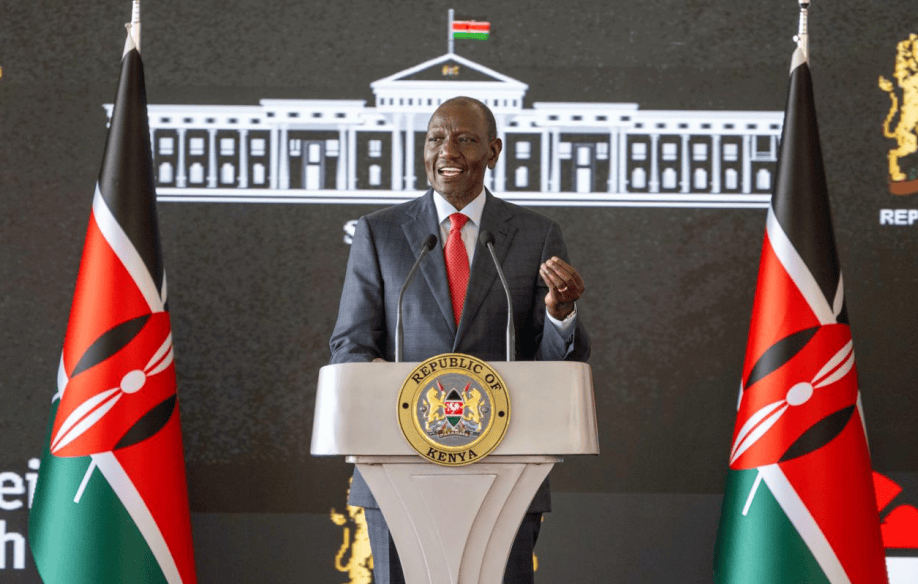
Speaking earlier in July, Kenyan President William Ruto said Kenya had struck a deal with Dangote to have the project in Lamu. He said the project would benefit East and Central Africa, as well as create at least 60,000 jobs for Kenyans during its construction and then operation.

Concerns about environmental impact
Meanwhile, environmental activists have called for transparency and sufficient involvement of the local community. They are pushing for a thorough Environmental Impact Assessment (EIA) before the government allows the project to advance. The activists said any decisions regarding the project should not only focus on its benefits to local economies, but also factor in its impacts on environment, cultural heritage and the livelihoods of current and future generations.
On July 14, Greenpeace Africa issued a statement expressing fears that implementing the oil refinery might be detrimental to the fragile coastal ecology in Lamu, an island located off the country’s Indian Ocean coast, and continue to make Kenya dependent on fossil fuels.
Greenpeace Africa said the promise of job opportunities “cannot be used to hide the true cost of this investment. Large fossil fuel projects often create temporary jobs while undermining existing livelihoods in fishing, tourism and small-scale local economies.”
Power Shift Africa, a nonprofit that champions clean energy on the continent, drew attention to the fact that the island, which is home to Lamu Old Town, a UNESCO World Heritage Site, contains vital ecosystems.
Power Shift Africa Executive Director Mohamed Adow said in a prepared statement that the area targeted for implementation of the project is home to mangrove forests, seagrass and coral reefs, vital to the fisheries sector and central to tourism.
The Lamu Beach Management Unit Chairman Somo Mohammed said the government had not given details on the nature of the project. He said if built near the Lamu Port, the effects on the fishing industry would be significant.
He said fishermen were already complaining about reduced fish stocks, the likely effect on agriculture and the possibility of displacement of local community members to pave the way for the project.
Community wants information, transparency
Mohammed urged the government to enlighten the local community and fully involve them in the decision making.
“We have been getting information about this project through the mass media. The constitution provides that the local community should be adequately involved before such projects are implemented,” he told Mongabay.

Omar Elmawi of Kenya-based Africa Movement of Movements Building Space told Mongabay that even though publicly-available information about the project’s construction was inadequate, countries that had relied on crude oil for decades ended up with higher environmental impacts than the projected benefits.
He said Kenya’s environmental laws recognize oil refinery projects as some of the most pollutant and destructive to the environment, hence the need for adequate and transparent EIA.
“If a proper EIA is conducted and local communities meaningfully involved, there is a strong possibility that this project could also flop, as happened with the Lamu Coal Powered Project,” Elmawi said, suggesting that following the proper processes would reveal the flaws in the scheme.
“In our view, proceeding with this project would be a big mistake, not only affecting the current generation, but also coming ones that will bear its brunt,” Elmawi told Mongabay on the telephone.
Elmawi said Africa already has such projects in Sudan, South Africa and Nigeria. He said there were concerns over the environmental impacts of the Dangote’s oil refinery project in Lagos, including land degradation and soil erosion at the coast, both which affect fishing activities.
The activists say proceeding with the new oil refinery project also risks causing marine pollution, compromised fish breeding grounds, and a decline in mangrove honey production in case of an oil spill.
Adow said the project would not offer solutions to the perennial energy poverty for millions of Africans in rural areas.
“Kenya is known globally as one of the countries that have taken the lead in transiting to renewable energy,” Adow said. “The country’s leadership still has the opportunity to decline the deal (with Dangote) and conserve one of Africa’s well-kept heritage [sites].”
The Kenyan government has not yet announced the date of the commencement of the project’s construction, nor has it made public any EIA, which activists and the local community insist needs to be done transparently.
This story was reported by Mongabay’s Africa team and first published here in Swahili on July 16, 2026.
Banner image: Nigerian billionaire Aliko Dangote. Image courtesy of The Habari Network.
FEEDBACK: Use this form to send a message to the author of this post. If you want to post a public comment, you can do that at the bottom of the page.
Cite this article
Amina Chombo (2026). Environmental activists in Kenya concerned over billionaire’s planned oil refinery. Mongabay Conservation news. DOI: https://doi.org/10.66709/news-325399