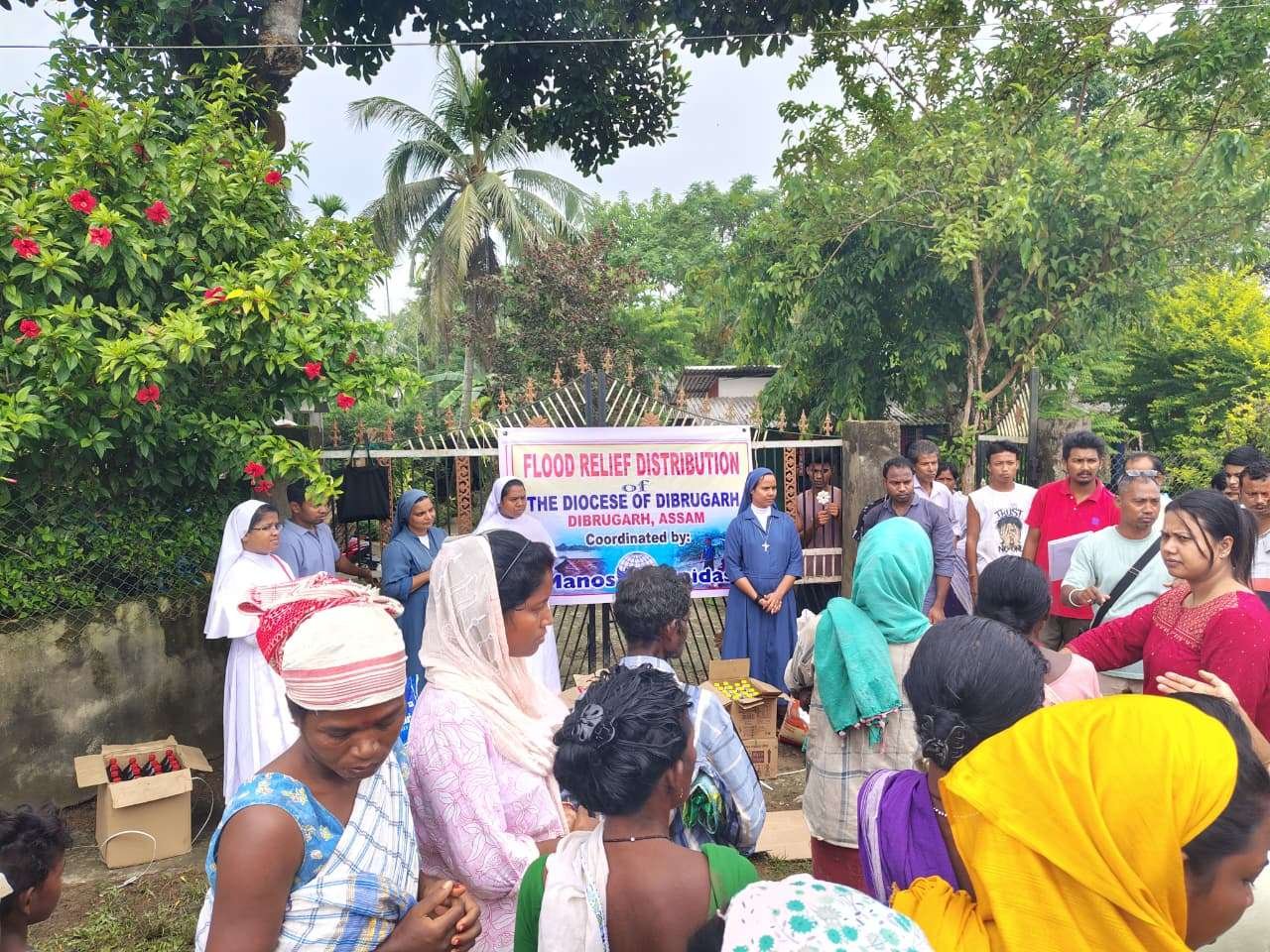
Members of the Diocese of Dibrugarh distribute aid to flood victims
Pictures supplied by Bishop Albert Hemrom
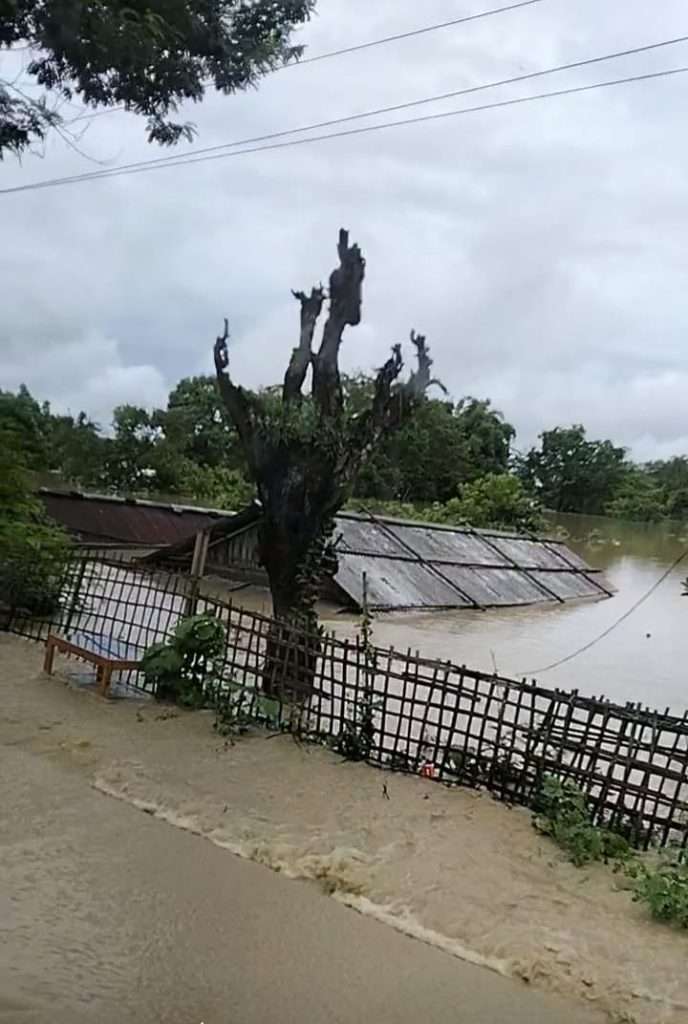
Nearly 349 villages across Golaghat, Sivasagar, Charaideo, Bajali, Dhemaji, Sonitpur and Jorhat districts of Assam state were affected, with several village and parish churches and convents submerged.
The Diocese of Dibrugarh in India’s north-eastern Assam state appealed for financial aid to help rebuild the lives of those affected by floods that have killed 82 people.
Bishop Albert Hemrom of Dibrugarh told The Tablet that more than one million people have been affected by the unprecedented floods that swept away their houses. The worst-affected areas were the Upper Assam districts of Charaideo, Sivasagar and Jorhat.
Poor rural communities, tea garden labourers, daily-wage earners, indigenous communities and marginal farmers suffered most, he said.
Nearly 349 villages across Golaghat, Sivasagar, Charaideo, Bajali, Dhemaji, Sonitpur and Jorhat districts were affected. Several village and parish churches and convents were submerged.
The Brahmaputra, a trans-boundary river which flows through southwest China, northeast India and Bangladesh, overflows its banks every year. Nearly 40 per cent of Assam is flood prone.
However, this region has been largely unaffected by floods until now. The inhabitants were caught unawares and had little means of countering nature’s fury, according to Bishop Hemrom.
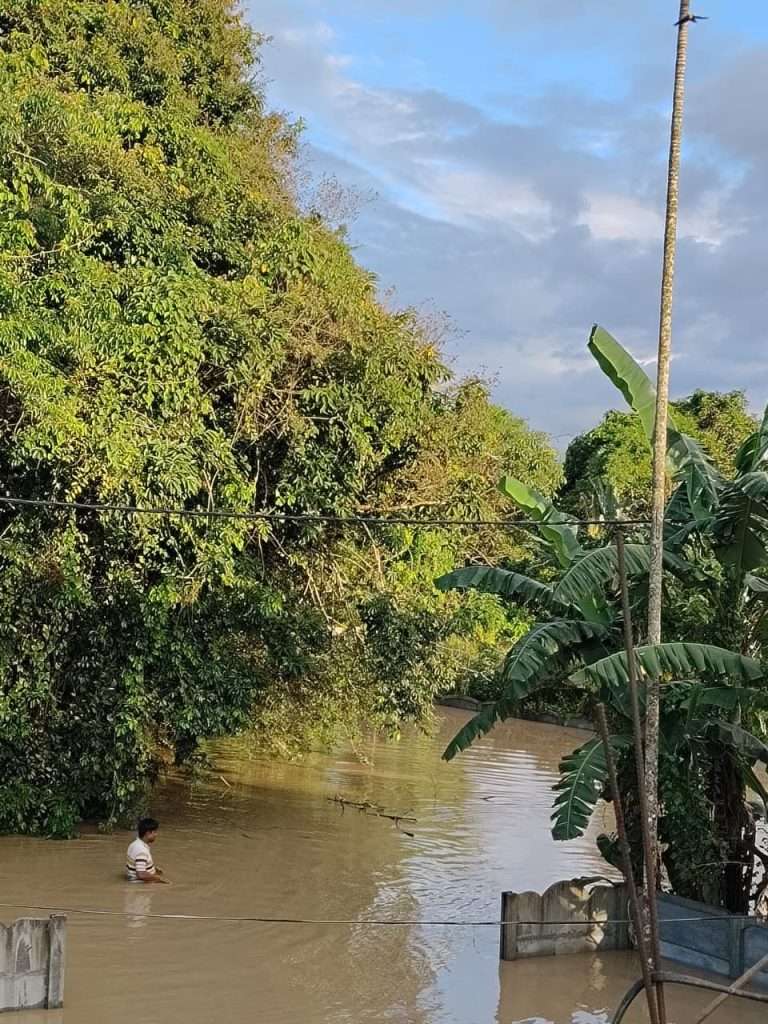
Since 19 July, the Dikhow, Disang and Dhansiri rivers overflowed submerging hundreds of villages. Bamboo huts, houses, standing crops and livestock besides public infrastructure were destroyed. Some perched atop trees as flood waters rushed into their houses.
Hemrom said that in other flood-prone areas almost every house has a boat. But people in these districts had to requisition boats from elsewhere.
The diocese immediately mobilised its priests, religious congregations, volunteers and social service institutions to provide emergency relief and pastoral accompaniment to the affected. Medical camps were also organised for those suffering from rain-related illnesses such as diarrhoea and cholera, caused by floating carcasses contaminating water sources.
Lakwa Parish in Charaideo District suffered the worst of the flooding, Hemrom reported, and five Catholic communities and many neighbouring villages there remained inundated for several days.
The diocese is now focusing on rehabilitation, which includes rebuilding damaged houses, providing utensils and other essential household items besides agricultural tools, seeds and livestock support. Though floodwaters are receding, rehabilitation work is being hampered by the knee-deep accumulated sand and silt.
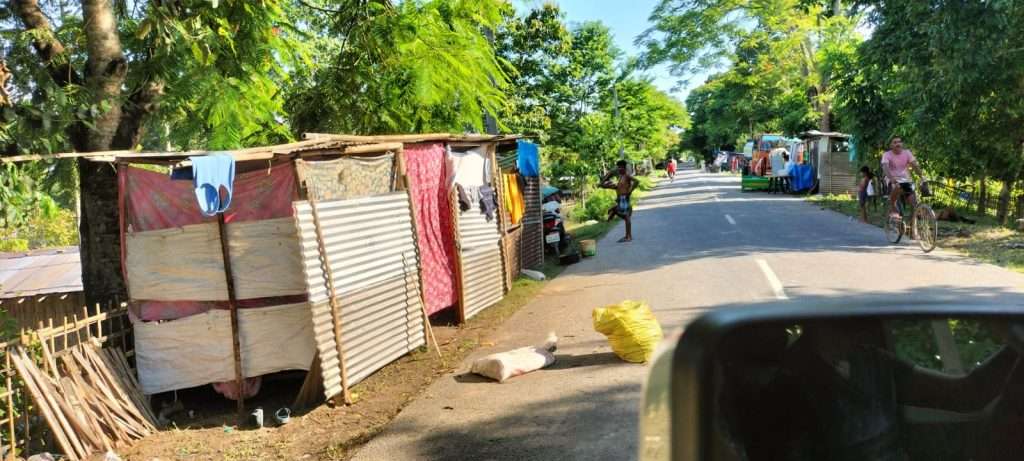
Most people of the districts are living in relief camps, temporary shelters or on the streets. Relief work is going on in full swing despite roadblocks, with non-profit organisations building temporary bamboo shelters.
“We are being helped by dioceses across India also by Caritas, Catholic Relief Services and others,” said Bishop Hemrom, who was recently appointed coadjutor Archbishop of Guwahati, Assam’s capital.
The Christian Conference of Asia, the regional ecumenical organisation, appealed to member churches, councils and ecumenical partners to provide financial and humanitarian assistance, its general secretary Jung Eun Grace Moon said in a statement.
Bishop Hemrom said churches remain committed to restoring hope and rebuilding lives of the affected communities of Upper Assam.
Church joins relief effort as floods devastate northern India
Stay updated — add us as a preferred news source on Google: