








The summer of 2026 is set to break Italy’s already impressive tourism records. One of the key drivers of this uptick is a renewed interest in the quieter, more authentic aspects of Italian life.
For some, that means trekking to tiny villages for the perfect photo or meal, but for many others, it’s simply an interest in tasting and experiencing Italy the way that locals do.
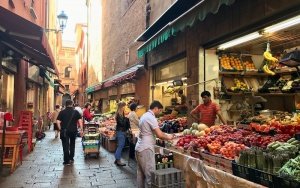
Social media and even shows like “Tucci in Italy” have helped elevate the ordinary parts of Italian food culture. Most especially, the morning markets. These markets appear in cities and villages alike and offer their own crash courses on the produce, people, and daily rhythms that underpin authentic Italian food culture.
Why Local Morning Markets Are at the Heart of Italy’s Food Culture
What makes Italy’s best dishes so good isn’t complicated recipes or cooking techniques, but the quality of the ingredients behind them. Cacio e pepe is nothing without good pecorino romano, and carciofi alla giudia depends almost entirely on fresh artichokes. If you want to understand where ingredients like that are sourced from, or why a set of local restaurants are all suddenly serving fiori di zucca (courgette flowers), all such answers can be found at the local market.
These markets are where home cooks and chefs will source not just ingredients, but inspiration. They usually open at 7am in summer, and while some might go on into the afternoon, many are closed by noon. The exact produce you find will depend on the farming communities nearby and what’s in season. Coastal areas are known for their seafood, while further inland, there’s often greater emphasis on preserved meats.
Nonetheless, variety and seasonality are the main hallmarks of an Italian morning market. Artisan bread and cheese will be just two steps away from a cart overflowing with summer melons. The minute figs begin to ripen in late summer, it will feel as if they are everywhere. And then just as quickly, they disappear.
This shifting tide of seasonality is at the heart of Italian cooking, and it begins at the markets. Whatever the farmers and food makers have in abundance is what will dominate meals for that week. It places these markets at the very heart of Italian food culture.
How Seasonal Produce in Italy’s Morning Markets Reflects Regional Traditions
Each region of Italy is known for its own set of speciality produce. During peak white truffle season in Tuscany and Le Marche over autumn, dedicated markets appear focusing almost entirely on fresh truffles and their uses. The markets of Rome and Florence are subject to the artichoke boom from February to April. Over a similar period, Sicily, in contrast, is in peak blood orange season.
As these peaks hit, it’s common to see market vendors adjusting to complement the abundance. Suddenly everyone is serving blood orange and fennel salads (a Sicilian classic), or putting wild chicory on things. This is part of Italy’s practice of using what they have, while they have it. The fact that the experience shifts so much depending on the region you’re in is proof of how important Italy’s markets are for preserving regional cooking traditions.
Why Italy’s Food Markets are Important for Sustainability
Italy’s farmers’ markets are receiving growing attention for their sustainability potential. Connecting consumers directly with artisans and farmers has boosted local economies and helped reduce food waste.
Italy’s markets have also given many farmers a chance to invest in more heritage crops that supermarkets aren’t always interested in. This has a positive impact on biodiversity and Italian cooking as both rely on variety to flourish.
Engaging with Italy’s morning markets is an important way to see the roots of the country’s food heritage, before the agricultural industrialisation of the 20th century. Shoppers get to meet growers who are experimenting with more sustainable practices and sometimes producing even more flavourful ingredients as a result.
How Local Vendors Preserve Italy’s Everyday Food Traditions
The vendors of Italy’s food markets are quietly keeping many of the country’s food traditions alive. Sometimes it’s because of the choice to feature traditional ingredients, like wild, foraged greens, and other times, it’s through their knowledge sharing.
The vendors at these markets are constantly rotating their stock according to the season. It’s part of what can make them a more sustainable alternative to supermarkets. For visitors, however, these vendors offer important insight into how Italy’s best ingredients are grown, when they reach their peak, and how best to prepare them.
The best Italian cooking advice isn’t always from the chef, but rather the person who sells to the chef every day. Local Italian market vendors have a wealth of knowledge about different vegetable varieties and which recipes they’re better suited for. Even just engaging with them in a quick conversation gives one an understanding of the network of expertise that makes Italy’s world-class food possible.
How to Experience Italy’s Morning Markets Like a Local
The best produce is often gone by mid-morning, so make sure to arrive early. Once you’re there, don’t be alarmed if there’s a lot of shouting. It’s just vendors announcing their specials.
The temptation in an open market is to touch the food, but it’s important that you refrain. Some market stands will even have signs reminding you to keep your hands away. Most vendors will wear gloves, and some might even offer you some when selecting fresh produce.
Most importantly, go in with an open mind and the friendliness of a local. Be ready to try samples from vendors and strike up a conversation when you can. The people who sell at these markets have years of knowledge and tend to be excited when someone is curious enough to hear about them. Talking to them is an important way to experience firsthand what is keeping Italy’s food culture alive. It’s not just one artisan, grower, or cook. It’s an entire market of them, each playing a role in preserving local culinary traditions.
To find out more visit. https://www.eatingeurope.com/guides/italy-food/