








New Research Highlights Unforeseen Plastic Contamination Risk in Food Waste Management Amidst Climate Crisis
Vermont, USA – As global efforts intensify to combat the climate crisis, new research underscores a critical, yet often overlooked, challenge in food waste management: plastic contamination. While diverting food waste from landfills promises significant environmental benefits, a recent study reveals a substantial risk of microplastic pollution, urging policymakers to consider this factor from the outset of new regulations.
Food waste is widely recognized as a major contributor to climate change, with campaigners labeling it “one of the most overlooked problems.” As acclaimed chef, author, and activist Max La Manna notes, food waste management is “one of the few climate problems where everyone wins.” Annually, approximately one-third of all food produced globally goes to waste. In the United States alone, 40% of food waste ends up in landfills, generating an astounding 30 million metric tonnes of CO2 equivalent each year – exceeding Cuba’s total annual CO2 emissions in 2024, which stood at 24.4 million tonnes.
A groundbreaking study, published in Nature Food, utilized life-cycle analysis modeling to meticulously compare the climate, nutrient pollution, and plastic contamination impacts of various food waste management scenarios. Researchers at the University of Vermont discovered that diverting food waste from landfills could reduce climate impacts by an impressive 89% to 99%. These alternative scenarios also showed potential for reducing nutrient pollution in water bodies, a phenomenon known as eutrophication, which leads to harmful algal blooms.
However, the study uncovered a concerning downside: microplastics can persist in compost, potentially contaminating US agricultural soils with up to 20,000 tonnes annually. This marks the first study to comprehensively examine the “plastic pollution footprint” of national-scale food waste management strategies.
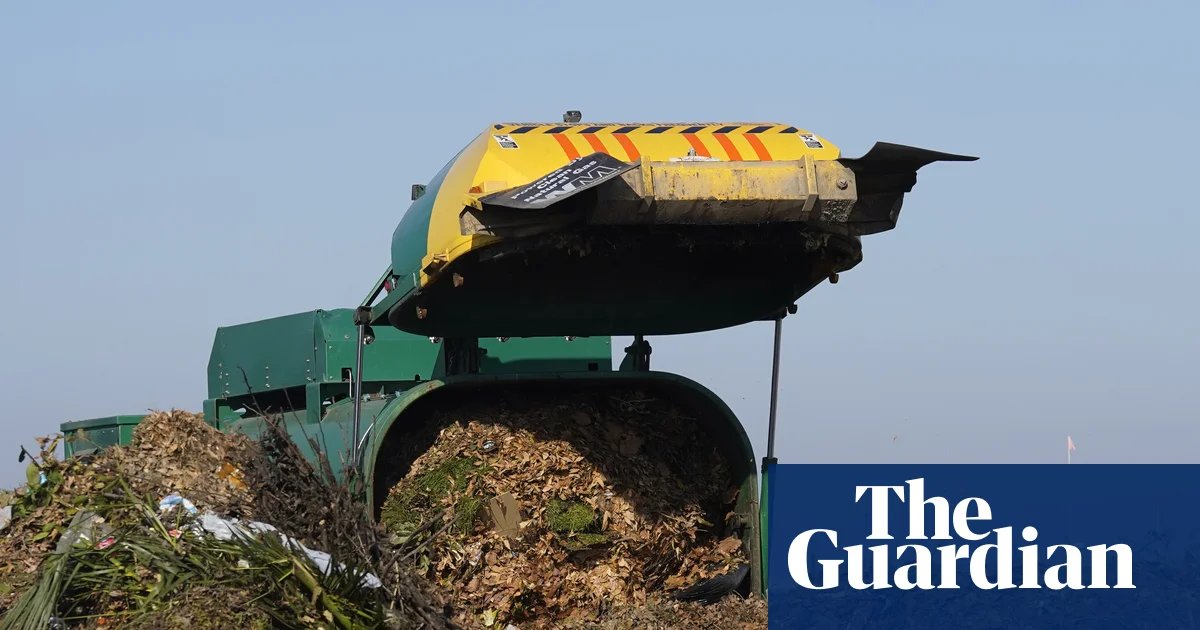
Kate Porterfield, the lead author, explained that their methodology is akin to calculating a “carbon footprint of a product or process.” The team meticulously tracked carbon emissions across all life-cycle stages of food waste management. Porterfield highlighted that a significant portion of wasted food, often still in its original packaging, “goes bad before it even reaches the consumer.” While mechanical “depackers” can separate food from packaging for composting or anaerobic digestion, the researchers found that even with 99% efficient plastic separation technologies, diverting food waste from landfills could still increase microplastic pollution in soil by an order of magnitude.
“Any time where you’re diverting food waste, there is a risk of microplastic pollution,” Porterfield stated, attributing this to human and mechanical imperfections, and the pervasive use of plastic packaging in modern food systems.
Vermont, a US state with “one of the most ambitious” state organics-diversion mandates, according to co-author Eric Roy, offers a real-world case study. Its Universal Recycling Law, fully effective since 2020, prohibits food waste from landfills for both households and businesses. The authors believe their findings provide crucial insights for evaluating the potential countrywide scale-up of such regulations, emphasizing the need for “more attention to the plastics issue” from the initial policy-making stages.
The dilemma surrounding plastic packaging was further illuminated by Phil Holtam, co-founder and director of the food waste social enterprise Sussex Surplus. Holtam acknowledged a “misconception that [plastic packaging] is unnecessary,” arguing it’s often a “necessary tradeoff” for extending the shelf life of fresh produce, particularly for smallholder farms. “That’s where the tension lies because as environmentalists we want to reduce food waste but we also want to prevent needless use of plastics.”
Max La Manna, drawing from his experience with farmers and in Michelin-starred restaurants, pointed to consumer expectations for “perfect-looking food” as a significant driver of waste. “Some of it may be misshapen, wonky, slightly cosmetically imperfect … [which is] challenging for supermarkets because they believe consumers want a perfect cucumber. We’re allowing ‘perfect’ to become this enemy of good.”
Roy also noted that institutional rules, such as those in schools, can inadvertently hinder efforts to move away from highly packaged foods, as “food safety is always going to be a number one concern.”
Ultimately, Porterfield stressed that effective food waste management systems must be “as easy as possible to make it mindless for people to separate things efficiently” to minimize plastic contamination. Roy added that addressing “wish recycling” – where non-recyclable items are placed in recycling bins in hopes they will be recycled – is crucial. He advocated for “old-school environmentalism”: “buy in bulk,” “make every effort to separate” and, crucially, “if in doubt, put it in the landfill stream.”
after newsletter promotion