







Delimitation Exercise Ignites North-South Divide Over Lok Sabha Representation
Sivaganga (Tamil Nadu) [India], August 10 (ANI): A proposed delimitation exercise, contingent on the upcoming census, has sparked a significant debate across India, particularly highlighting concerns from southern states regarding their parliamentary representation. Congress MP Karti Chidambaram has voiced strong objections, arguing that a population-centric redrawing of constituencies would disproportionately disadvantage states like Tamil Nadu, while potentially inflating the seat count for northern states such as Uttar Pradesh and Bihar.
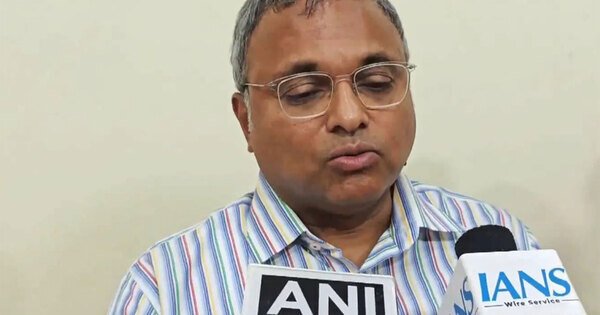
Speaking to reporters in Sivaganga, Chidambaram elaborated on his concerns. “Delimitation, if it is purely done on the basis of population, will be very unfair to the southern states, especially to Tamil Nadu,” he stated. He further questioned the timing, suggesting that such an exercise would be based on the census currently underway, with its report anticipated in 2027.
Southern States Foresee Disadvantage
The Congress MP underscored that if the strength of the Lok Sabha were to be increased and seats redistributed according to the new census data, southern states would find themselves at a distinct disadvantage. “If the 543 seats—Parliament is allowed to have 550 seats—are redistributed according to the new census, the southern states, including Tamil Nadu, will be disadvantaged,” Chidambaram asserted. He pointed out that states that have effectively implemented family planning policies, like Kerala, might even witness a decrease in their Lok Sabha seats, or at best, a marginal increase. In contrast, he predicted a “quantum jump” in representation for states in the Hindi heartland, particularly Uttar Pradesh and Bihar. “That will be patently unfair, and the delimitation based purely on population in the present strength of the Lok Sabha will be unacceptable,” he concluded.
Centre Defends Proposal Amidst Misconceptions
Conversely, Rashtriya Lok Morcha (RLM) national president Upendra Kushwaha has come to the defence of the Centre’s delimitation proposal. Addressing reporters in Patna, Kushwaha dismissed claims of a reduction in Lok Sabha seats for South India due to the proposed Bill, labelling them as “misconceptions.”
“The work that the Government of India is doing regarding delimitation is evident to everyone. People in the South are trying to create a misconception among themselves. They fear that if delimitation takes place, the number of seats there will decrease. However, that is not the case at all,” Kushwaha clarified.
He further elaborated, “The number of seats will not decrease anywhere; in fact, under the current proposal, the number of seats across the country will increase to one and a half times the current count.”
Women’s Reservation Bill and the Delimitation Link
The crux of the current debate is intricately linked to the implementation of the Women’s Reservation Bill, which received parliamentary approval in 2023. This landmark legislation is slated to come into effect only after a comprehensive delimitation exercise, which in turn depends on the next census.
Earlier legislative attempts to accelerate this process include The Constitution (131st Amendment) Bill, 2026. Introduced in the Lok Sabha on April 16, this Bill aimed to significantly increase the strength of the Lower House to 850 seats and expedite the women’s reservation implementation. However, it failed to secure the constitutionally mandated special two-thirds majority of members present and voting and was not passed during the extended Budget Session.
Opposition Demands All-Party Consensus
The opposition’s stance on this matter remains cautious. Congress President Mallikarjun Kharge recently stated that any move by the government to reintroduce the delimitation Bill, particularly if linked to women’s reservation, would necessitate thorough discussions among opposition parties to formulate a collective stand. Kharge emphasized that the Congress’s position is clear: the government should convene an all-party meeting before proceeding with such a crucial legislative endeavour.
While the Congress and other opposition parties have consistently supported women’s reservation, they have voiced strong opposition to linking its implementation with the delimitation exercise and the proposed increase in Lok Sabha seats. They have continuously demanded that women’s reservation be delinked from the delimitation process, advocating for its independent enactment.
(ANI)