








[
Prime Minister’s Call for Gender Parity at IITs Ignites Debate on Deep-Rooted Disparities
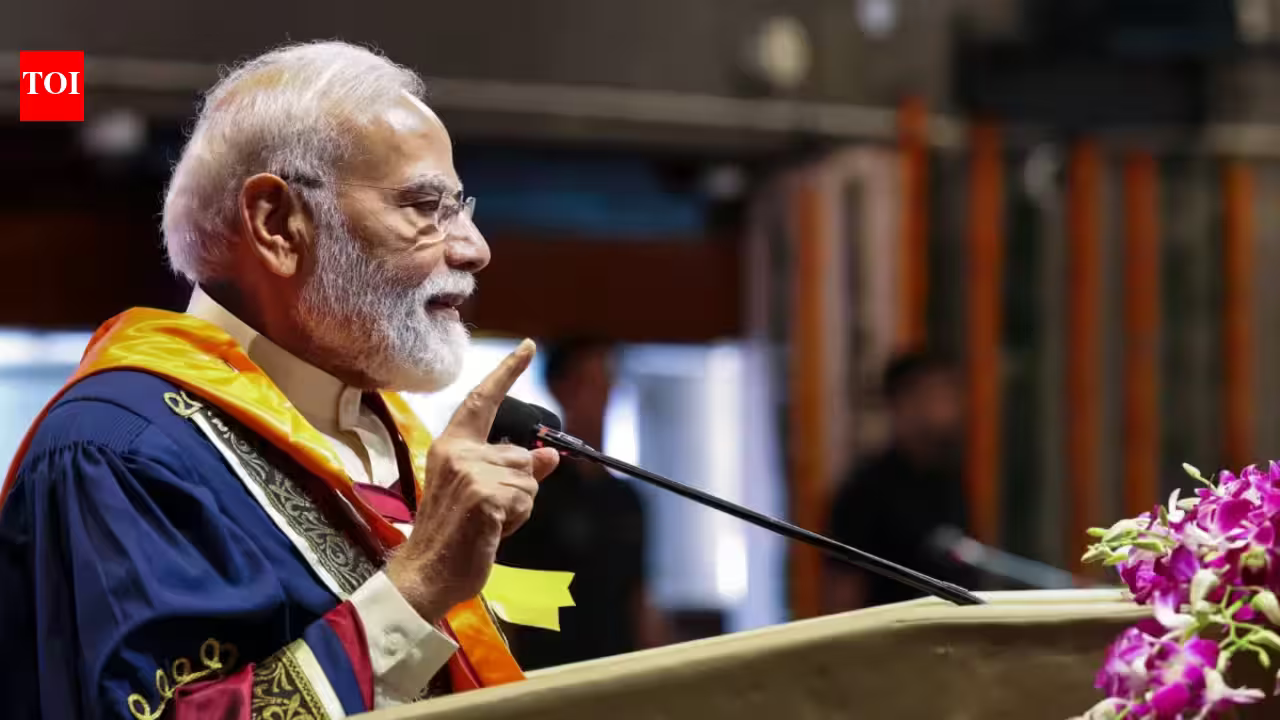
NEW DELHI – Prime Minister Narendra Modi’s recent remark at the Indian Institute of Technology (IIT) Delhi’s 57th Convocation Ceremony, expressing his desire for “more daughters among the medallists,” has sharply focused attention on the persistent underrepresentation of women in India’s premier engineering institutions. While seemingly a simple statement of aspiration, it has resonated deeply, highlighting a systemic issue that continues to challenge the nation’s academic and social fabric.
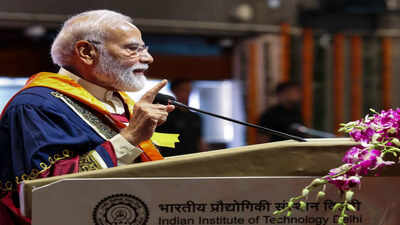
The Prime Minister’s observation transcends the immediate context of a celebratory event, prompting a crucial inquiry: why, despite significant policy interventions and a national emphasis on gender diversity, do women continue to account for only about one-fifth of undergraduate engineering admissions at IITs?
The Stagnant “Needle”: An Uncomfortable Reality
Data from the Joint Implementation Committee (JIC) reveals a sobering truth. While the absolute number of female BTech admissions in IITs increased from 3,185 in 2020 to 3,664 in 2025, the overall percentage of women admitted has barely budged. In 2020, women constituted 19.90 percent of total admissions, a figure that only marginally rose to 20.15 percent by 2025. This miniscule 0.25 percentage point increase over five years, despite a substantial expansion in total available seats (from 16,061 to 18,188), suggests that while more women are entering IITs, their proportional representation remains largely stagnant.
| Year | Total seats filled | Female candidates admitted | Female share |
| 2020 | 16,061 | 3,185 | 19.90% |
| 2025 | 18,188 | 3,664 | 20.15% |
This raises a critical question: is the system genuinely fostering greater gender diversity, or are we merely scaling up the number of women without fundamentally altering the underlying systemic imbalances?
The Limits of Policy: When Quotas Reach Their Plateau
The Supernumerary Seats Scheme (SSS), introduced in 2018, was a direct attempt to address this disparity, aiming to boost female representation to approximately 20 percent. The initiative initially yielded significant results, propelling female participation from a mere 8 percent in 2016 to nearly 20 percent by 2020. However, the subsequent years have seen this momentum stall, with the percentage plateauing around the 20 percent mark, even as additional female-only seats (including supernumerary seats) and increased success in gender-neutral pools contributed to higher absolute numbers.
This stagnation indicates that while policy can open doors, it cannot always persuade individuals to walk through them. The challenge, it appears, extends far beyond simply increasing seat allocations.
The IIT gender gap : A Journey Plagued by Societal Barriers
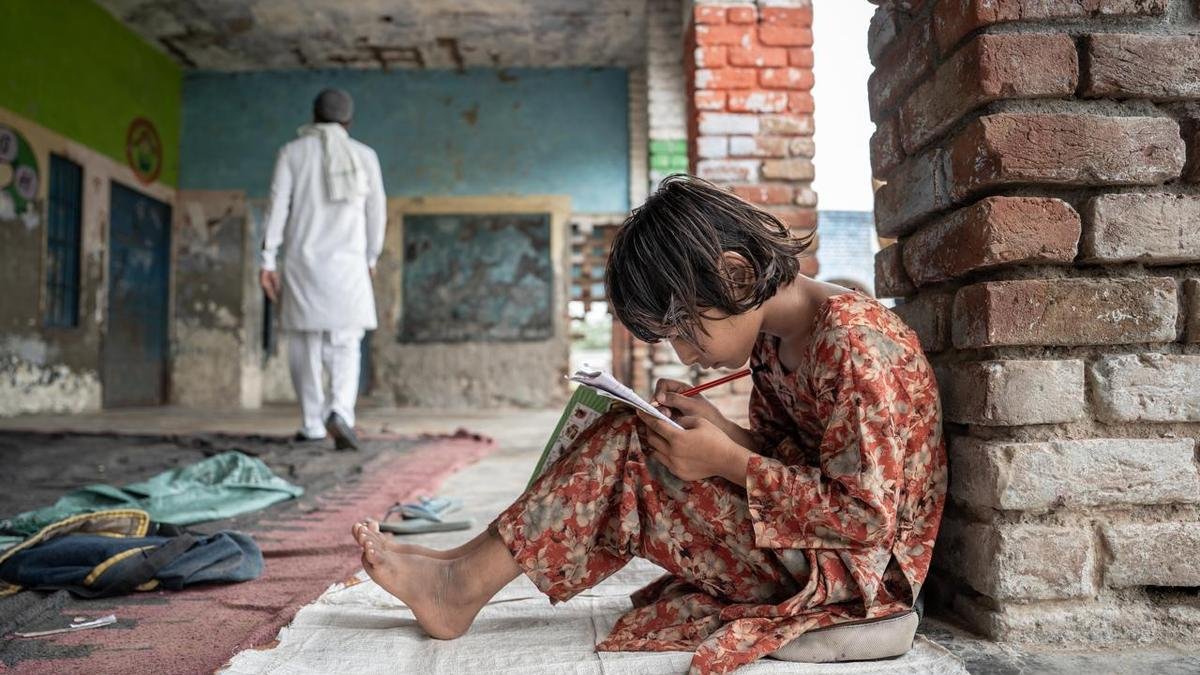
The journey to an IIT seat is arduous, often commencing years before the Joint Entrance Examination (JEE) with early exposure to STEM, parental encouragement, access to quality coaching, and the monumental decision to commit to intense preparation. For girls, each step is frequently complicated by societal expectations and gender stereotypes. The two-year rigorous coaching often necessitates relocation to coaching hubs, a decision families may view differently for sons versus daughters, raising concerns about safety, accommodation, and social environment for young women.
Furthermore, the financial burden of competitive engineering preparation acts as an “invisible filter.” When resources are limited, families may unconsciously prioritize male children for educational investments in fields perceived as more “masculine” or offering higher returns, thereby reinforcing existing gender biases. This means the decision regarding a daughter’s engineering future is often made long before the IIT admission list is published.
Beyond Admission: Campus Climate and Culture
Even for those high-ranking female candidates who qualify, the choice of institution is not always straightforward. Reports suggest some top-ranking female candidates opt for institutions closer to home or universities offering environments perceived as more flexible or accommodating. This highlights concerns beyond mere admission statistics, pointing to the importance of campus climate, branch allocation, and the broader culture of engineering disciplines. An IIT must not only make a seat available but also ensure the student feels a sense of belonging and support throughout her academic journey.
The Early Seeds of Disparity: Confidence Gap and Social Coding
The gender divide in engineering often begins much earlier than JEE preparation, permeating early education. Mathematics and physics can become subtly “coded” as “boys’ subjects” through differential encouragement, perceived natural aptitude, and the handling of mistakes. Experts emphasize that insufficient early exposure to STEM, uneven parental encouragement, and a lack of sustained institutional support contribute to this foundational confidence gap. A girl consistently told that engineering is difficult, unsafe, or unsuitable for her may never seriously consider an IIT, meaning the gender gap is often established long before the entrance examination.
A Medal: More Than Just an Award
Prime Minister Modi’s wish for “more daughters among the medallists” serves as a powerful prompt for introspection. A medal is the culmination of a complex series of choices and opportunities. It necessitates asking: Who was encouraged to pursue mathematics? Who could afford the rigorous preparation? Who received quality teaching and mentorship? Who was convinced that a demanding engineering career was compatible with being a woman? And crucially, who felt that an IIT campus was a place where she truly belonged?
If these fundamental questions continue to yield gender-differentiated answers, then merely increasing seats will not resolve the problem.
From Quotas to Culture: The Path Forward
The 20 percent representation mark, while an initial achievement, has now become a benchmark requiring further scrutiny. The stagnation since 2020 indicates that the next phase of reform must move beyond admission statistics to address deeper societal and cultural factors. This involves strengthening STEM exposure in schools, encouraging parents to view engineering as a viable career for daughters, providing accessible quality preparation in smaller towns, and instituting mentorship programs well before the JEE years.
IITs themselves must critically examine campus culture, academic flexibility, accommodation, and the overall experiences of their female students. The goal should not be to generate better statistics, but to cultivate an environment where every talented girl in India can confidently envision herself as an integral part of an IIT.
National Imperative: Bridging the IIT Gender Gap
India’s aspiration to become a global technology powerhouse hinges on harnessing the full potential of its population. The