- Environmental investigations in Latin America increasingly combine field reporting with tools such as satellite imagery, cross-border collaboration, and long-term investigative work to document deforestation, illegal mining, wildlife trafficking, and other environmental violations.
- Over the past decade, Mongabay Latam has built a regional reporting network and partnerships with dozens of media outlets, helping environmental investigations reach audiences across the region.
- Alexa Vélez, managing editor of Mongabay Latam, has spent nearly ten years helping coordinate investigations, support reporters, and shape the outlet’s investigative approach to environmental reporting.
- Vélez spoke with Mongabay founder Rhett Ayers Butler in March 2026 about investigative journalism in Latin America, the role of technology in environmental reporting, and how Mongabay Latam’s work has evolved over the past decade.
Environmental crimes rarely occur in isolation. A road cut into a forest may appear first as a faint line in satellite imagery. Months later it becomes a corridor for timber, wildlife, and sometimes cocaine. The early stages often unfold far from capitals and rarely attract immediate scrutiny. When the evidence does emerge, it tends to arrive through a patchwork of sources: scientists sharing coordinates, local communities describing unfamiliar aircraft, or reporters willing to spend months tracing how a clearing became a network.
Environmental journalism in Latin America has grown around precisely these kinds of fragments. The region contains some of the world’s most biodiverse landscapes and some of its most persistent environmental activities. Illegal mining, wildlife trafficking, and forest clearing often intersect with organized crime and political interests. Yet sustained reporting on these issues has historically been limited. Many large news organizations treat the environment as an occasional beat rather than a structural concern. Investigative work requires time, technical expertise, and sometimes the willingness to operate in difficult or dangerous conditions.
In recent years the practice has begun to change. Satellite imagery, open databases, and new mapping tools allow reporters to track environmental change with greater precision than was possible even a decade ago. A clearing detected in a remote basin can be compared against historical imagery, connected to land concessions, and matched with field reporting. What once depended largely on eyewitness accounts now involves a blend of remote sensing, traditional reporting, and collaboration across borders.
Those collaborations have become an increasingly important part of the work. Environmental crimes rarely respect national boundaries. Rivers flow through multiple jurisdictions. Supply chains extend across continents. A single investigation can involve journalists in several countries comparing notes and verifying information together. In Latin America such networks have gradually taken shape among specialized outlets, regional reporters, and nonprofit newsrooms.
Mongabay’s Latin American bureau is one example of that shift. Over the past decade it has built partnerships with dozens of media organizations across the region. Stories produced by a relatively small editorial team are republished widely, often reaching audiences well beyond the website where they first appear. Some investigations have combined satellite analysis with months of reporting on the ground. Others follow patterns that communities have long observed but that authorities have struggled to document.
Within that effort, editors play a role that rarely receives much attention outside the newsroom. They coordinate investigations that may last more than a year. They connect reporters with scientists, lawyers, and analysts who can help interpret evidence. They also decide when a story is ready to publish and when it needs further verification. In regions where journalists face growing legal threats and physical risks, those judgments carry practical consequences.
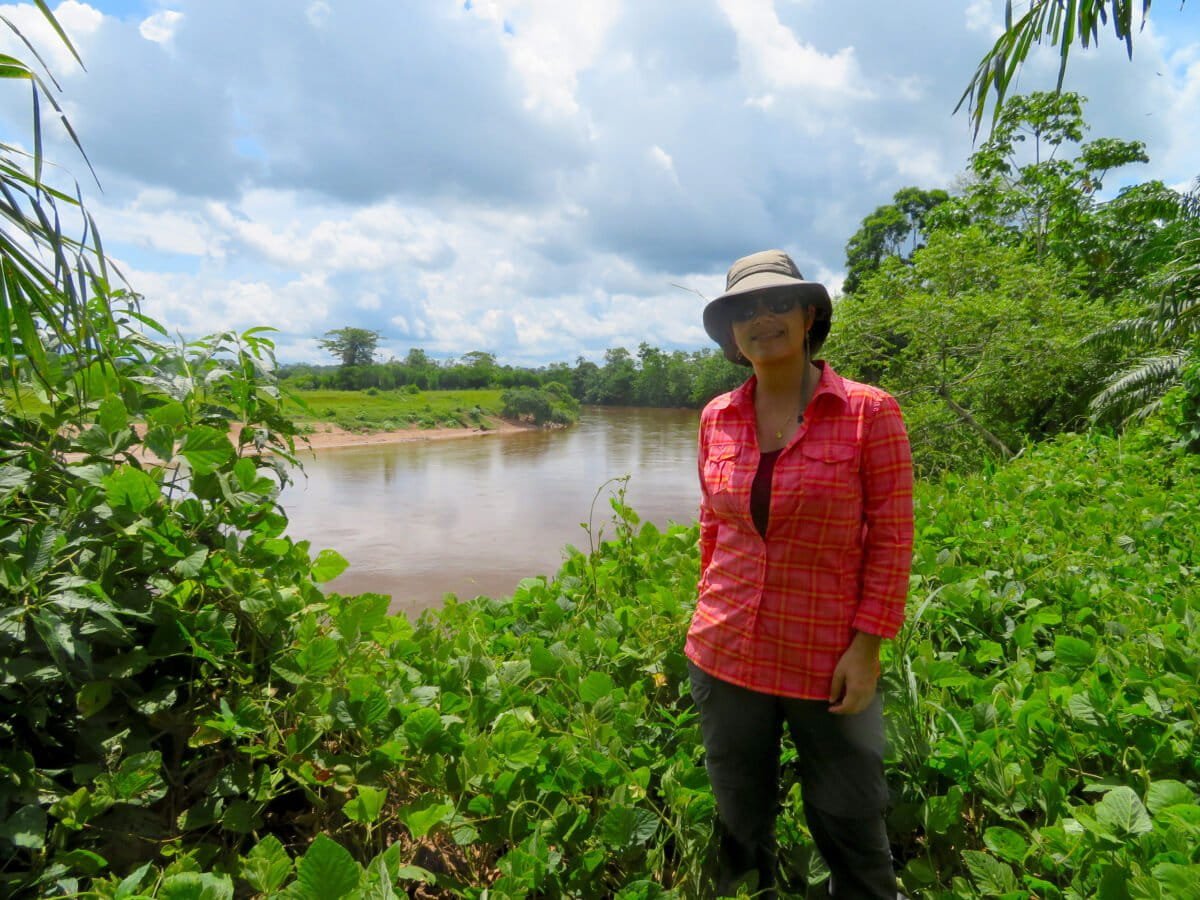
Alexa Vélez has spent much of the past decade working in that role. She is the managing editor of Mongabay Latam and has been part of the Latin American office for nearly ten years. Her days move between editorial work and organizational responsibilities. “My day is divided between various editorial and organisational activities,” she says. Much of that time goes toward investigations and regional collaborations. “One of the most important is following up on investigations and special topic coverage at Mongabay Latam. This often involves coordinating with other media outlets in the region on cross-border special projects.”
The path that led her there did not begin with environmental reporting. Vélez trained as a journalist on a weekly investigative television program in Peru, where she spent years examining corruption in national and local governments. For a time she also worked as a field camerawoman, an unusual role for women in the industry at the time. Later she directed a television program devoted to conservation stories, traveling across Peru to film episodes about protected areas and wildlife.
That work eventually led her to Mongabay. Today she helps oversee investigations that combine field reporting with satellite analysis and partnerships across Latin America. In the following interview she reflects on how environmental journalism in the region has evolved, the risks that now accompany the work, and the methods reporters increasingly rely on to document what is happening across some of the planet’s most contested landscapes.

An interview with Alexa Vélez
Rhett Ayers Butler for Mongabay: Please introduce yourself and your position at Mongabay.
Alexa Vélez: My name is Alexa Vélez, and I am managing editor of Mongabay Latam. I have been part of the Latin American office for almost ten years.
Mongabay: And what does your day-to-day work at Mongabay look like?
Alexa Vélez: My day is divided between various editorial and organisational activities. One of the most important is following up on investigations and special topic coverage at Mongabay Latam. This often involves coordinating with other media outlets in the region on cross-border special projects.
Currently, we are supporting senior fellows investigating environmental crimes in the Amazon, and we are editing final drafts and preparing the next stories for them to work on.
I also oversee the budget, review our annual goals and participate in weekly editorial coverage meetings. I am now also planning the activities we will hold to celebrate Mongabay Latam’s 10th anniversary.

Mongabay: What did you do before you joined Mongabay?
Alexa Vélez: I initially trained as a journalist on a weekly political investigative program broadcast on Peruvian television. Over the course of nearly nine years, I investigated and exposed cases of corruption involving national and local governments. This period was instrumental in shaping my focus and interest in investigative journalism.
I was also a field camerawoman for almost three years. I don’t talk about this much. At the time, we were the only two women in the entire country working in a male-dominated field. This was in the late 1990s and early 2000s, during the fall of the Fujimori regime in Peru. It was challenging to go out on the streets with heavy cameras and carve out a space for ourselves in a field where women were seen as oddities. I also directed a sports journalism program for five years, followed by a television program about conservation stories. Throughout the country, we ended up filming more than 80 episodes.
Mongabay: Why did you decide to get into journalism?
Alexa Vélez: I have always been interested in telling stories. I have always enjoyed reading and writing. When I was 16 and had just finished high school, but was too early to decide what to study, I realized that journalism was the career that best suited what I wanted to do. I was very aware of what was going on around me: the violence, and how the internal armed conflict was affecting the country. I also grew up hearing many stories about my grandparents’ lives, their political activism and the persecution they suffered for defending their ideals. They were actually political prisoners, which made politics central to our lives. Ultimately, many factors influenced my decision to study journalism.
Mongabay: What was going through your mind when you applied for the Mongabay position?
Alexa Vélez: Before joining Mongabay, I spent almost three years directing a television program about environmental conservation. We recorded around 80 episodes, all of which were broadcast on Peru’s public television network and reached a national audience. This role enabled me to travel throughout Peru, visit dozens of protected areas, learn about conservation projects and speak to scientists. It also confirmed my desire to pursue a career in this field. While covering these positive stories, however, I also encountered problems such as illegal mining, deforestation and wildlife trafficking. However, the program only told positive stories, and I wanted to expose these problems as well. Another influence was my sister, who is a marine biologist and showed me Mongabay. I really liked Mongabay’s stories and journalism, and as soon as they opened a call for applications, I decided to apply.

Mongabay: Why do you care about the issues Mongabay covers?
Alexa Vélez: There is a huge gap in environmental coverage in Latin America. The information available on the websites of the most important media outlets is very limited. I like that Mongabay Latam can fill this void by explaining complex environmental issues, telling conservation stories and reporting on environmental crimes, and providing news for media outlets that do not cover these issues in depth for various reasons. Thanks to our nearly 90 media partnerships in the region, our content now reaches a large audience that exceeds the reach of our website alone. This is gratifying to me because it means that more people are becoming informed about how environmental issues intersect with social, political, economic and cultural issues. It also enables us to expand our reach in areas where misinformation continues to gain ground.
I also like drawing attention to serious and urgent issues that governments are not addressing and that the population is not paying attention to. I feel satisfied knowing that we are fulfilling our journalistic duty to provide a public service.
My childhood also influenced me. I grew up in a fishing port in northern Peru, witnessing how pollution was destroying the sea. I didn’t understand the contradiction of living by the sea and not being able to enjoy that natural space; I didn’t understand why the authorities couldn’t find a solution. But above all, I owe my connection and interest for nature to my parents, who loved adventure and would take us on trips to different parts of the country at a moment’s notice. I remember waking up many times in the back of the car, wrapped in a blanket, to find myself surrounded by glorious scenery. I am very grateful to them for that.

Mongabay: What do you most enjoy about your work at Mongabay?
Alexa Vélez: I really enjoy investigation and exploring the endless possibilities that technology offers in revealing truths that are sometimes difficult to expose. I enjoy every stage of the process, from identifying relevant topics to investigate in depth to deciding on the best methodology and conducting rigorous research until we publish a story that truly contributes to society. I enjoy all aspects of this work, not only because I find it fulfilling, but also because I believe it is important and can encourage the relevant authorities to take action.
The use of satellite imagery to monitor forests and oceans, in particular, has largely defined the way we conduct our investigations. I remember receiving coordinates from a scientist for the first time ten years ago and not knowing what to do with those numbers. However, that story revealed a major case of deforestation in the Bolivian Amazon and opened my mind, as I realized that we could much better understand changes in the territory. I am also very proud of our highly skilled team of editors, who have revealed important cases such as chronic oil spills in the Gulf of Mexico and clandestine airstrips for drug trafficking in the Peruvian Amazon. I believe that my experience, and that of María Isabel Torres, in investigative journalism has shaped the way the Latin America office works. We have a team that contributes greatly to this line of work
Mongabay: What motivates you?
Alexa Vélez: I am motivated by the opportunity to contribute to Mongabay’s mission of caring for nature, educating people about the importance of environmental protection, and encouraging them to demand action from the authorities to safeguard our future. I am also motivated by the fact that we can act as a bridge, telling stories that no one else is telling and amplifying the voices of people on the ground, such as indigenous communities, who act as a barometer of how the environmental crisis is progressing. These communities are the first to be affected by environmental issues, and we depend on the land they care for. However, it is very difficult to make people in cities understand their connection to these problems. I am also motivated to help us understand the bigger picture. I am also motivated to shine a light on the people, companies and mafias that are destroying nature for economic gain, showing no concern for the future of millions of people.
Of course, I also think a lot about my nine-year-old nephew and how I would like his life to be. Young people deserve to inherit a planet they can inhabit freely, without fear of the increasingly severe effects of the climate crisis.

Mongabay: What are you most proud of when it comes to your work?
Alexa Vélez: This is a pivotal year in answering that question, as we celebrate ten years of coverage at Mongabay Latam. I am proud of many things. Firstly, I am proud to have applied for the position of editor at Mongabay, working on coverage of a topic that I consider to be of the utmost importance for everyone’s future. It’s not always easy: sometimes you feel depressed, sometimes you take emotional blows when people you know in the field are killed — bearing in mind that Latin America is the most lethal region for environmental defenders — but there are also many rewarding moments. For example, when you feel that your journalism is helping to change things, get things moving and make things happen. This could be because a prosecutor opens an investigation, those responsible for illegal mining or opening irregular roads are sentenced, the police carry out an operation to tackle a problem we have reported or a community receives support to develop a conservation project following a publication.
I am also proud of how we have managed to expand and strengthen our regional coverage, a significant challenge. I am proud of the quality of our investigative reports, series and solutions-focused stories, which have had a significant impact. I am also proud of the partnerships we have established with almost 90 media outlets in the region who trust Mongabay Latam. Ten years ago, we started knocking on doors to introduce Mongabay to media outlets across Latin America, and today many of these outlets seek us out to ask us to share our content. This is an achievement that I attribute to the excellent team we have built under María Isabel’s leadership — a group of journalists who are deeply committed to their work and, like me, feel fortunate to work in a media outlet that respects independence. This is a luxury in the current political and authoritarian climate.

Mongabay: Is there a particular project or story Mongabay has produced that you’re especially proud of? Something noteworthy or impactful?
Alexa Vélez: Our knowledge of using satellite imagery, gained over the years, allowed us to conduct such a complex and challenging investigation as “Deathly Flights” or “Los vuelos de la muerte.” This investigation took almost a year and a half, but enabled us to combine satellite imagery with artificial intelligence to map clandestine landing strips used for drug trafficking in three regions of the Peruvian Amazon. While the use of technology was key, the participation of the journalistic team in verifying all the information detected by the AI search tool and identifying the most critical stories was also essential. These stories were then reported on location. The investigation received significant recognition, including the Global Shining Light Award from the Global Investigative Journalism Network. It also had a tangible impact, resulting in over seven interviews with the country’s leading media outlets. The information empowered communities to demand protection for their territories, prompting politicians and congressmen to speak out about the importance of addressing the issue. Members of the armed forces also requested a meeting to learn about our methodology.
Additionally, we presented this investigation for the first time in a theatre, experimenting with a new format of stand-up journalism that attracted an audience of at least 100 people.

Mongabay: What are some of the lessons you’ve learned since joining Mongabay?
Alexa Vélez: One of the most important lessons I have learned is that no story is worth the life of a journalist or a source. Over the past 10 years, I have seen coverage of environmental issues become increasingly unsafe. Fortunately, Mongabay has always had security protocols in place, which have been adjusted to protect journalists in the field as threats intensify. It’s important to continue doing journalism in the field — one of the things I value most about Mongabay — while measuring the risks and protecting people.
I have also learned that we must be prepared for a new type of risk: legal threats. Journalism must always be rigorous and ethical. Nothing should distract us from these two principles because the slightest mistake leaves us vulnerable to discreditation and legal threats, which undermine our revelations and ensure that journalists are silenced. Environmental journalism is often dismissed as activism, and this is another of the main battles we fight: to demonstrate that we practice rigorous journalism based on facts and evidence.
Mongabay: You’ve become a prominent leader at Mongabay. Do you have any reflections on leadership?
Alexa Vélez: I remember a talk by a Mexican journalist whom I greatly respect, given at a journalism event. She spoke about the role of editors, sharing the idea that our main responsibility is to help the journalists under our supervision to grow, learn and shine, while remaining in the background and applauding their achievements. I mention this because it is one of the lessons I have learned from leadership. It is a great responsibility to train the people who are part of the team, teach them, help them grow and support them so that they feel confident in their journalism. Over time, they can also become leaders themselves.
I also feel a great sense of responsibility and pride that the Mongabay Latam leadership team is female. Women are still underrepresented in leadership positions, so I see this as an important step towards encouraging more women to reach those positions.

Mongabay: Is there any advice you’d give to someone who wants to follow a similar path?
Alexa Vélez: Yes, they should seek out training opportunities that could help them develop a career in environmental journalism. One example is the fellowship program we have for young journalists. It’s a wonderful program where you can learn a lot, get published and build a portfolio of stories. Above all, it can pave the way to becoming a Mongabay contributor. Several of the participants have gone on to become contributors and have earned scholarships and awards. That makes me very happy. So, I would encourage them to seize training opportunities, give their all, write their best stories, never stop questioning and asking, and always be rigorous and ethical, as this is the path to a successful career in environmental journalism.