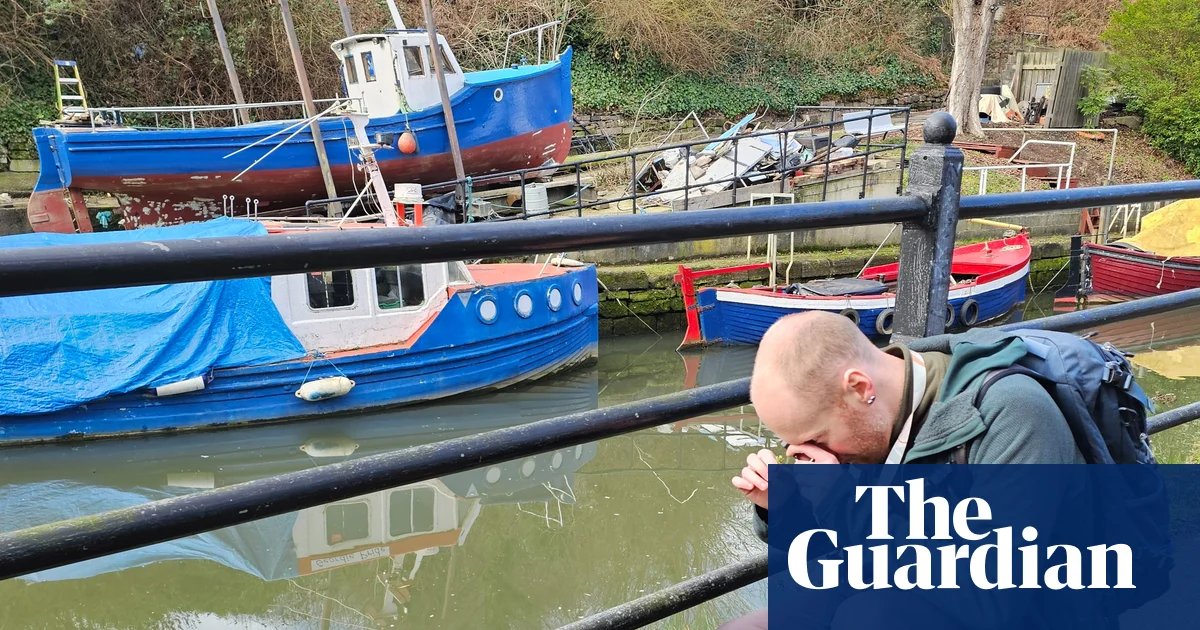
The Ouseburn slides glassily, reflecting clouds, as it moves towards the Tyne. These lower reaches are tidal, once used for loading coal barges, here in the industrial heart of Newcastle. From glassworks, bottleworks, potteries and flax mills, the area is now transformed into waterside cafes, bars and housing. The burn flows through a variety of habitats: a wooded dene beneath a soaring viaduct, past stables, a farm and converted factories, exposed mud and ivied ruins, an evolving cityscape, its plants often overlooked.
We study the ground while joggers and prams go past and progress is slow; there’s so much life here in the footpath margins. James Common has researched the city’s plants for six years and his book Urban Flora of Newcastle and North Tyneside is published on Monday. He found the Lower Ouseburn to be the fifth most diverse 1km square of the 188 he covered, the others being nature reserves and the Victorian park of Jesmond Dene. This vibrancy is the result of movement, of people and industry, animals and ships’ ballast, seeds borne by the river or carried on feet.
Plants survive everywhere: beneath a boardwalk, in crumbling concrete, on window ledges, clinging to river embankments. They’re a mix of natives, archaeophytes – species introduced before 1500; and neophytes – introductions since then. Yarrow, plantain, goosegrass and clover sprout fresh leaves under riverside railings, a foot-wide mossy strip that is full of life. Pellitory-of-the-wall fills the tiny crack between pavement and wall. There are minuscule white flowers on common whitlowgrass, seedpods on shepherd’s purse, winged stems on water figwort alongside mallow and shining cranesbill. As we hunker down, a passerby calls out: “Ah, plant man! I’ve been on one of your talks!”
A grey wagtail skitters across gabions by moored boats and gulls cry overhead. Common points out crop weeds, bronze age archaeophytes henbit deadnettle and green field-speedwell, growing alongside the neophyte Oxford ragwort. There’s eastern rocket, dating locally from 1936, aromatic black horehound, common polypody and maidenhair spleenwort ferns, dove’s foot geranium and wild parsnip. The number of plants that Common and others recorded doubled expectations; 1,123 species, a third of all plant species in Britain – a history of the city written in plants.