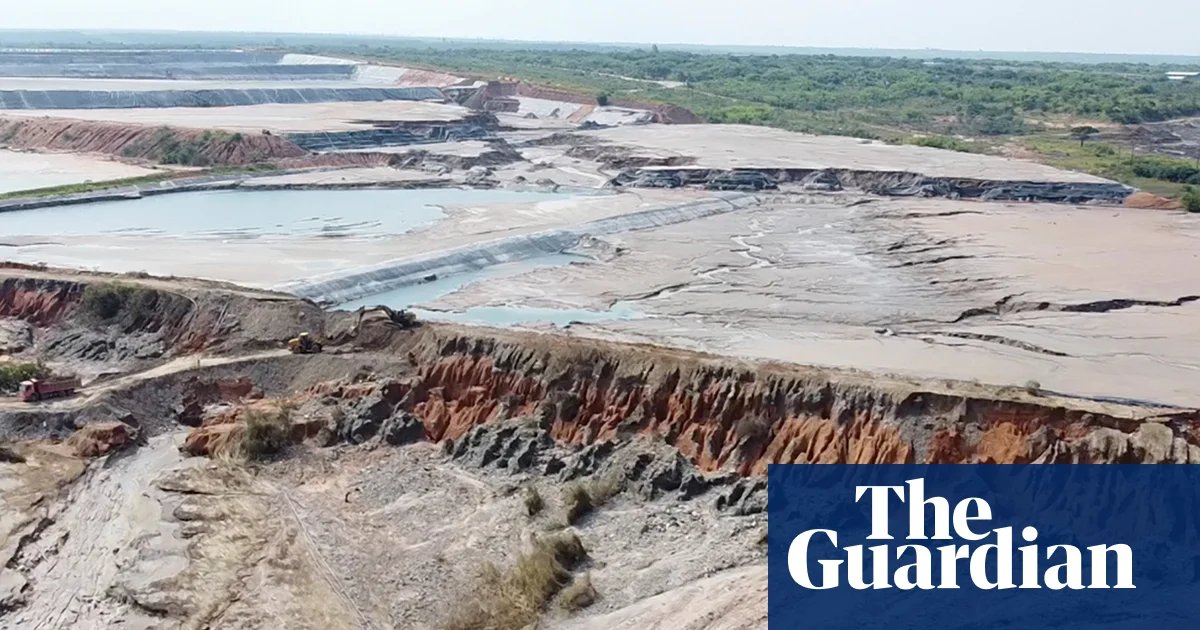
When Middle Eastern wars sparked an oil crisis in the 1970s, tripling energy prices and throwing economies into chaos, some countries looked beyond short-term solutions. The French made nuclear the pillar of their power system. Scandinavians insulated buildings and funnelled waste heat into homes. The Dutch built bike lanes where others wanted motorways. The Danes developed wind turbines.
Such steps cleaned filthy air and cut imports from autocrats but took a back seat when Russia invaded Ukraine half a century later. Europe raced to buy gas from the US and Middle East. Policies to roll out renewables by cutting red tape helped reduce dependence, but calls to use less energy and reduce waste were muted. Industry lobbying and populist backlash have since sabotaged efforts to phase out petrol cars and fossil boilers.
Reducing gas demand is “the only way to reduce energy prices in the EU, and the only way to ensure we are not geopolitically constrained by our addiction to fossil fuels”, said Marin Gillot, an energy analyst at Strategic Perspectives.
Now, with ships full of Middle Eastern fuel idling in the Gulf and the Trump administration in the US seeking energy dominance to “project power”, a chorus of voices are calling to speed up the green transition.
“The lesson was never entirely about dependency on Russia, and now it’s not so much about dependency on Qatar or the US,” said Gillot. “The question is do we want to keep fixing the same issue, which is fossil fuel dependency, with only one aspect of the short-term response, which is diversification.”
What did some countries do differently in the first big oil crisis? And what lessons do they hold for today?
Danish wind turbines
In the early 1970s, Denmark burned oil for almost everything – heating, transport, and electricity. Today the birthplace of modern wind power gets 91% of its electricity from renewables.
Henrik Stiesdal was one of the early pioneers who kickstarted the wind industry when oil prices jumped. In 1975, he built one of Denmark’s first wind turbines – using an old gearbox and a generator from the junkyard to power his parents’ farm – and soon sold the licence for a better model he made with a blacksmith to a local crane company. Within a few years, Denmark had more than a dozen companies making turbines for the budding wind sector. The cranemaker Vestas is today the biggest manufacturer of wind turbines outside China.
“Nothing would have happened if it were not for the oil crisis,” said Stiesdal, who became the chief technology officer of Siemens Wind Power and now runs a climate technology company.
As energy prices soared, the Danish government expressed an early desire to turn its abundant wind into usable power. It introduced a consumer subsidy for turbines, set an attractive tariff for electricity sold to the grid and told the operators not to refuse a connection without good reason. In doing so, said Stiesdal, a “specific demand” for wind grew out of society’s “general demand” for cheap and reliable energy.
Europe now erects wind turbines and lays solar panels at a rate almost fast enough to meet its targets but has been sluggish on electrification and emerging technologies.
Analysts complain the distant promise of clean hydrogen and carbon capture – needed to clean a few industries but held up as a solution for many more – has been used to delay the shift away from fuel-guzzling machines. At the same time, support for tried-and-tested solutions such as heat pumps and electric cars has been fought in the name of “technological openness”.
“The government must want it to happen, otherwise it’ll never happen – that’s the first prerequisite,” said Stiesdal. “Then the means by which you make it happen is to create demand. You subsidise users while the new thing you want to promote is still too expensive, and then over time, due to volume, it’ll get cheaper, and your subsidies can be reduced.”
Dutch cycle lanes
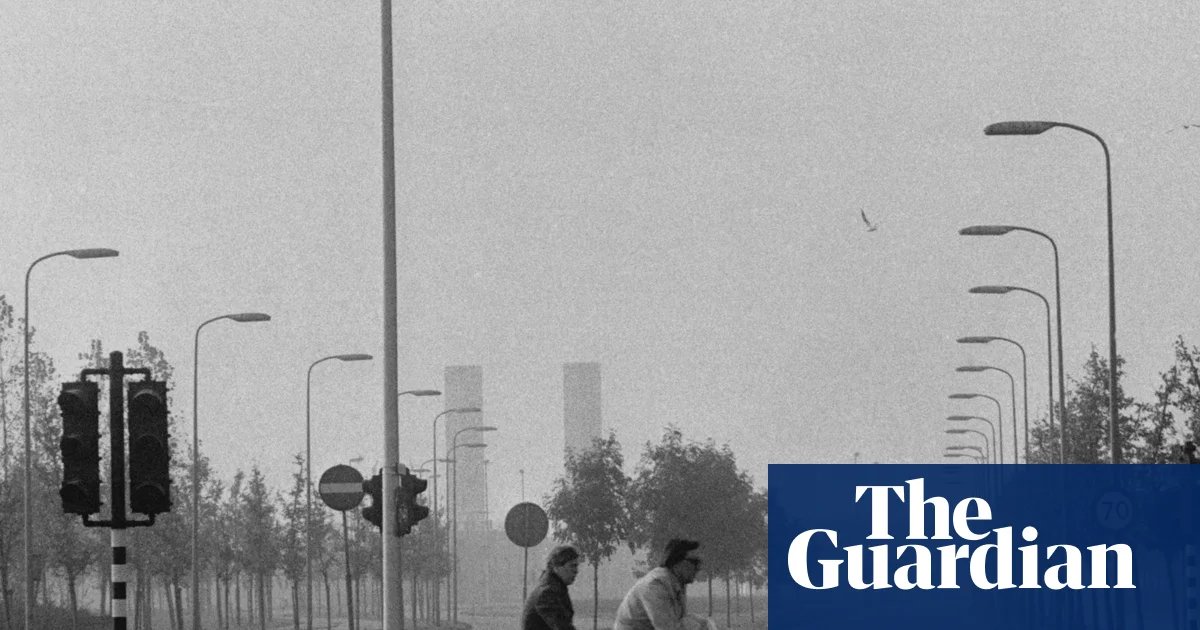
“Holland saddle-sore but fume free” was how Guardian editors headlined an article in November 1973 after oil price spikes led the Dutch government to ban cars on Sundays. The three-month measure was followed by a number of structural steps – from segregated cycle lanes to designing people-friendly cities – that got people on their bikes and out of vehicles that chugged foreign fuels.
“The decision of not using cars on Sundays made it clear that societies could do without them for one day,” said Jan Wittenberg, the first chair of the Dutch Cyclists’ Union, which was founded 50 years ago. “And it looked fantastic. There were picnics on motorways and kids playing in the street.”
While campaigners such as Wittenberg had already been fighting for road safety and clean air, Dutch society as a whole had not reckoned with the dangers of car dependence. “The oil crisis made it clear to a far bigger group – specifically politicians.”
In the decades since, the Netherlands has built the world’s best cycling infrastructure and provided a roadmap to other cities on giving space back to pedestrians and cyclists. But recent policies to reduce car dominance in Europe have largely been limited to individual cities. The rise of electric cars may have already caused oil demand from the transport sector to peak, but progress has been challenged by the rise of fuel-wasting SUVs.
Wittenberg said the equality embedded in proposals such as car-free Sundays helped with public acceptance for a radical shift in the way people moved.
“It was not that an elite could say ‘it’s not my cup of tea’ – everyone had to leave the car at home on Sundays,” he said. “It changed something in the awareness.”
French nuclear power plants
France had laid the foundations for a strong nuclear sector after the second world war, but it was the 1973 oil crisis that catalysed the Messmer plan to transform its energy supply. Without public debate or room for dissent, the Gaullist government of Pierre Messmer ordered the construction of nuclear power plants across the country. Its engineers built 50 reactors in a decade under the slogan: “In France, we don’t have oil, but we have ideas.”
Although France lacked sufficient uranium deposits to fulfil the plan and relied on colonies such as Niger, the government presented nuclear as “the only way” to ensure France’s energy independence and its industrial modernisation, said Sezin Topçu, a historian of technology at the French National Centre for Scientific Research. “This was put forward as a state truth – and every reaction or opposition to the idea was considered antipatriotic or irrational.”
The forceful approach was backed by loan guarantees to Électricité de France (EDF) – which at the time was a state-owned company with a monopoly on France’s energy – as well as long-term contracts with the manufacturer and government decrees that kept reactors safe from legal challenges.
Today, calls for a European nuclear renaissance have been hampered by the high costs of building new plants and the falling price of renewables, which offer more energy security for countries without uranium. But a similar sense of urgency could help fix Europe’s creaking electricity grid. The Messmer plan is one of the few historical examples – along with US fighter plane production in the second world war and the construction of China’s high-speed rail network – of “emergency-like deployment” of a technology at the scale that would be needed to tackle the climate crisis, a study looking at hydrogen production found in 2022.
The “investment gap” for the transition to a low-carbon economy is what matters, said Anna Creti, a climate economist at Université Paris Dauphine. “If we can convert the bill that we pay to import oil and gas into investment for decarbonisation, this is really the lesson that we should learn.”
Clean Nordic heating
The cold countries of Northern Europe were particularly at risk when oil prices rose, and used the crisis to invest in more efficient ways of keeping warm. They insulated buildings, tightened building rules and replaced oil-fired boilers in people’s homes with centralised district heating systems, which are more efficient and can be powered with other fuels.
“The oil dependency in Sweden was severe,” said Magnus Åberg, a civil engineering professor at Uppsala university and co-author of a study on how district heating came to dominate the country’s heating. “The oil crisis really put the finger on the vulnerability of the Swedish energy system.”
The national government provided municipalities with financial incentives to create district heating networks and an active association of district heating networks created a roadmap for how municipalities could adopt them. The build-out sped up as Sweden began to back away from nuclear power, increasing demand for combined heat and power plants, and the government increasingly restricted the types of fuels that could be used for home heating. “They didn’t want to make it mandatory to connect, but they reduced the number of options, so that it was an offer that you couldn’t refuse,” said Åberg.
Today, district heating systems across the Nordics burn fewer fossil fuels than at the time, and more waste and biomass. Some have replaced their boilers with huge electric heat pumps.
The combination of government incentives and local expertise led to 287 of 290 municipalities using district heating, said Åberg, though most of the projects were built at a time when large government infrastructure spending was more accepted. “If we wouldn’t have district heating already in Sweden, it would not be built now. But maybe what’s happening now in the world – the war in Ukraine and in Iran – has put resilience on the map again.”