- Doug Allan, a Scottish wildlife cameraman, spent decades filming in polar regions and underwater, bringing remote ecosystems into view for global audiences.
- Trained as a marine biologist and diver, he moved into filmmaking after a chance meeting with David Attenborough in Antarctica.
- His work on major BBC series, including The Blue Planet, Planet Earth and Frozen Planet, was shaped by patience, fieldcraft and long periods of waiting for rare moments.
- He died on April 8th, aged 74, leaving a body of work defined by close observation and sustained exposure to some of the planet’s most demanding environments.
There are moments in natural-history films when the camera seems improbably close: a polar bear’s breath fogging the lens, a seal’s eye lingering, an orca pod moving with intent beneath fractured ice. The illusion is of proximity without disturbance. The reality is colder, slower and less certain. It depends on patience, judgment and a tolerance for discomfort that most viewers never see.
Doug Allan spent his career in such conditions. He worked where light is scarce, where equipment fails, and where the margin for error is thin. Much of his footage was gathered in the polar regions or underwater, environments that reward persistence and ingenuity. He liked the constraints. You could only be in one place at a time, he would say; if you weren’t there, you would not get the shot.
Allan came to filmmaking indirectly. Born in 1951 in Dunfermline, he studied marine biology and began as a diver, including work with the British Antarctic Survey. A meeting with David Attenborough in Antarctica in the early 1980s redirected his path. He bought a camera, filmed emperor penguins, and sold the footage to the BBC. From there he became a principal cameraman on landmark series such as The Blue Planet, Planet Earth and Frozen Planet.
His work helped define how audiences came to see remote ecosystems. The sequences were often brief on screen but long in the making. Allan might spend weeks waiting for an animal to appear, or return empty-handed after a day’s search. He accepted this as part of the method. Wildlife filming, he noted, involves long stretches of waiting, broken by moments when everything must be done correctly.
He developed a reputation for getting unusually close to animals. This demanded more than courage. He described it as a form of intuition: an ability to anticipate behavior and to remain within range without causing alarm. That proximity produced footage that felt intimate without being intrusive. It also carried risk. He was once dragged underwater by a walrus that mistook him for prey; on other occasions he found himself within reach of large predators. He regarded these incidents as part of the work.

The polar regions remained central to his work. He spent extended periods in Antarctica, including winters in near darkness, and accumulated hundreds of days filming polar bears. Some of his most widely recognized sequences—bears emerging from dens, or hunting on shifting ice—required weeks of preparation in severe cold. Conditions could be monotonous as well as dangerous. Allan spoke of boredom alongside excitement, and of the discipline required to remain alert.
Despite the scale of the productions he worked on, Allan’s perspective was practical. He avoided romanticizing the profession. It involved discomfort, isolation and missed opportunities as much as success. Yet he valued the access it gave him to places and encounters that few people experience. The satisfaction lay in witnessing behavior at close range and recording it with enough clarity to be shared.
He also retained the habits of a field observer. His training allowed him to engage with scientists and contribute to their understanding of what he filmed. Observations made during dives or shoots could inform research as well as storytelling. The boundary between documentation and inquiry was often narrow.
In later years Allan received industry recognition, including Emmy and Bafta awards, and was appointed an OBE. Such honors reflected the reach of his work more than the conditions under which it was made. The images themselves carried little sign of the effort behind them.
Allan, 74, died on Wednesday after suffering a brain hemorrhage while trekking to Annapurna base camp in Nepal. He had spent much of his life working in challenging and inaccessible environments. The films he helped create made those places visible to a wide audience. They did so with little sense of the person behind the camera, which was how he preferred it.
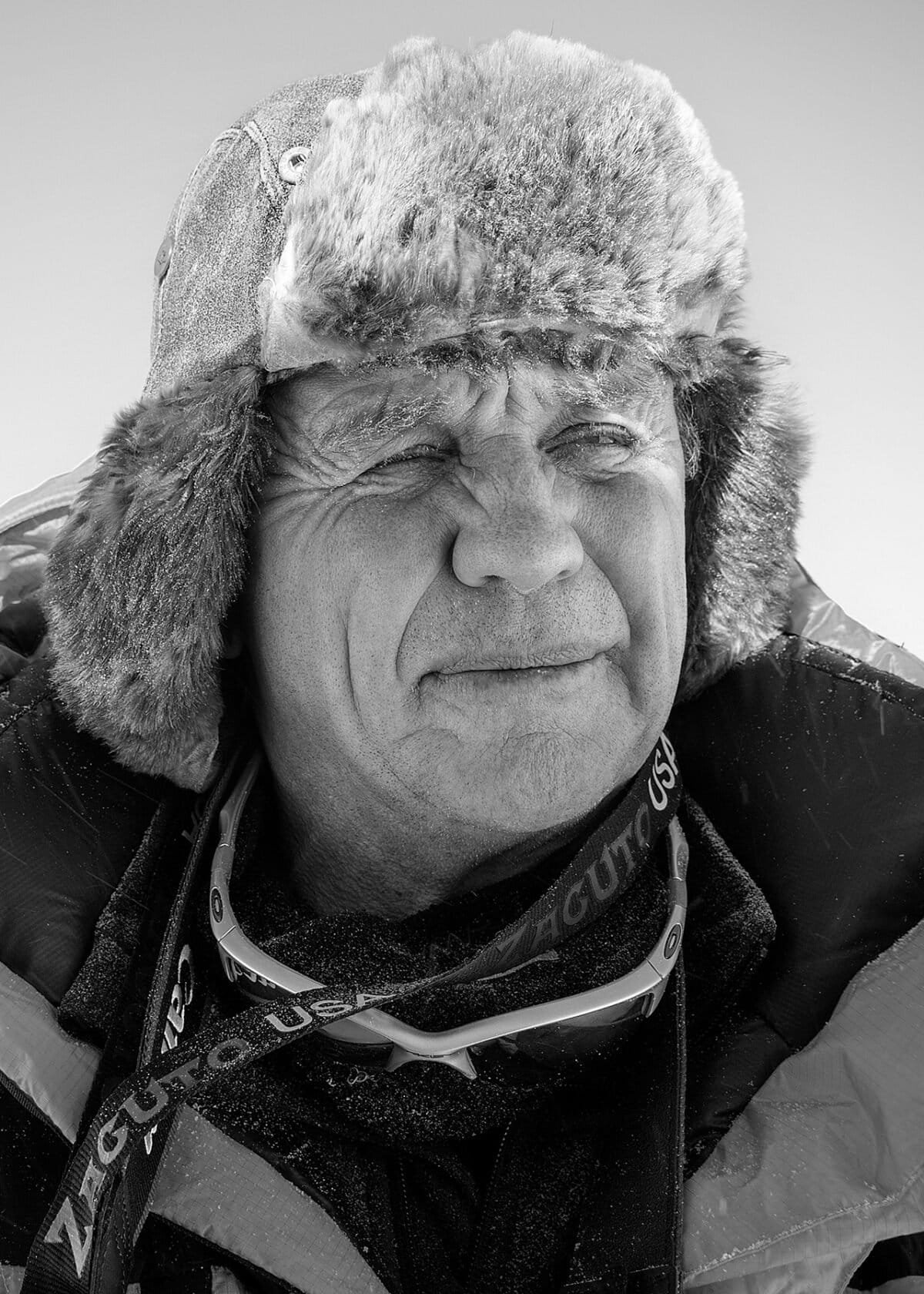
Banner image: Doug Allan. Photo courtesy of the Royal Scottish Geographical Society