In the past decade or two, since the climate emergency has been widely recognised, every year has ranked among the hottest on record – and a new global report warns that the planet is absorbing heat at an unprecedented rate.
The World Meteorological Organization released its State of the Global Climate report 2025 on Monday, confirming that 2015-2025 were the hottest 11 years on record.
“When history repeats itself eleven times, it is no longer a coincidence. It is a call to act,” said UN Secretary-General António Guterres. “The State of the Global Climate is in a state of emergency”.
While 2025 itself was only the second- or third-warmest year on record, the temperature was around 1.43°C above the 1850-1900 average. In 2015, that figure was just under 1°C.
The 2015 Paris Climate Agreement set out to limit the rise in the global average temperature to “well below 2°C above pre-industrial levels”, whilst striving to limit it to 1.5°C.
Energy imbalance
But while weather patterns are subject to temporal and regional variation, a new metric included in the WMO’s annual report leaves little room for complacency.
The Earth’s energy imbalance (EEI) is simply the difference between how much of the sun’s energy is absorbed by the planet and how much it radiates back into space. To maintain a stable temperature in the long term, these two should be the same.
The fact that they are not is down to the greenhouse effect, which prevents us from freezing but is growing stronger as the concentration of heat-absorbing gases – mainly carbon dioxide and methane – continues to increase due to human activity.
Recorded since 1960, the EEI has never been higher than it was in 2025, and it has been rising faster than ever over the past two decades. So far, the world’s oceans have been absorbing more than 91% of this excess heat, compared to 5% on land and just 1% in the atmosphere.
Consequences
Every one of the past nine years has seen a new record set for the the temperature of the world’s oceans, leading to the degradation of marine ecosystems and, ultimately, a reduction in the oceans’ role as carbon sinks.
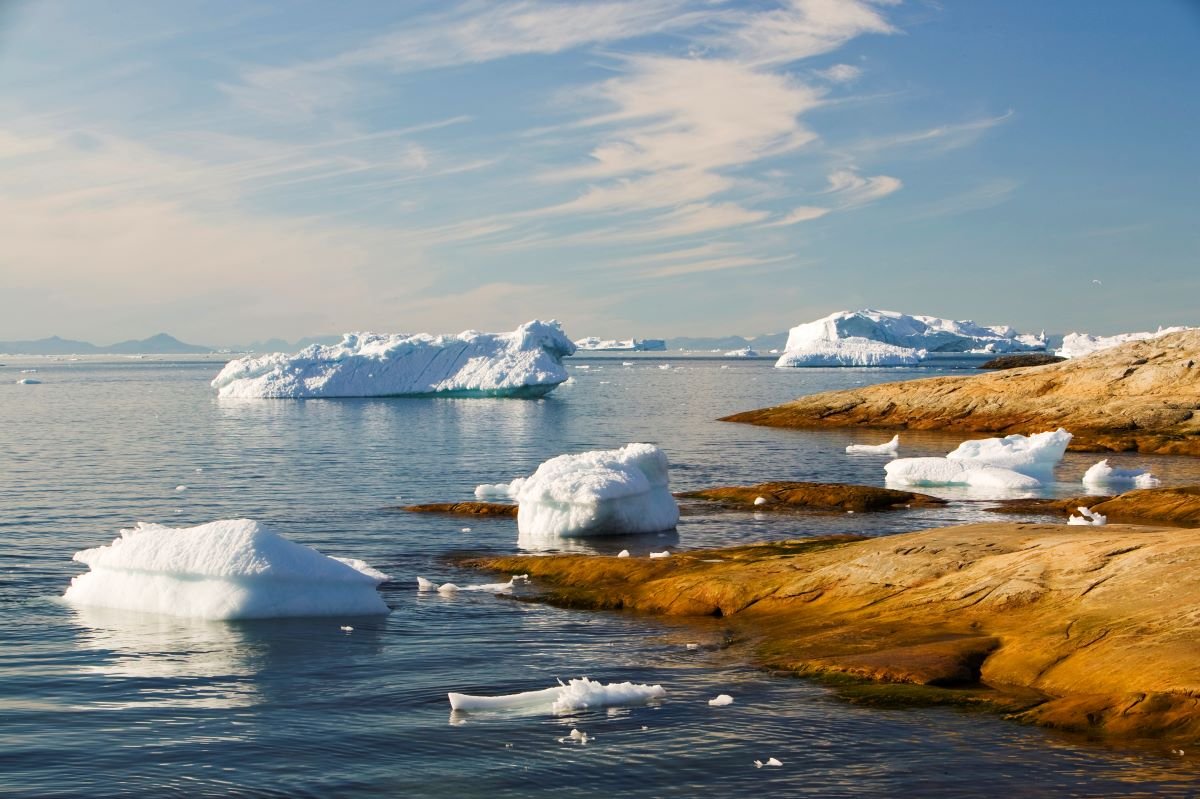
Furthermore, the average annual extent of Arctic sea ice in 2025 was the lowest or second-lowest ever recorded during the satellite era. As ice melts, the globe absorbs yet more solar radiation that would otherwise be reflected back into space.
WMO Secretary-General Celeste Saulo said that the overall energy imbalance has led to “heatwaves, wildfires, drought, tropical cyclones, storms, and flooding” in 2025.
The report underlines the cascading impacts of climate change and extreme weather on agricultural production, mortality, livelihoods, ecosystems and health. Dengue fever is the world’s fastest-growing mosquito-borne disease, according to the WMO, and global warming is directly responsible for its spread.
Guterres called on countries to reassess their reliance on fossil fuels, which destabilise “both the climate and global security” – and with the next round of climate talks coming up in eight months, he had a simple message.
“Today’s report should come with a warning label: climate chaos is accelerating and delay is deadly,” Guterres said.
World leaders are due to gather in Antalya, Turkey, in November to discuss global climate action at the 31st COP summit, and the 12th since the Paris Agreement was struck. Global greenhouse gas emissions are still rising.
(rh, aw)