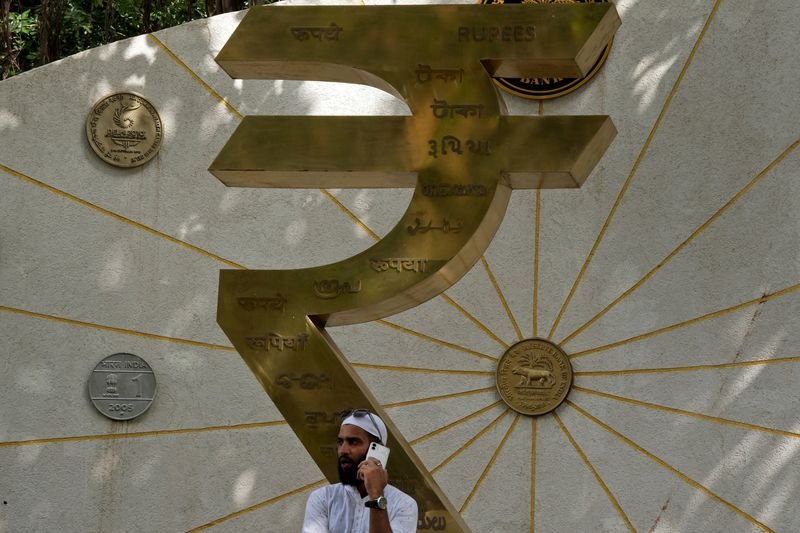
India has gradually strengthened its diplomatic relations with Sri Lanka after the end of Sri Lanka’s civil war in 2009, entering a renewed phase of engagement built on soft diplomacy—particularly India’s dedicated efforts in relief and reconstruction in war affected regions of Sri Lanka. India emerged as the largest single contributor to post-war reconstruction in Northern and Eastern Provinces.
Among foreign funded post-war peacebuilding initiatives, India has supported Sri Lankan Tamil communities for large projects like housing reconstruction, livelihood development, voluntary repatriation of Tamil refugees who fled to India during the war, and facilitating Sri Lanka’s resettlement process. The widening peacebuilding support led India to broadened cooperation in trade, military, and strategic affairs.
Since the end of the civil war, Sri Lanka’s political leadership has increasingly regarded India as its most important regional neighbor. In a telephone conversation with Indian Prime Minister Narendra Modi dated December 1 2025, Sri Lanka’s President Anura Kumara Dissanayake appraised India’s “first responder” approach in times of need, expressing gratitude to India for its immediate response to the recovery of Sri Lanka after cyclone Ditwah (Press Release, PM’s Office, India).
India’s steady and continuous humanitarian peacebuilding initiatives serve as key foundations for the consolidation of strong India–Sri Lanka diplomatic ties.
Post-war Humanitarian Peacebuilding
India’s bilateral commitment to humanitarian assistance is widely recognized at the global level. In response to Sri Lanka’s post-war humanitarian recovery, India presented a comprehensive humanitarian agenda, encompassing not only emergency relief, but also long-term peacebuilding commitment. India’s housing construction project in Sri Lanka represents one of the largest humanitarian initiatives undertaken by a single country, with a commitment to build 50,000 new houses for conflict-affected populations at an estimated cost of 33 billion Sri Lankan rupees (High Commission of India, Colombo).
Initiated in 2012, the project later expanded through a fourth phase in 2017, providing an additional 10,000 houses for estate-sector communities with historical ties to Tamil Nadu, thereby linking humanitarian relief with socio-cultural support.
India’s humanitarian engagement expanded to include rehabilitation and resettlement programmes, particularly supporting Sri Lanka’s internally displaced persons (IDP) resettlement. Since 2014, India has also facilitated the repatriation of Sri Lankan Tamil refugees—an issue that had long remained a complex and unresolved social and economic challenge due to the prolonged presence of the refugees in Tamil Nadu.
India’s Humanitarian Emergency Assistance
India was recognised and appraised among the hearts of Sri Lankans for its timely intervention during Sri Lanka’s back-to-back emergency phases, particularly in 2022 during Sri Lanka’s worst economic breakdown, and after the entire island was devastated by cyclone Ditwah in December 2025—India’s relief and recovery support stood indispensable.
Addressing the All-India Partner Meet in June 2024, Ranil Wickremesinghe stated, “having now survived two difficult years, I must acknowledge that this was possible because India extended a loan of US$3.5 billion” (The Economic Times), reflecting India’s immediate intervention to Sri Lanka during the economic crisis. India’s recovery support was not only humanitarian but wisely set under strategically structured credit lines, which facilitated the stabilisation of essential imports—including fuel, food, medicine, and fertilizers—critical for the lives of people and daily engagements.
At the time the island nation hit by the tropical cyclone Ditwah, the most severe natural catastrophe since the tsunami in 2004, India responded by extending a US$450 million relief and reconstruction package (news.lk), underscoring how humanitarian assistance continues to constitute a central pillar of bilateral cooperation. This marked the first instance in which a military-humanitarian operation was deployed, with India airlifting medical teams and units, rescue teams and even critical infrastructure—including movable bridges to facilitate immediate relief and post-disaster recovery. India demonstrated its humanitarian peacebuilding by moving beyond conventional intervention methods.
Humanitarian Relief Leveraging the Strategic Scope
Amid recognising debates over the strategic competition between India and China in the Indian Ocean Region (IOR), India’s closer diplomatic engagement with Sri Lanka positioned itself as a calculated strategy of soft balancing. In this context, humanitarian cooperation has functioned not only to strengthen political trust but to advance broader strategic interests of India in the region. At the geopolitical level, India-Sri Lanka affairs reinforced India’s Neighbourhood First policy, positioning India as a reliable partner in the emerging regional strategic architecture.
A review of some key initiatives indicates that India has steadily strengthened its strategic engagement with Sri Lanka. Such debates can be expanded to areas such as geostrategic dialogue, maritime security, and military exercises. In the recent past, India has shown its security follow-up in the aftermath of the Easter bombings in Sri Lanka in 2019, after which India enhanced intelligence-sharing mechanisms–that Sri Lanka allied with. In the broader regional trade context, India has stepped into key strategic infrastructural initiatives, such as the restoration of Kankesanthurai Harbour in 2018, the Colombo Port, West International Terminal Project (2022) and the joint development of oil storage facilities at the Trincomalee Oil Tank Farm in 2022—one of the largest oil storage complexes in the Indian Ocean, originally constructed during World War II. India showcased its strategic commitment to enhancing its strategic footprint in Sri Lanka.
Critical Perspectives
While humanitarian peacebuilding carries significant diplomatic weight—allowing states to strengthen bilateral ties, as evident in India–Sri Lanka—it also prompts a critical reassessment of the liberal peace framework. Soft diplomatic approaches are generally welcomed, but in close geographic proximity, they require careful evaluation and political dialogue, given the shifting of goals and sensitivity of interests. India and Sri Lanka have navigated this dynamic effectively. The Sri Lanka case illustrates the fragility and complexity of state-centric peacebuilding efforts, according to many critics; conventional liberal peace architectures are weakened in many applications in the world. However, India’s humanitarian peacebuilding provides a salient example of how humanitarian peacebuilding contributes to strengthening bilateralism.
A case study like India Sri Lanka underscores how humanitarian peacebuilding—can lay the groundwork for more robust diplomatic engagement, fostering stronger trust and sustained strategic alignment.
Keywords: Sri Lanka, India, peacebuilding, development, humanitarian, humanitarian peacebuilding, peace, conflict, conflict resolution

Menik Wakkumbura
Having experienced in the field of International Relations and Peace & Conflict Studies for more than 18 years, Dr. Menik Wakkumbura is currently serving as a Senior Lecturer at the Department of International Relations, University of Colombo. Prior to joining the University, she served as a Consultant at the Sri Lanka Institute of Development Administration (SLIDA). Among the publications, she has authored two handbooks titledPeace Negotiation in International Relations(2020) andIntroduction to International Security(2023) published by Colombo University Press among those edited booksApplied Case Studies in Public Administration(2015) andApplied Research with Agency Partnership(2017) were published by the Sri Lanka Institute of Development Administration. She has published number of book chapters and in reputed international journals. Dr. Wakkumbura is a recipient of renowned scholarships including NORAD Scholarship (2005), Norwegian Government’s Quota Scheme Scholarship (2006-2008),Australian Leadership Award (AUSAID) in 2014,Malaysian International Scholarship (MIS) (2016) and recipient of scholarship grant from National Center for Advance Studies in Humanities and Social Sciences (NCAS), Sri Lanka (2018-2020). Dr. Wakkumbura holds the PhD from University of Colombo (Sri Lanka), MPhil in Peace & Conflict Studies from University of Oslo (Norway), and BA Honors, First Class in International Relations, University of Colombo. She contributes to research, focusing her research interests on geopolitics in the Indian Ocean, International Security, International Negotiation and Peacebuilding and Reconciliation.