G7 foreign ministers meet in France as Iran war escalates, with focus on Strait of Hormuz disruption, global energy risks and calls for de-escalation.
Senior diplomats from the world’s leading industrialised democracies gathered in France this week as tensions surrounding the Iran conflict intensified, with disruptions to global oil shipments emerging as a central concern.
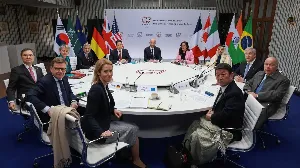
United States Secretary of State Marco Rubio joined counterparts from the United Kingdom, Canada, France, Germany, Italy and Japan, facing calls to explain Washington’s objectives nearly a month after the conflict began.
The meeting, held at a historic site near Paris, comes amid rising unease among allies about the risk of further escalation and the broader economic impact of the crisis.
A key issue under discussion is the Strait of Hormuz, a narrow waterway through which roughly one-fifth of the world’s oil and liquefied natural gas typically passes. Iranian actions have effectively restricted access to the route, triggering a surge in global energy prices and raising fears of prolonged disruption.
Speaking ahead of the talks, Mr Rubio said it was in the shared “interest” of G7 nations to restore shipping through the strait, emphasising the importance of maintaining international maritime routes.
“For all the countries who care about international law, they should be doing something about it,” he told reporters.
European leaders have taken a more cautious tone, stressing the need for a diplomatic resolution. United Kingdom Foreign Secretary Yvette Cooper called for “a swift resolution to this conflict that restores regional stability”, adding that freedom of navigation must be upheld.
She warned that the continued disruption risks allowing Iran to exert undue influence over global trade, stating that such actions could effectively “hold the global economy hostage”.
Despite shared concerns, divisions remain within the group over how to respond. Several G7 countries have expressed reluctance to become directly involved in military operations, instead favouring diplomatic efforts to end the conflict and reopen key shipping lanes.
German Foreign Minister Johann Wadephul underscored the importance of unity among allies, particularly in light of what he described as growing cooperation between Iran and Russia.
“We need to strengthen our unity,” he said, adding that closer coordination with the United States would be essential in bringing the conflict to an end.
However, signs of strain between Washington and its allies have emerged. In a departure from usual practice, no joint communiqué is expected at the conclusion of the meeting, with France, which holds the G7 presidency this year, set to issue a summary statement instead.
The absence of a unified declaration highlights differing perspectives within the group on both the Iran conflict and broader geopolitical priorities.
The talks have also addressed the ongoing war in Ukraine, with European officials warning that the Middle East crisis must not divert attention from Russia’s continued military campaign.
Ukraine’s Foreign Minister Andrii Sybiha, who attended the meeting, emphasised the importance of continued international support, describing the United States’ role in peace efforts as “critical”.
European Union foreign policy chief Kaja Kallas suggested that the conflicts in Ukraine and the Middle East are interconnected, arguing that efforts to resolve one may influence the other.
Defence officials have also pointed to alleged military cooperation between Moscow and Tehran, including the sharing of drone technology and tactics.
United Kingdom Defence Secretary John Healey told the BBC that similarities between Iranian and Russian military methods indicate a deeper strategic link.
Meanwhile, United States President Donald Trump has publicly criticised North Atlantic Treaty Organization allies, accusing them of failing to contribute meaningfully to managing the crisis.
His remarks have added to tensions within the alliance, particularly as member states weigh the risks of military involvement against the urgency of securing global energy supplies.
Mr Rubio, defending the United States’ position, said the conflict was not only about national interests but had wider global implications.
“The President is not just doing a favour to the United States and to our people. This is for the world,” he said.
Context:
The G7, originally formed in the 1970s as a forum for major advanced economies, has increasingly become a platform for coordinating responses to global crises.
This year’s meeting has also included outreach to emerging economies such as India and Brazil, reflecting efforts to broaden international cooperation.
The current crisis highlights the vulnerability of global energy markets to geopolitical tensions, particularly in strategic chokepoints such as the Strait of Hormuz.
Analysts warn that any prolonged disruption could have far-reaching consequences, including higher fuel costs, inflationary pressures and potential slowdowns in economic growth worldwide.
As discussions continue, the challenge for G7 leaders will be to balance diplomatic engagement with strategic coordination, while seeking to prevent further escalation in an already volatile region.