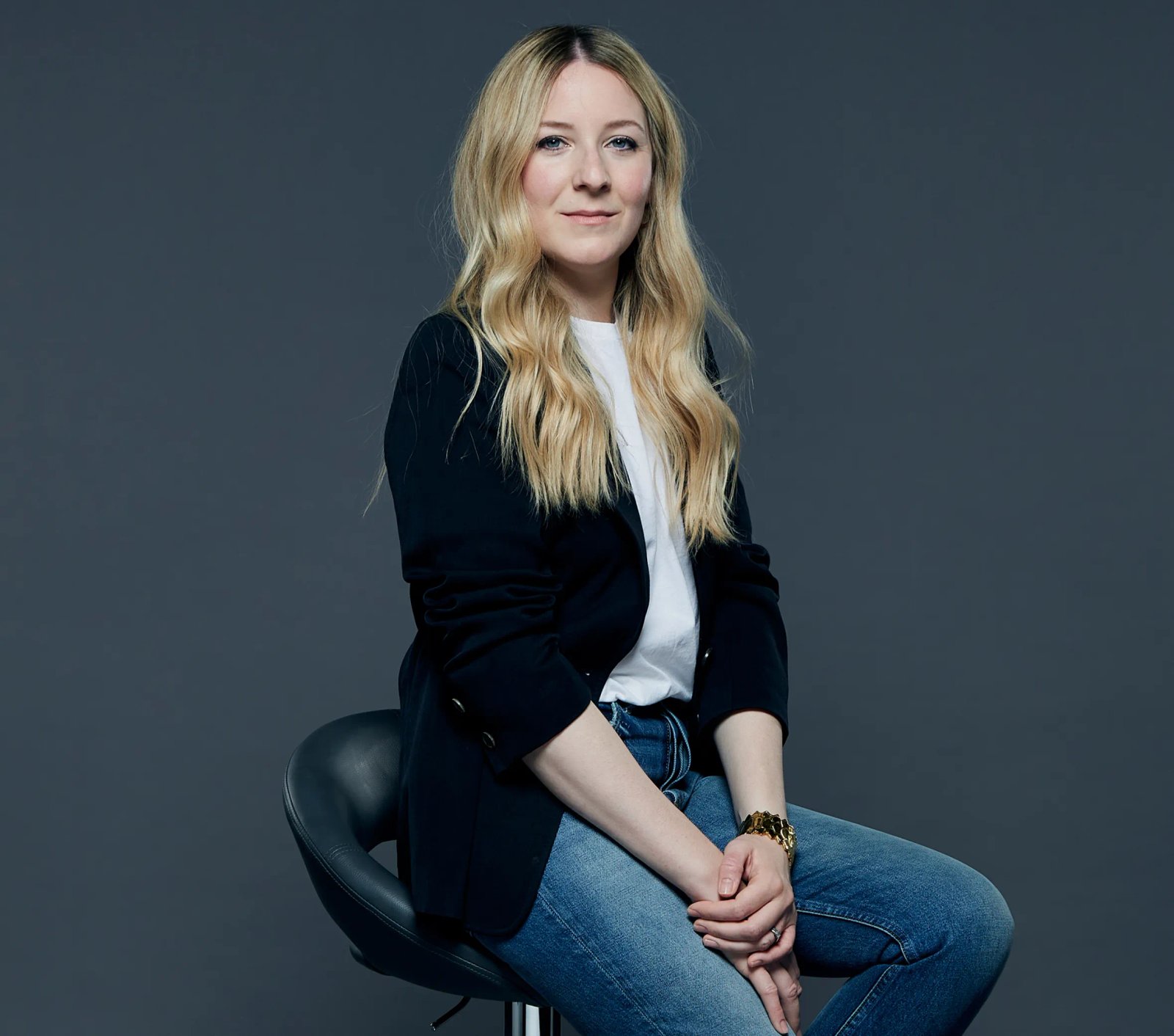
‘The motor components of juggling are fairly simple,” says Professor Tommy Wood, while steering apples through the air, “once you get the hang of it.” Fresh off a flight from Seattle, where he is associate professor of paediatrics and neuroscience at the University of Washington, Wood demonstrates the fundamentals of his new book, The Stimulated Mind: Future-Proof Your Brain from Dementia and Stay Sharp at Any Age. Keep learning, keep moving.
But this is no throwaway bumper sticker. Wood is an expert on what drives and what prevents neurodegeneration — and his book draws a detailed road map for creating and preserving what he calls “headspace”.
Dementia is the UK’s leading cause of death according to data from the Office for National Statistics. It accounted for more than one in ten deaths in 2024 and has recently overtaken cancer as the chronic disease we fear the most.
A Lancet Commission estimate that 45 per cent of dementia cases are preventable is too conservative and its list of 14 potential risk factors is too few, Wood says. He refers to a recent analysis of UK Biobank data that looked at many more risk factors, including sleep and nutrition, and calculated that the number of preventable cases could be as high as 73 per cent.
“There are dozens of risk factors with good evidence. Where are the links with oral health or late-life cognitive engagement? The downstream effects of being sedentary, of obesity, high blood pressure and diabetes are there, so why is physical inactivity not on the list?”
Wood questions why the accumulation of the proteins p-tau and amyloid is spoken of as if they are the only biomarkers for dementia. “Almost all the thoughts and actions that make us human rely on the electrical connections in the white matter.”
More than 50 per cent of a healthy brain is white matter, the billions of nerve fibres protected by a fatty sheath called myelin. “When it comes to cognitive changes there’s a better correlation with changes to white matter. The fact is some people have brains full of amyloid and p-tau and function just fine,” he says. “Where books about health go wrong is they focus on one thing — it’s movement, it’s diet or it’s cognitive stuff. It’s never about simple causality, it requires looking at the whole.”
Wood’s research methods are not wafty notions of holistic health. In his mid-twenties, as he was finishing medical school, his stepbrother was diagnosed with multiple sclerosis. His stepfather, then a professor of chemical engineering, corralled the family to examine thousands of pages of research to better understand the disease. They mapped the evidence using a causal loop model, an engineering tool used to visualise complex problems. “Engineers are really good at scaling up complex systems and seeing how all the different pieces interact,” he says.
This was his introduction to system dynamics. “It turned out not to be that useful for my brother, but it taught me how to distil vast amounts of scientific discovery, like the 2,000 research papers in the book, and see common pathways and potential interventions related to brain function and its decline.”
He used only strong evidence and human studies — the odd mention of a mouse study is prefaced with apology. From this he extracts his basic framework, called the 3-S Model, of what the brain needs: stimulation, supply and support.
Stimulation entails activating networks in the brain to maintain its health and function. Learn a language; play an instrument; read; juggle. Tax the brain in different ways to build new circuits.
Supply means ensuring that the stimulated network actually receives what it needs: oxygen, energy and nutrients via the bloodstream. Exercise sits at the centre of this, particularly the kind that builds and preserves muscle.
Then there is support. Feelings of safety, adequate sleep and good rest allow the brain time to adapt. Avoid anything that impairs that support process: chronic stress, smoking, air pollution, excessive drinking or any sort of chronic inflammatory condition. Certain things trigger multiple benefits. He uses the unscientific word “magic” to describe one activity that hits all three S’s: “Dancing! The studies show there’s nothing like it.”
Understanding how lifestyle affects health has been important to Wood since he was a young man. It was what made him decide, after achieving a BA in natural sciences at Cambridge, that he should do medicine. He aced the interview for Oxford with his “deep personal interest in how lifestyle factors such as exercise could dramatically improve health”.
However, “lifestyle medicine was not something the system nor doctors had time or space for,” he says. “I realised I’d be more useful looking at the bigger picture, improving the evidence base and driving change in other ways… What stood out on vascular wards and in elderly care was how much was preventable.”
During his career Wood has gained broad experience within neuroscience. Unusually his lab studies brain injury across the entire lifespan. He works with the Institute for Human and Machine Cognition in Florida, where he helps to develop technology that extends human capabilities for the US army. If that weren’t enough, he is also a scientific adviser to elite athletes, including Lewis Hamilton. “These people are jet-lagged nine months of the year. Most of my work is how do we maximise recovery.”
So what can lesser mortals do to protect brain health? Here are a few of Wood’s tips. “Just pick one thing today,” he says.
Sleep matters, but there are offsets for insomniacs who exercise
The brain’s glymphatic system kicks in during deep sleep, clearing waste products including proteins linked with neurodegeneration. Yes, sleep is critical, but short breaks during the day — a walk outside, anything that fully switches the brain off from work — also help. “You quickly rebound. It just takes a few minutes,” Wood explains. A 20–30 minute moderately intense aerobic exercise session can offset some effects of sleep loss. And supplementing the body’s natural stores of creatine “can offset some of the negative effects of sleep deprivation”, he says.
If you can’t cover nutrient needs take a supplement
Filling gaps in core nutrients for brain health with high-quality supplements in dosages based on good evidence — B vitamins, vitamin D, magnesium, iron, choline and omega-3s — comes with “a high likelihood of benefit and a low likelihood of risk”, says Wood. In a Cosmos study of more than 5,000 adults aged over 60, a daily multivitamin improved overall cognitive function and memory equivalent to being two years younger.
Find an exercise that hits the 3-S’s
Exercise that requires co-ordination, especially in a social setting, seems particularly beneficial. Randomised controlled trials show dancing beats most other types of exercise for activating multiple brain regions at once. “It’s associated with a lower risk of dementia and improvements in mental health,” Wood says. “Similar effects appear with table tennis, badminton, yoga, Pilates and martial arts — ideally the varieties that don’t involve getting kicked in the head.”

Think about stress in a new way
“As soon as you tell somebody about the risks associated with stress, they get stressed about being stressed.” Chronic stress affects physiology, but not always in the way people assume. Some studies suggest stress harms health mainly when you believe it is harmful or feel you have no control over it.
Embrace failure…
Parts of the brain function better when exposed to challenges involving failure or discomfort. The brain benefits from failure: “Error… opens the door to neuroplasticity.”
… And don’t beat yourself up
People who believe they do less — regardless of how much they actually do — die earlier and have worse cognitive function. If you constantly think you’re not doing enough, you may get less benefit from the things you are actually doing.
Make time for hard work and focus — and avoid endless multitasking
Structure your day so you can focus on a single rewarding piece of challenging work. “Musicians have younger-looking brains than non-musicians, but the effect is stronger in amateurs. Playing an instrument is harder for amateurs, so their brains get more stimulus.” Do it away from emails, social media, admin and endless Slack or Teams demands. Wood lists multiple ways that multitasking undermines brain health.
Don’t offload too much on AI
Wood uses AI for writing code but limits it elsewhere. Use AI to support cognitive stimulus rather than replace thinking. “Every day I receive emails from colleagues clearly written by a chatbot,” he says. “More scientists are using AI to design experiments, analyse data and write research papers. When this happens, it’s like you can see the individual’s skills decreasing in real time.”
Life isn’t about survival of the fittest. Social connection is important
An individualist society is a mismatch for human biology. We are physiologically designed to interact with and help others. In The Descent of Man Charles Darwin argued that societies with the most sympathetic individuals would thrive. This prosocial behaviour, which reduces the harm of stress, counts for pets as well, Wood claims.
Never retire, never stop learning
Human physiology is not designed for retirement. “Retire if you like but replace work with similarly challenging activities,” Wood advises. “Cognitive decline does not accelerate with age for most people; it accelerates with retirement.”
Lactate supports neuroplasticity
The brain mainly runs on glucose or fat-derived ketones. But intense anaerobic exercise releases a fuel source called lactate, which in turn switches on brain-derived neurotrophic factor that supports neuron growth, survival and plasticity. Wood travels with restriction bands that mimic the oxygen-deprived benefits of intense exercise. “They’re widely used in Japan with frail individuals or people in rehab because you don’t have to lift heavy weights, you don’t even have to leave your bed.”
Leg strength for brain strength
Muscle strength matters, and it’s especially important where that muscle is. There is a strong correlation between leg-muscle density, good cognitive health and lower dementia risk, particularly in women.
Ignore prescriptive diets and focus instead on nutrient density
The brain wants energy. Most diets claiming health benefits follow the same principle: reduce energy density and increase nutrient density. Increasing fibre, water, fat and protein improves satiety across everything from ketogenic diets to whole-food plant-based regimes. Choose a diet that improves quality overall and that you can stick with.

But some foods really ‘pack a wallop’
Wood isn’t keen on the idea of superfoods, but maximising nutrients by eating especially nutrient-dense foods makes sense: “Nothing fancy, things such as liver, blueberries, eggs, good-quality meats, leafy green veg, lentils, bananas, avocados.”
Some wins are easy
Use a water filter to remove PFAS (forever chemicals) and lead from mains water (even the most basic countertop jug with a carbon filter does the job, rising to more expensive reverse osmosis and ionising whole-house systems). Consider a portable air purifier with an HEPA filter for PFAS and a carbon filter for VOC (volatile organic compounds). Researchers at the Harvard TH Chan School of Public Health found improved indoor air quality increases an occupant’s cognitive function. Or simply “burp” your home daily, creating a strong draught by opening doors or windows for a few minutes to instantly upgrade the indoor air quality. And eat sardines for breakfast. A 90g tin provides the recommended daily intake of omega-3 fatty acids.
The Stimulated Mind: Future-Proof Your Brain from Dementia and Stay Sharp at Any Age by Tommy Wood is published on Mar 26 (Vermilion, £22)