The war with Iran has prompted the most dramatic fuel price increases the United States has seen in years.
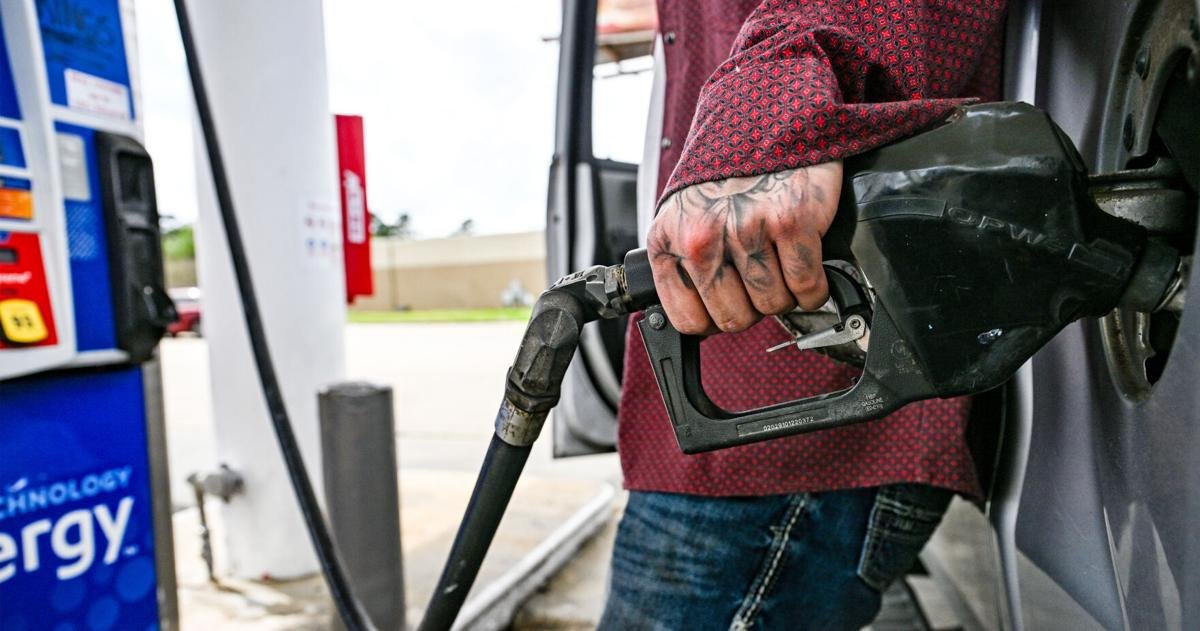
The price of diesel fuel on the Gulf Coast rose by nearly 29% during the first week in March, the largest single-week spike since the U.S. Energy Information Administration began tracking the data in 1994.
As of Tuesday, the price in Louisiana was averaging $4.83 per gallon, up from a prewar price of less than $3.49.
And experts say if Iran continues to blockade the Strait of Hormuz, through which about 20% of the world’s fossil fuel traditionally flows, the shock to the supply chain will likely intensify.

This image released by the Royal Thai Navy shows Thai cargo ship, Mayuree Naree, that was struck and set ablaze in the Strait of Hormuz Wednesday, March 11, 2026. (Royal Thai Navy via AP)
Louisiana is the nation’s second-largest petroleum refiner and one of the nation’s top 10 crude oil-producing states, two factors that keep prices lower than in many other states. Still, the nature of the global energy market means that it is not immune from disruptions to the supply chain on the other side of the world.
For this week’s One Big Question, we asked local business owners from different sectors how higher energy prices are affecting their day-to-day operations.
Answers have been edited for clarity and length.
Katie Jensen, CEO of Triton Stone, New Orleans-based importer and distributor
Stone is heavy and it’s imported from all over the world, so we rely on a lot of transportation. When fuel and energy prices increase, it increases ocean freight and it increases our trucking costs. And that’s just to get the stone into our warehouses.
On the other side, when we deliver the material to our customers, we’re dealing with increased transportation costs domestically. The challenge is that these costs ripple through the industry faster than we can adjust. It means constantly paying attention to where freight is going.
In some cases, we have to adjust pricing to keep our projects affordable for our customers, but it’s a very, very quick reaction. Diesel prices, in some of our markets, have gone up over 50%. So we have to consider charging delivery charges. Are we going to do a fuel surcharge? Is this going to be a week in time? Is it going to be a month? Is it going to be six months?
The uncertainty is a very big challenge to manage.
Troy Henry, managing partner of Henry Consulting, New Orleans owner of gas stations and convenience stores
It’s unfortunate that as the cost of fuel goes up, we essentially have to pass that on to our customers. And the higher the pricing is, the more of a pain it is for our customers.
At our gas stations, we don’t like to see increased prices because it alters demand, which alters the volume of fuel that we sell. In the other companies that I own, I see a similar ripple effect. Customers have less cash to buy other items and do other things.
So, it’s inflationary, dampens demand for the goods and services that my companies provide and is challenging for our customers.
Sinesio Canseco, founder of Canseco’s Markets, Metairie supermarket chain with six locations
We haven’t really seen the effects yet. In the past, when fuel prices have gone up, the transportation companies put a fee on bringing stuff to your store. It could be $10 a delivery or $20 a delivery — it depends how high the price of gas or diesel hits. Then, when the gas goes down, they take that charge off, and probably all your groceries will go up a little bit. That’s just the way that it works. I have not seen it happen yet, but I think in another week or two, you will start to see the prices go up a little bit.
Robby Trahan, co-owner, Falcon Rice Mill, Crowley
Higher fuel costs affect everything transported to and from the mill. It’s concerning, I’ll be honest. When you’re dealing with commodities, you have to make decisions that are so far out. You want things as steady as possible.
Paul Leleux, CEO, Acadian Kitchens, maker of Cajun’s Choice Premium Blend and Ragin’ Cajun products
Shipping costs haven’t increased yet, and shipping companies have not announced any surcharges yet. Hopefully, this is a short-term blip and it’ll be over before it becomes a problem.
It’s still very early and I think everybody is taking a wait-and-see approach. If this protracts over a longer term, it may have some downward impact.
Todd Waguespack, CEO of Level Homes, Baton Rouge-based homebuilder
I don’t think it’s going to directly affect our bottom line. My prediction is it will end before everybody starts passing the cost along. What drives cost increases in our business are interest rates and insurance. The media is blowing this out of proportion.
Adam Daigle contributed reporting for this story.