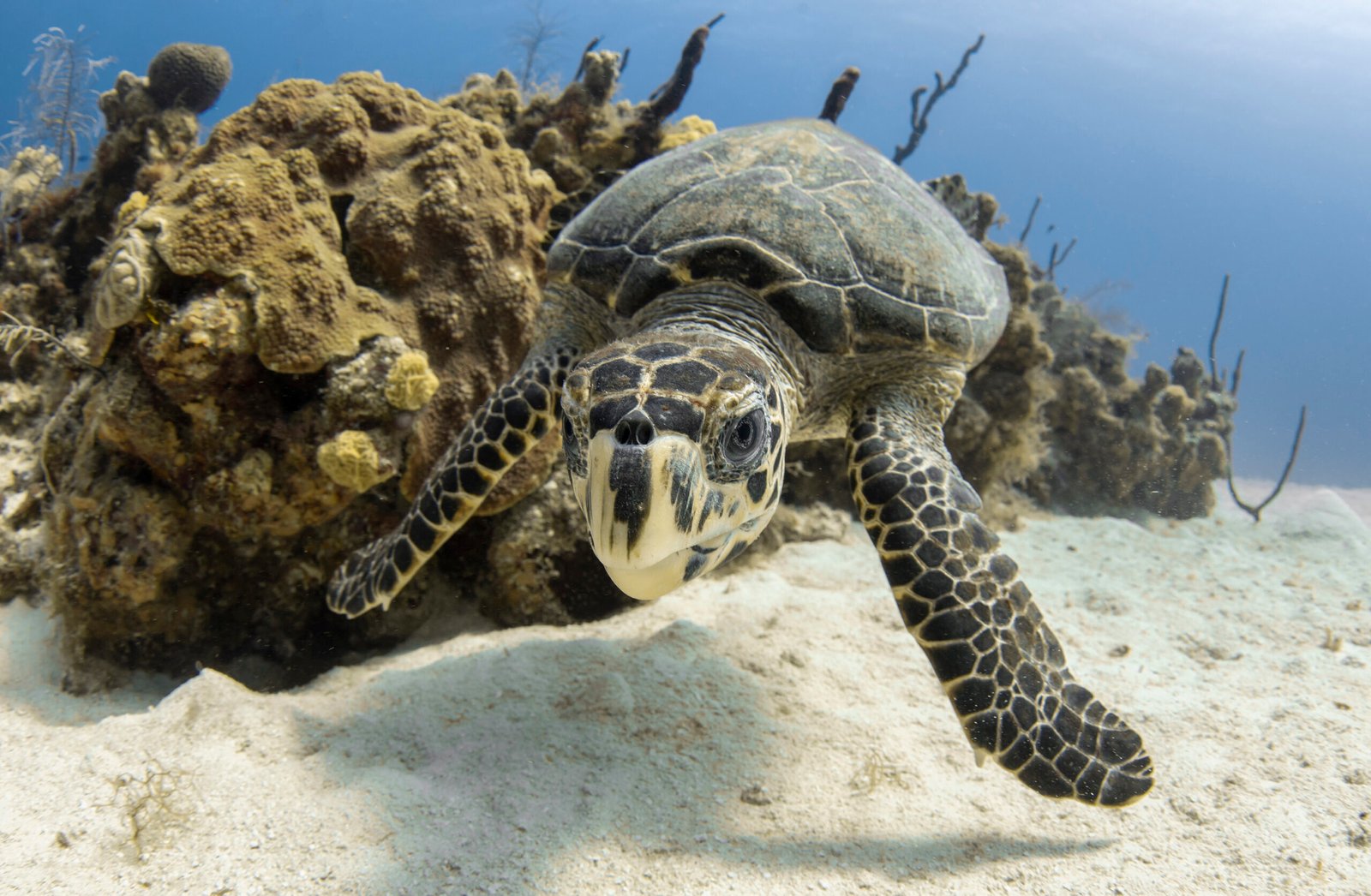
Sea turtles’ shells act as biological time capsules and record signs of major environmental changes in the ocean according to new research which has carbon dated the shells.
Scutes – the thick, hardened, shield-like plates that form a turtle’s shell – are made from keratin, the same material as a human’s hair.
This material grows in successive layers and captures chemical information about a turtle’s diet, and the environments they exist in, including how the marine environment is affecting their stress levels.
While researchers have used this “biological record keeping” to understand the ecology of these turtles, they have now applied radiocarbon techniques to historically contextualise these chemical records and trace how environmental changes affect the species.
The research was led by Bethan Linscott and Amy Wallace, in collaboration with researchers from the University of Florida, the University of Bristol, and Earth Sciences New Zealand.
To determine how quickly the layers form, they analysed shell samples from 24 stranded sea turtles, loggerheads (Caretta caretta) and green turtles (Chelonia mydas), collected along the Florida coast between 2019 and 2022.
The team removed small circular biopsies from the scutes and sliced them into ultra-thin sections approximately 50 microns thick.
Each layer was radiocarbon dated and compared with the mid-20th-century “bomb pulse,” a spike from nuclear weapons testing that serves as an environmental tracer in the marine environment.