Responding to the sentencing of nine police officers to death by the First Additional District and Sessions Court in Madurai for the 2020 custodial torture and killing of P. Jayaraj and P. Bennix, Aakar Patel, Amnesty International India’s Chair of Board, said:
“The court verdict marks a rare moment of accountability in India’s long struggle against police torture. The verdict acknowledges the brutality of a crime that shocked the nation. But this death penalty sentence is not justice – it is a deflection from the deeper reforms urgently required to ensure police oversight and accountability. Punishing a human rights violation with another does not end violence; it just perpetuates it.
“What is needed is structural reform. India must ratify the UN Convention against Torture, a long-pending step that would legally bind the country to international law and strengthen domestic accountability mechanisms. While ratification alone will not end torture, it is a critical part of a broader solution that should include a standalone anti-torture law, independent investigations, and strict enforcement of existing safeguards. India must also facilitate the visit of UN Special Rapporteur on Torture, whose requests have gone unanswered since 1999.
Punishing a human rights violation with another does not end violence; it just perpetuates it
Aakar Patel, Amnesty International India’s Chair of Board
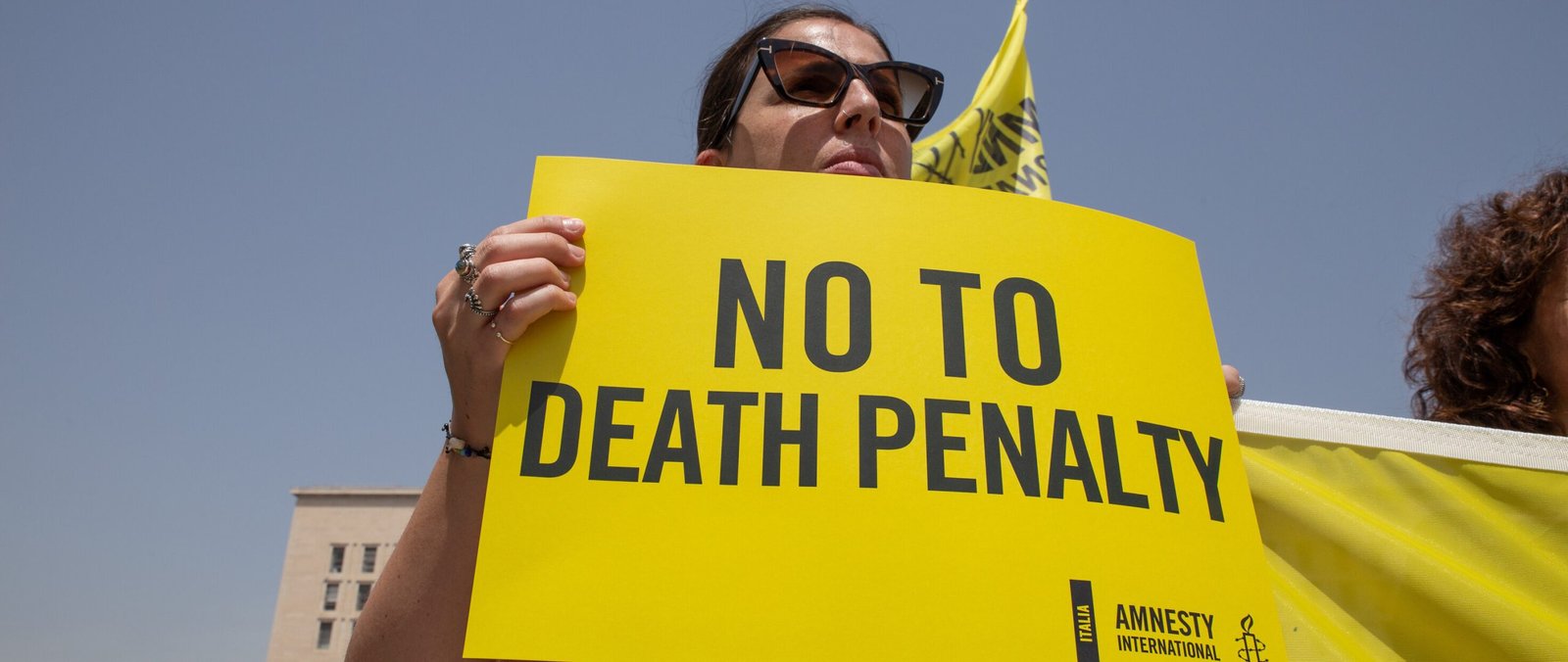
“The death penalty is the ultimate cruel, inhuman, and degrading punishment. It neither deters torture nor delivers systemic change. Justice for Jayaraj, Bennix and thousands of others lies in transforming the institutions that enabled their deaths and ensuring it will never happen again.”
Background
In addition to the death sentences, the court ordered the police officers to jointly pay ₹1.40 crore (USD 150,500) in compensation to the deceased’s family.
Jayaraj and his son Bennix died days after being taken into custody by the Sathankulam police in Tamil Nadu state in June 2020, allegedly for violating COVID-19 restrictions. They were subjected to torture including sexual violence in custody. Their deaths exposed systemic failures: routine torture, weak oversight, and a culture of impunity that persists despite existing legal safeguards.
According to National Crime Records Bureau (NCRB) data, between 1999 and 2023, over 2,200 people died in police custody in India. However, convictions remain exceptionally rare, with no convictions recorded in custodial death cases between 2018 and 2023.
India has established legal and institutional safeguards to ensure police accountability for torture in custody. The Criminal Procedure Code requires medical examination, production before a magistrate within 24 hours of arrest and judicial inquiries into custodial deaths. The National Human Rights Commission has investigative authority. Yet these safeguards are routinely ignored or weakly implemented.
Regardless of India’s non-ratification of UNCAT, prohibition of torture and other cruel, inhuman or degrading treatment or punishment is a norm of customary international law that applies to all people in all circumstances.
For more information on Amnesty International’s position on the death penalty, see here.