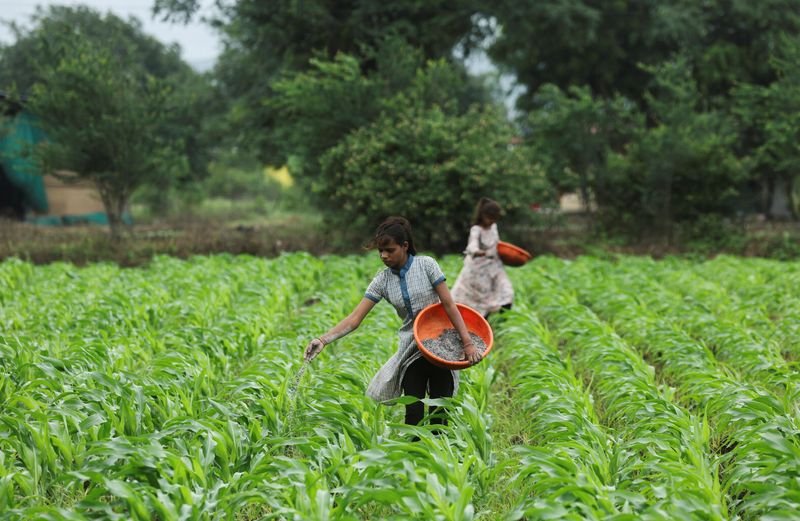
NEW DELHI, April 8 (Reuters) – India on Wednesday raised its nutrient-based subsidy for summer-sown crops by 11.6% from a year earlier to shield farmers from rising global fertiliser prices following the U.S.-Israeli war with Iran.
The cabinet approved a nutrient-based subsidy scheme worth 415.34 billion rupees ($4.50 billion) for the summer crop season, Information Minister Ashwini Vaishnaw said.
The government aims to ensure that farmers continue to get a 50-kg bag of diammonium phosphate (DAP) at the current price of 1,350 rupees despite the rally in global prices, Vaishnaw said.
India, where farming is a mainstay, imports fertilisers such as urea, DAP and muriate of potash, as well as liquefied natural gas, a key feedstock for urea production.
The Middle East accounts for roughly half of India’s DAP imports, with Saudi Arabia the largest supplier.
Global DAP prices have risen about 20% since the conflict in the Middle East disrupted fertiliser supplies from the region..
India issued a tender on Saturday to import 2.5 million metric tons of urea to shore up domestic supplies, which have tightened due to the conflict.
India imports urea and DAP mainly from Oman, Russia, China, Saudi Arabia and Morocco.
($1 = 92.3530 Indian rupees)
(Reporting by Rajendra Jadhav, C K Nayak and Hritam Mukherjee; Editing by YP Rajesh and Tasim Zahiid)