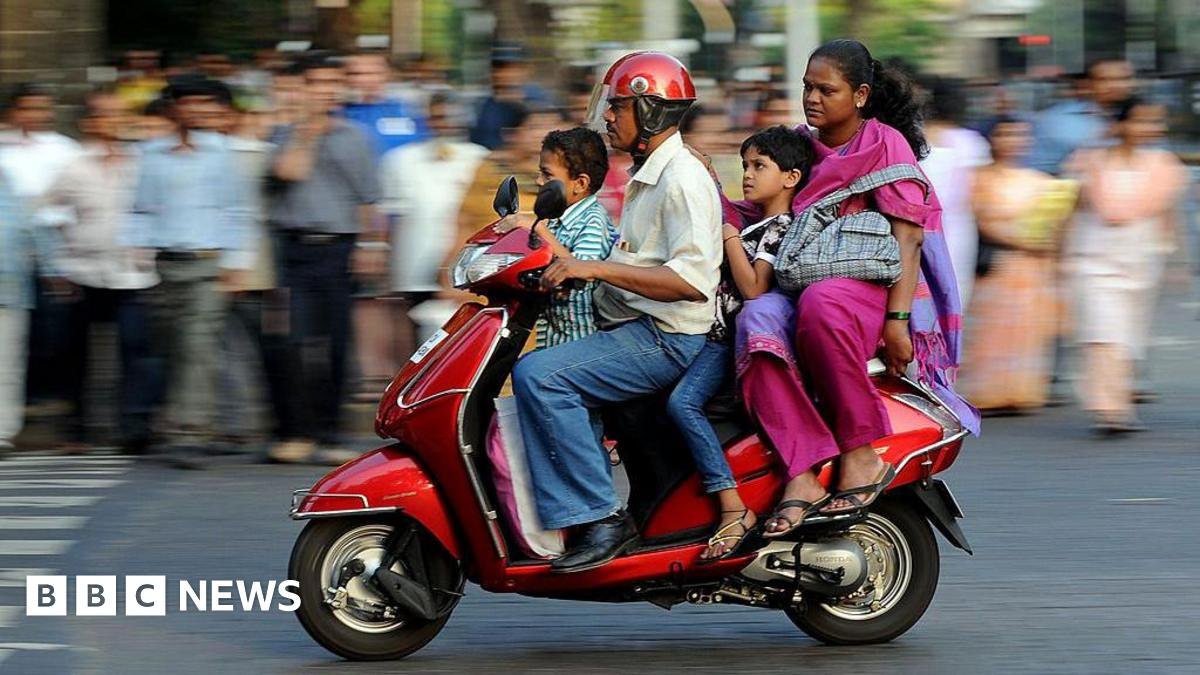
Even for those who find work, something has quietly gone wrong with the economics of middle-class life.
Over the past decade, the average middle-class income taxpayer’s annual income has grown by around 50,000 rupees – roughly the price of a decent smartphone. In isolation, that sounds like progress. Against the actual cost of living, it is a slow erosion.
Recent research shows a vegetarian thali (an Indian meal comprising several small dishes) now costs 11% more, external each year, an entry-level car or motorcycle rises by 7 to 8% annually, external and medical costs climb at 14%, external.
Our estimate – based on spending patterns for typical middle-class households across rent (10-13%), food (7-9%), healthcare (around 14%) and education (8-10%) – suggests that the true cost of living is doubling roughly every eight years, implying an effective inflation rate of about 9% for this group.
A family that lived comfortably on 1m rupees in 2016 would now need close to 2m a year.
Their salary, in most cases, has barely moved. The middle class is on a treadmill, and every year the belt speeds up.
The debt is real, and it is growing.
The gap between what people earn and what life costs has to be filled somehow. Increasingly, it is being filled with borrowed money. India’s non-housing household debt as a share of income now exceeds that of the United States and China.
Nearly half of all Indian families have taken personal loans; 67% of borrowers, external had their first loan before the age of 30. For those carrying debt, nearly 40% of annual, external income goes to servicing it.
This borrowing isn’t building anything. It is financing holidays, smartphones, school fees and hospital bills – consumption and survival, not investment.
Between 5% to 10% of retail borrowers, external are caught in what lenders call a debt trap: taking new loans to pay old ones, with no clear exit.