The UK Government has unveiled measures intended to accelerate housebuilding and infrastructure projects by changing how two of the country’s main environmental regulators operate.
New strategic policy statements (SPS) will give Natural England and the Environment Agency clearer direction to prioritise outcomes rather than procedures, ministers say, allowing regulators to make swifter decisions while remaining bound by environmental law.
The move is accompanied by a £100M fund, spread over three years, earmarked for extra specialist staff and upgraded digital systems aimed at speeding up environmental assessments.
A new Infrastructure Unit will be created to monitor major projects and resolve planning bottlenecks as they arise. The most intractable problems will be escalated to a Department for Environment, Food and Rural Affairs (Defra) Infrastructure Board for further oversight. Ministers also intend to convene a Development Industry Council in the spring to bring developers and government together to discuss practical planning solutions.
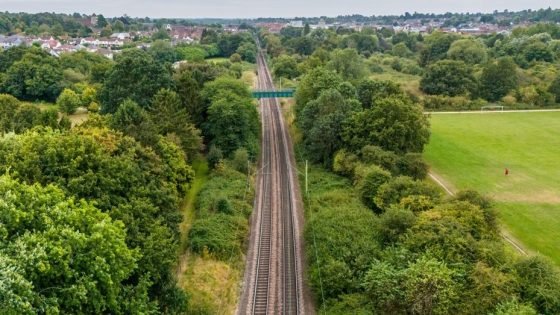
As a first test of the approach, the Environment Agency has been named the single Lead Environmental Regulator for the East West Rail project. That role is intended to replace a fragmented process in which developers deal separately with multiple regulatory bodies, and to coordinate advice from all relevant environmental authorities. East West Rail, intended to improve connections between Oxford and Cambridge and serve towns including Milton Keynes and Bedford, has previously been projected by government to support up to 100,000 new homes and unlock about £6.7bn of economic growth.
Defra officials say the SPS introduce “constrained discretion”, empowering regulators to apply professional judgement in place-based decisions, including those tied to planning approvals, while ensuring compliance with environmental protections. Ministers have pointed to pilots of the model on other schemes, Natural England’s role at the Lower Thames Crossing and a similar arrangement at Falmouth Docks, as evidence the approach can reduce delays; Natural England’s pilot for the Thames crossing has been extended until September 2026.
The package of reforms is explicitly linked to the government’s broader ambitions to build 1.5M homes and to fast-track 150 development consent orders (DCOs) on major infrastructure projects within this Parliament. Proponents argue faster regulatory decisions will cut costs and deliver infrastructure and housing more quickly.
Critics of deregulation and streamlining have warned, however, that accelerating decision-making can risk weaker environmental scrutiny. Environmental groups and some local campaigners have previously expressed concern that prioritising speed over process may reduce opportunities for public consultation or diminish the thoroughness of habitat and biodiversity assessments.
Environment secretary Emma Reynolds said: “Our regulators do vital work protecting the environment we all depend on. These Strategic Policy Statements give them a clear mandate to deliver on our twin missions – economic growth and nature recovery.
“Having one Lead Environmental Regulator in charge speeds up approvals and helps projects like East West Rail to progress at pace, without compromising our ironclad commitment to the environment. This is a win-win situation for jobs, prosperity and nature.
“Today marks a decisive shift in our drive to make regulation work for the people of Britain, as we build more homes, restore nature and strengthen our communities in a decade of national renewal.”
Environment Agency chief executive Philip Duffy said: “These measures will accelerate the Environment Agency’s ongoing shift from process-driven to outcomes-focused regulation, helping to unblock development while protecting the environment we all rely on.
“We will play a key role as Lead Environment Regulator for East West Rail, bringing developers and regulators together to prevent environmental damage and streamline approvals.”
Natural England chief executive Marian Spain said: “The clear direction set out by government today directly aligns with our new corporate strategy, which sets how we are going further and faster to recover nature to support growth, public health and food security.
“Natural England’s work as Lead Environmental Regulator for the Lower Thames Crossing is already paying dividends, enabling faster decision-making for one of the greenest roads ever. We look forward to seeing similar results for the Environment Agency on the East West Rail project.”
David Hughes, chief executive officer, East West Rail, said: “We warmly welcome the appointment of a Lead Environmental Regulator for East West Rail. This single point of contact will make a huge difference, as it will ensure that key decisions can be made efficiently and effectively. Crucially, this will deliver momentum for the construction of the railway, helping us deliver infrastructure that works for nature and communities, allowing the region to feel the economic and social benefits of East West Rail far sooner than would have otherwise been the case.”
Like what you’ve read? To receive New Civil Engineer’s daily and weekly newsletters click here.