Stocks roared higher Wednesday, after President Donald Trump announced a two-week ceasefire between the United States and Iran, bringing a pause to the war that started more than a month ago.
Subscribe to read this story ad-free
Get unlimited access to ad-free articles and exclusive content.

Official statements from Washington and Tehran, however, did not offer a clear picture of what the future of shipping traffic in the Strait of Hormuz would look like. Despite the unanswered questions and conflicting comments throughout the afternoon, markets had an overwhelmingly positive response to the news.
The S&P 500 closed up 2.5%. The Nasdaq Composite ended higher by 2.8%, the Dow jumped 1,325 points and the Russell 2000 surged 2.9%.
It was the Dow’s single largest one-day percentage gain since April 2025.
Strategists on JPMorgan Chase’s trading desk said the S&P 500 could rise even further “as euphoria returns to markets.”
“Assuming that this is not a feint from any of the parties, the market is likely to treat this as a de facto end of the conflict despite the economic damage that is still coming across all regions,” they wrote.
Other experts cautioned that investors and traders could be getting ahead of themselves.
“We are not out of the woods yet,” Krishna Guha, Evercore vice chairman and head of economics, wrote in a memo Wednesday morning. “The ceasefire could fall apart. There will still be an initial inflation shock.”
Not long after trading began Wednesday, an Iranian semiofficial news agency reported that traffic was suspended in the Strait of Hormuz in response to Israel’s attacks on Lebanon. The news did not slow down the drop in oil prices, however.
Neither did an announcement from the speaker of Iran’s parliament, who said around 2:15 p.m. ET on X that the U.S. had violated the ceasefire.
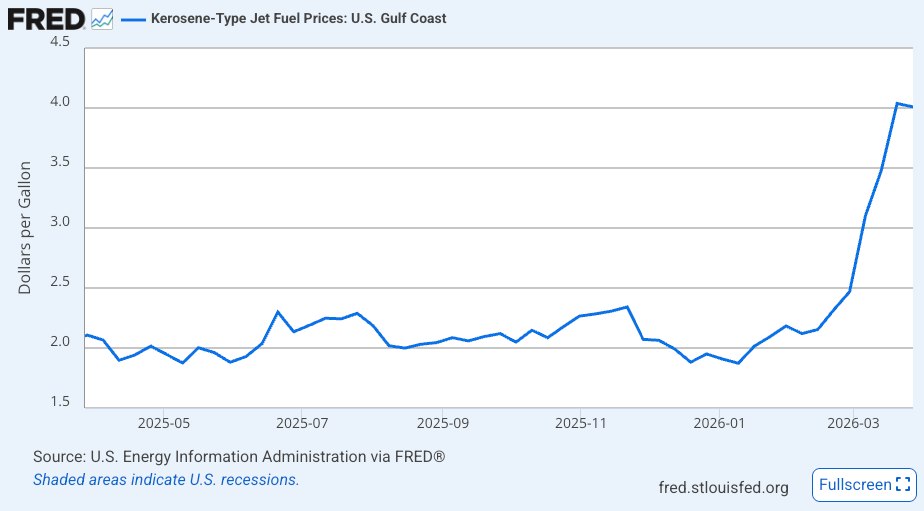
U.S. crude oil closed down 16.4% to $94.41 per barrel, its largest one-day decline since 2020.
International Brent crude oil also tumbled 13.3% to $94.75.

But whether oil tankers will decide to transit the strait — even if Iran says some are being granted safe passage — is far from assured.
The decision rests in part on whether the ships can secure maritime insurance, a crucial financial hedge for valuable cargo on the high seas.
On Wednesday, only four ships passed through the strait, according to S&P Global Market Intelligence. That was the fewest of the week so far, after 11 ships passed through Tuesday and nine passed Monday. However, it’s possible that the count is incomplete because of ships’ turning off their transponders to try to transit the critical waterway undetected.
“Time will tell whether it is a pause or a peace but, in the meantime, it is highly unlikely that trade into the Gulf will simply resume,” wrote Neil Roberts, head of the Lloyd’s Market Association.
“The region remains at heightened risk with none of the underlying tensions resolved,” he added. The Lloyd’s of London market is the global hub for maritime and shipping insurance.
But while oil prices may be falling, gas prices will take longer to reflect the moves.
In some parts of the U.S., “these big drops today don’t get locked in until this evening,” GasBuddy analyst Patrick De Haan wrote on X. He predicted that “prices may begin to ease” in the next 36 hours and that the cost of a gallon of gas could fall 1 to 3 cents per day by the weekend.
Since the war started, unleaded gas prices have risen more than $1.20 per gallon, from $2.94 to $4.16 as of Wednesday morning, according to GasBuddy data.
On Wednesday afternoon, the Fed released the minutes from its most recent meeting on March 17 and 18. Fed officials warned that a “protracted conflict in the Middle East could lead to a further softening in labor market conditions, which could warrant additional rate cuts, as substantially higher oil prices could reduce households’ purchasing power,” the newly released minutes showed.