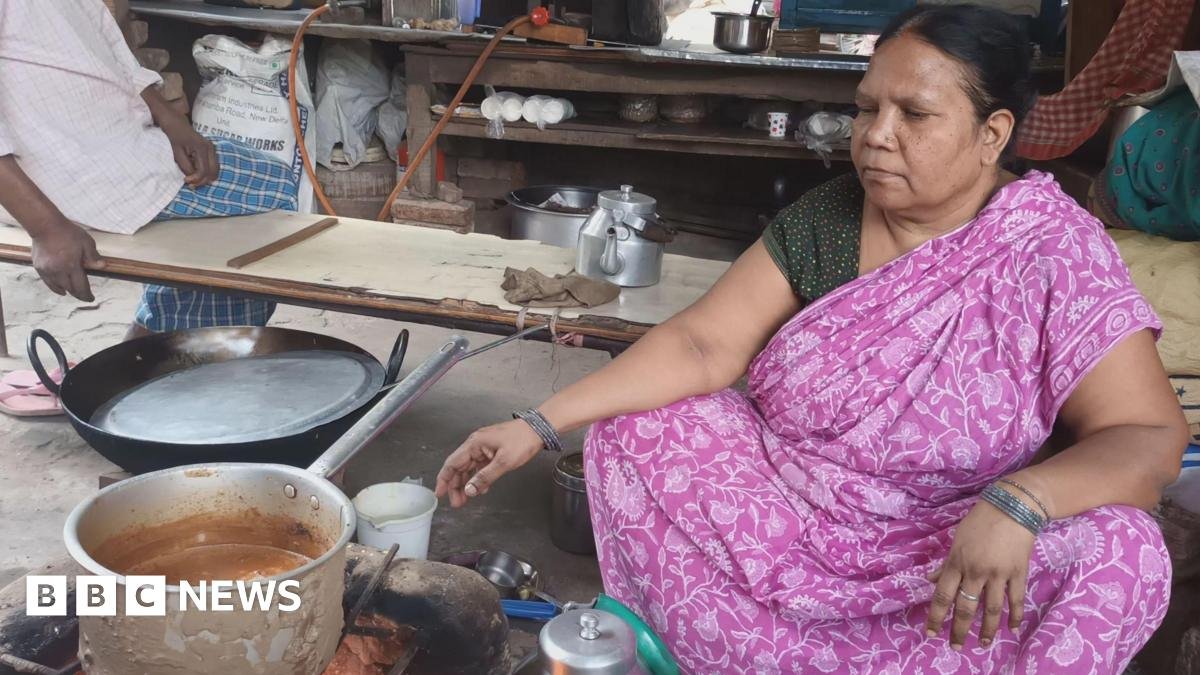
Every morning, Shakuntala Devi and Shakiba Bibi – neighbours at a slum in India’s capital Delhi – leave their homes, walking from one shop to another in search of a cooking gas cylinder.
For three weeks now, they have returned empty handed.
“If it continues like this for a few more days, we will run out of gas in our kitchens and have to return to our villages,” Shakuntala says.
Shakuntala, Shakiba and many of their neighbours who join them in the cylinder hunt work as domestic helpers in middle-class neighbourhoods near the slum, earning around 15,000 rupees (£122; $161) a month. Their families migrated to Delhi from villages in neighbouring Uttar Pradesh and eastern Bihar state over the past decade.
The disruption to global shipments caused by the war in the Middle East has strained cooking gas supplies in India. Many people are finding it difficult to access Liquefied Petroleum Gas (LPG) cylinders, the most widely used cooking fuel in the country.
India depends heavily on LPG imports, much of which reach the country through the Strait of Hormuz, a narrow, critical shipping route affected by the conflict. While Iran is now allowing Indian vessels to pass, the situation is still uncertain and several ships are waiting near the strait to get through.
The government says there is no shortage of LPG, external, that it is ramping up domestic production and securing more supplies from countries including the US, Russia and Australia. It has also asked people to stop “panic ordering” of gas cylinders.
But migrant workers in big cities, many of whom depend on informal networks to buy cooking gas, say they are worried.
The BBC spoke to nearly 30 migrant workers in Delhi who said they would have to return to their villages if the situation did not improve.
News reports and visuals of crowded railway stations and bus terminals suggest the situation is similar in cities such as Mumbai, Bengaluru, Chennai and Hyderabad, where large numbers of migrant workers live and work. In some areas, shutdowns in industries such as textiles, jewellery and ceramics have also forced workers to return home.
People who have left say they are watching the situation closely to decide when they can return.
“There was no cooking gas available. Even local restaurants were shut. I was struggling to eat two meals a day, so I had to return home,” Ashok Yadav told the BBC over the phone from his village in Uttar Pradesh’s Ayodhya town. He had worked in a catering firm in Delhi.
Last month, the government asked refineries to prioritise gas distribution for households over businesses. This forced many small restaurants to trim their menus or temporarily shut down as they could not afford commercial gas cylinders.
The shortage is also pushing some towards more polluting fuels such as firewood, kerosene and coal.