Q. I recently got zapped by a community volunteer with a speed gun. Are these people able to get drivers’ addresses from the DVLA? If so, will I get a warning letter and will it be from the police? Are there any consequences and are they allowed to retain my details under data protection?
RC, Crowborough
A. Community Speedwatch (CSW) is a nationwide scheme operated in conjunction with most police forces where trained volunteers use properly calibrated “speed guns” to measure the speed of motorists. However, their activities do not lead directly to prosecution of speeding drivers; the aim is awareness and education. Speeding drivers can only be prosecuted if they are detected by a police officer or police staff. The CSW teams simply report the registration number, make and colour of speeding vehicles to the police, who will then send a warning letter, along with advice on sticking to the speed limit, to the registered keeper. The volunteers do not have access to the names of registered keepers or drivers, they submit the completed forms to the police after the session. They don’t keep their own records and must destroy any notes they may have taken during the session.
Part of the training of CSW volunteers stresses that they must not “disclose any knowledge or details to other people about the vehicles or drivers recorded”. (They are local schemes, so it is possible that a volunteer will recognise a driver.) Another strict rule is that they report all incidences of speeding, without exception. So, there is no favourable treatment for family members, friends, other CSW volunteers or anyone else. Even emergency vehicles (fire, police and ambulance) have to be reported if they are speeding, so that the circumstances can be checked to make sure the excess speed was warranted.
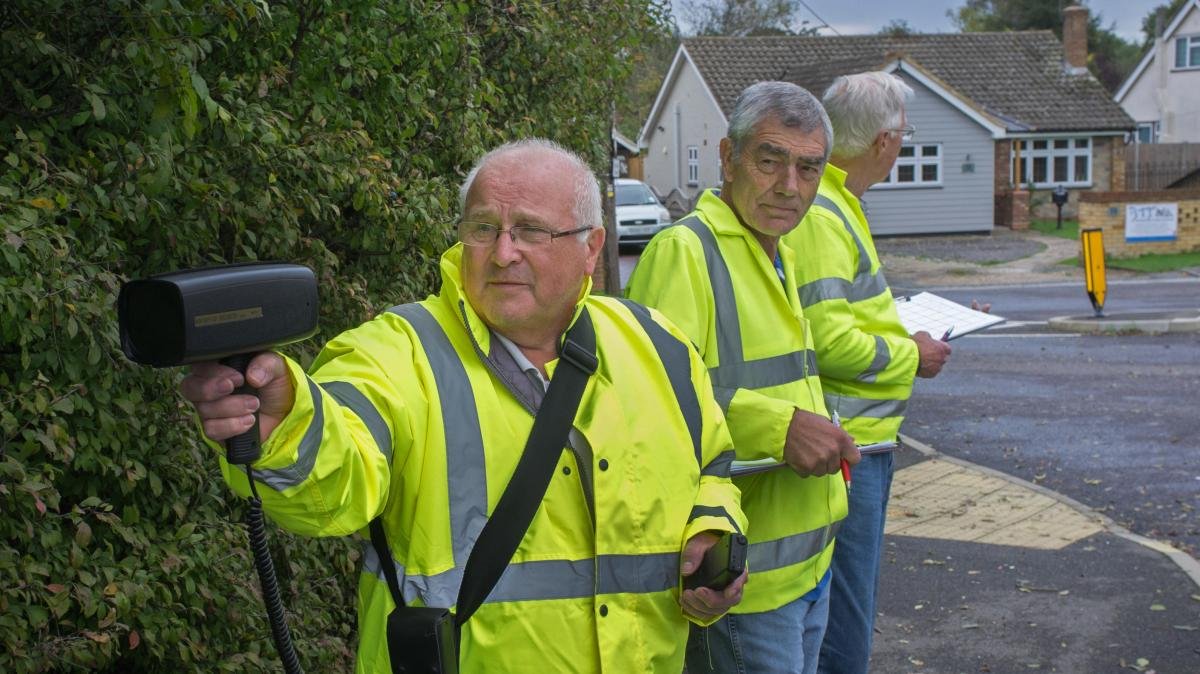
A CSW session comprises two or three volunteers, usually wearing hi-vis jackets or waistcoats, at a location previously agreed with the police. Vehicle speeds are measured using police-issued equipment and speeding is usually recorded if it meets the threshold of “10 per cent plus 2”, which most people are aware of. In other words, cars are reported for 24mph or more in a 20mph limit, 35 or over in a 30 limit and 46 or more for a 40mph limit.
• My car’s steering feels heavier after repairs. Can I fix it myself?
The police access the details of the registered keeper from the data held by DVLA and they do keep records of those speeding. The results of CSW reports show that well over 90 per cent of cars are not detected a second time, which suggests that people stick to the speed limit more rigorously once they have been warned — which is the whole point of the scheme. However, repeat offenders and excess speeders (more than 50 per cent over the speed limit) may be targeted by the police for closer scrutiny and the reports of the CSW team can be included in evidence for a prosecution.
Locations that have high levels of speeding identified by CSW teams may be considered for speed reduction measures such as better signage, speed humps, visits by mobile camera vans or the installation a fixed speed camera.
CSW teams only operate during the hours of daylight and only where the speed limit is 20, 30 or 40 miles per hour. They check the accuracy of the radar speed guns every time they’re used, using a tuning fork supplied with the gun.
Why a tuning fork? Well, a radar gun (or speed detection device, to use the official name) works by sending out a radio wave, then measures the change in frequency of the wave when it’s reflected from a moving vehicle (the Doppler effect that you may remember from school science lessons). The vibrating tines of a tuning fork reflect radio waves in a way that mimics those from a vehicle moving at a specific speed. So, a tuning fork of a particular note will mimic waves from a car at exactly 30mph, another note will mimic 40 mph and so on. The CSW teams strike the tuning fork, hold itin front of the speed gun and check that the gun shows the correct speed. Simple, reliable and easy to use, so that, in theory at least, volunteers and the rest of us can be reassured that they are recording accurate speeds.
Tim Shallcross, independent expert
Post your motoring questions below or send to carclinic@sunday-times.co.uk