Sen’s personal life carried its own burdens.
While in Nepal she adopted a baby girl, Bhutu, whose mother had died in childbirth. A single mother during a period largely unforgiving of female independence, Sen balanced professional rigour with private responsibility within the confines of traditional Bengali society. But later, in Calcutta, the child died after a debilitating illness, a devastating personal loss.
A few objects from Sen’s life survive today, preserved by her biographer.
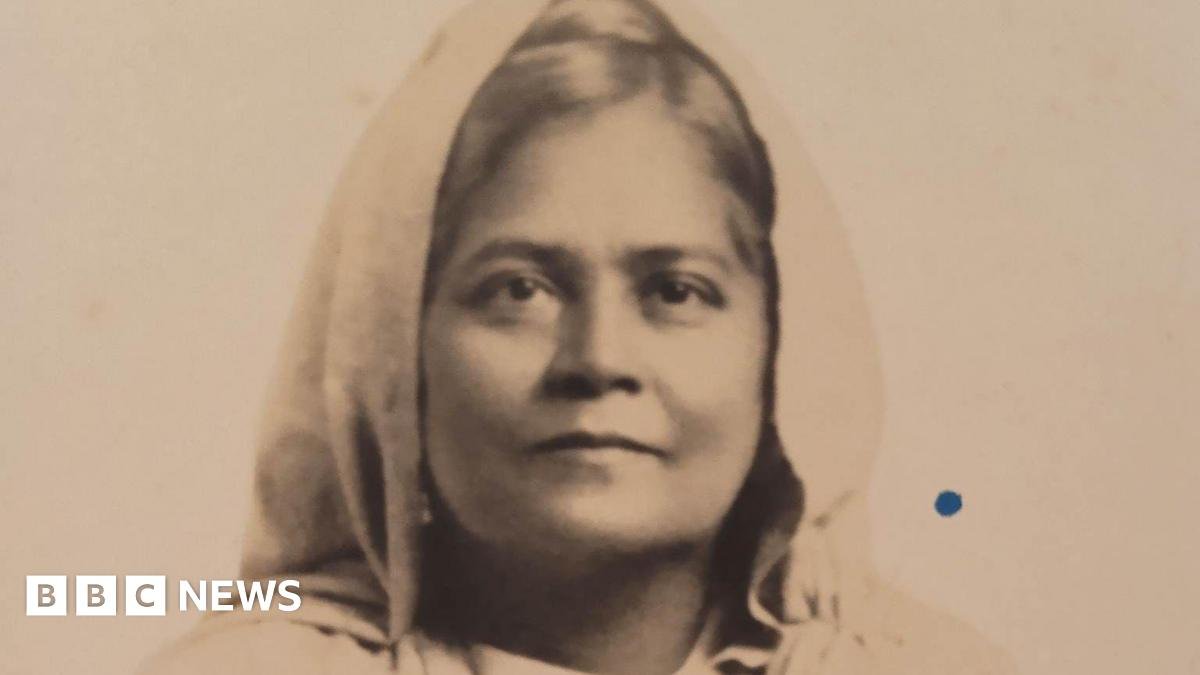
Among them are the watch given to her by Nepal’s king – which she wore pinned to her sari – a Tibetan tsog spoon gifted in recognition of her medical service and a delicate blue-wing brooch she purchased in London. Only two grainy black-and-white photographs of her remain, now submitted to the Glasgow College archives.
Chakraverti’s portrait is of a woman shaped equally by ambition and sorrow – a doctor who confronted racism in pre-independence India and sexism in Britain, yet remained steadfast in her vocation.
“In celebrating Dr Jamini Sen today,” Chakraverti writes, “we honour not just a doctor but a trailblazer whose courage laid the groundwork for generations of women in medicine both in India, in Britain, and beyond.”
Sen died in 1932. For decades, her name receded into obscurity. In 2024, more than a century after her historic Fellowship, her portrait was finally unveiled in Glasgow – a symbolic restoration of a life that had quietly bent history’s arc.
Her story reminds us that the making of modern medicine was never solely a European tale, nor exclusively a male one.
It was also written in pinned saris, palace wards, epidemic outposts and examination halls where a determined Bengali woman refused to step aside.