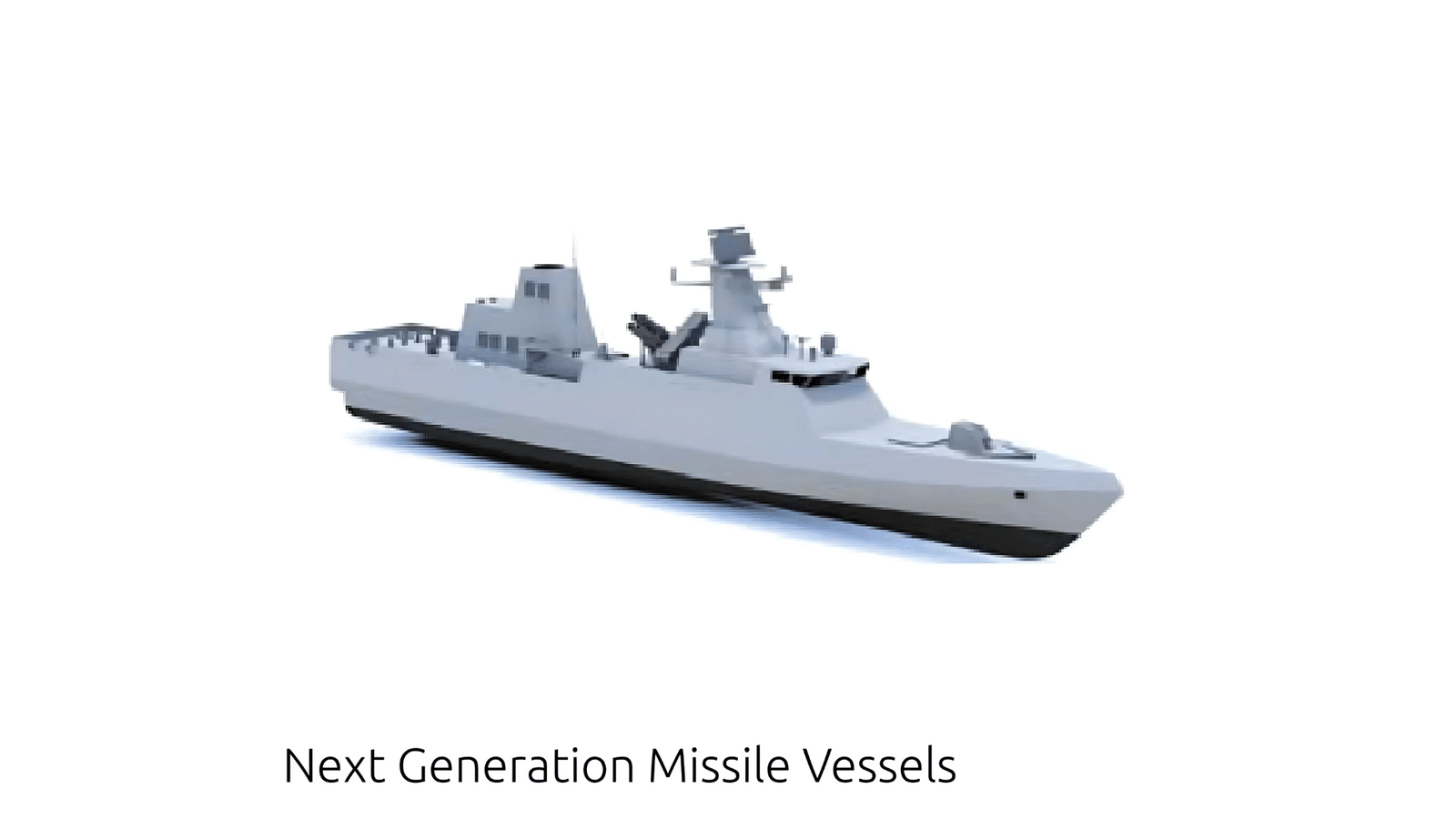
Kongsberg Maritime has signed a contract to supply 18 large Kamewa waterjets for the Indian Navy’s Next Generation Missile Vessel (NGMV) programme.
Kongsberg Maritime press release:
Kongsberg Maritime has signed a contract to supply 18 large Kamewa waterjets for the Indian Navy’s Next Generation Missile Vessel (NGMV) programme. Each of the vessels will feature waterjets, delivering exceptional speed and manoeuvrability for high-performance naval operations.
The NGMV fleet is being built by Cochin Shipyard Limited and will play a critical role in India’s maritime defence strategy.
This contract marks Kongsberg Maritime’s largest single waterjet order to date and signals a strong return to large waterjet manufacturing after a relatively quiet period over the past decade.
A spokesperson for Cochin Shipyard Limited, said: “We are pleased to collaborate with Kongsberg Maritime for the supply of the waterjet propulsion system for the Naval project currently under construction at CSL for the Indian Navy. Kongsberg Maritime has been a valued and reliable partner to CSL across several commercial projects in the past, and the association has been marked by strong technical cooperation and mutual confidence.
“CSL looks forward to Kongsberg Maritime delivering a high-quality and reliable system in line with the exacting standards required for this important project and to their continued support in achieving an important milestone for CSL.”
Anders Valkeinen, Vice President, High-Speed Craft at Kongsberg Maritime, said:
“This is a milestone project for Kongsberg Maritime and a testament to the trust placed in our waterjet technology for demanding naval applications. Our Kamewa waterjets will deliver the speed, agility, and reliability required for these advanced missile vessels.”
Anette Holte, Country Manager – India at Kongsberg Maritime, added: “We value our long-standing relationship with the Indian Navy and Cochin Shipyard and are committed to supporting India’s naval ambitions. This contract underlines our dedication to growing our presence in India and delivering world-class technology for critical defence programmes.”
Delivery of the waterjets will align with the NGMV construction schedule at Cochin Shipyard.
–End–
Naval News comments:
Cochin Shipyard Limited (CSL) had signed a ₹9804 crore (over $1 billion) contract for construction and supply of six Next Generation Missile Vessels (NGMV) for the Indian Navy in March 2023. The delivery of the first ship will be in March 2027. Steel cutting ceremony of the first ship was held in December 2024. In October 2024, GE Aerospace had announced the selection of its LM2500 gas turbine engines for the NGMV program. These will be assembled in India by HAL.
The NGMV will be the largest waterjet propelled craft in the Indian Navy. The initial RFI had mandated that the NGMV be equipped with minimum eight surface to surface missiles and a short range SAM system. In September 2024, Bharat Electronics Limited (BEL) had secured an order worth ₹850 crores (around $100 million) from CSL for supply of a DRDO developed X-band MFR. This is intended to be fitted to the NGMV, which is likely to be the first new class of vessels to be fitted with VLSRSAM.
Notably the image of NGMV used by Kongsberg in the press release, first seen publicly in a CSL annual report, does not match the final design of the NGMV. Images released by CSL during the steel cutting ceremony of the first ship as well as scaled models of NGMV by BEL showcasing the MFR differ significantly from this image.


Inclined missile launchers are placed in the bow, with the missile of choice expected to be BrahMos. Only four launch tubes are present along with a 76mm SRGM. The model shown by BEL also includes two fire control radars.
NGMV is expected to replace smaller and older missile craft as well as corvettes. However, the class also symbolizes India’s dependence on foreign firms for propulsion systems. Attempts are being made to develop several indigenous marine propulsion systems.