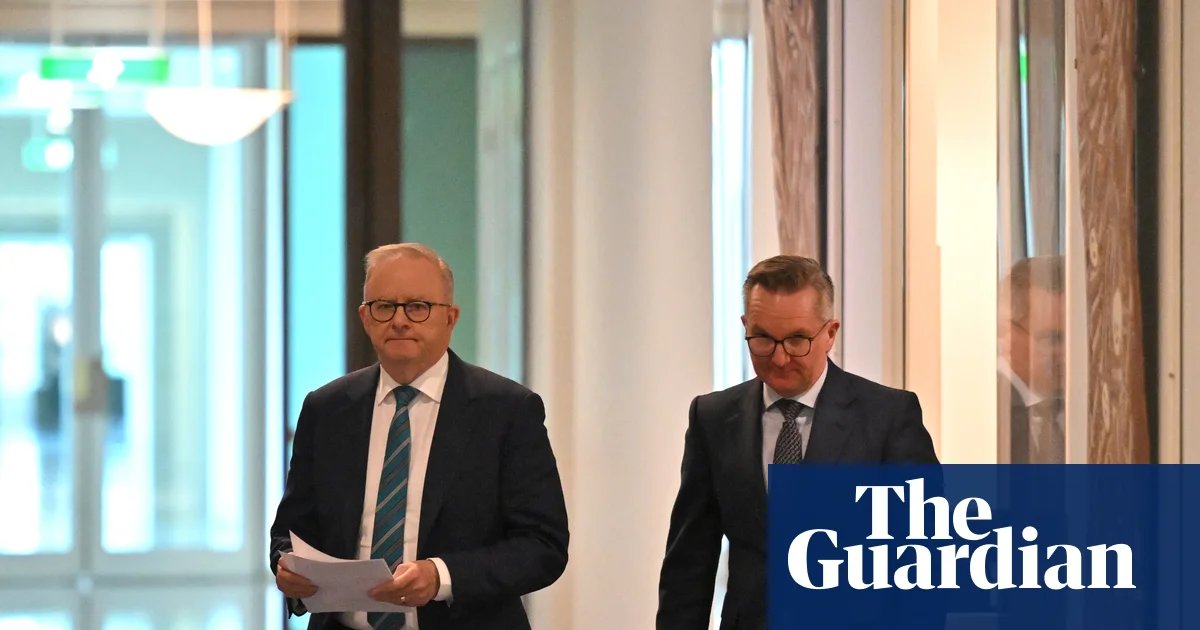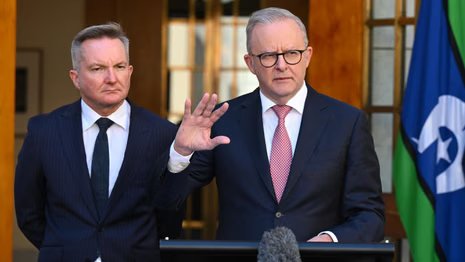
Anthony Albanese has slashed the fuel excise in half in a move which will save motorists 26 cents a litre, and encouraged people to take public transport, after the national cabinet agreed to a plan to manage the petrol crisis.
Following a meeting of state and federal leaders on Monday, leaders also agreed to reduce the heavy vehicle road user charge to zero for three months, in a bid to support truck drivers.
A four-stage national fuel security plan flagged the potential for state and territory governments to implement “practical measures to reduce fuel demand”, but does not explicitly forecast petrol rationing. Albanese said the government would announce further measures on “supply chain challenges” in coming days.
The fuel excise cut will come into force from Wednesday 1 April, and run until 30 June. The excise is now set at 52.6 cents a litre, and will be cut to 26.3 cents.
“We are making fuel cheaper today because we understand that Australians are under serious pressure,” Albanese said.
The fuel excise cut and reducing the heavy vehicle road user charge will cost $2.55bn, the treasurer, Jim Chalmers, said. The opposition leader, Angus Taylor, last week called for halving the excise, which he costed at $1.5bn alone; last Tuesday, Chalmers had told parliament that cutting the excise was “not something that we have been considering”.
Economists and analysis have shown, including when former Liberal leader Peter Dutton suggested it at the last election, that halving the fuel excise would be poorly targeted and largely benefit wealthier people. Cheaper petrol could even increase demand and put pressure on inflation.
Chalmers said on Monday that he had written to the Australian Competition and Consumer Commission, asking that they monitor whether petrol stations were reducing their prices in line with the fuel excise cut. The government claims the excise cut would reduce the cost of a 65 litre tank of fuel by almost $19.
National cabinet on Monday agreed to a national fuel security plan, with four levels: “plan and prepare”; “keeping Australia moving”, which is the current setting; “taking targeted action”; and “protecting critical services for all Australians”.
At the current level, the federal government would be focused on working with trading partners to secure supply, underwrite additional supplies of fuel and urea, and manage the national fuel reserve including ensuring “equity” in how those supplies are distributed.
States would move to collect timely data, consider regulatory reforms like allowing trucks to work longer hours or have longer trailers, and monitor impacts on affected industries.
Australians were encouraged to “only buy the fuel you need” and to make “voluntary choices to use less and avoid the impact of higher fuel prices,” Albanese said.
At higher levels of the plan, governments would “adopt voluntary practical measures to limit fuel use” including looking for “practical measures to help you reduce your use”.
Albanese said Australia was “substantially away” from moving from the current level two to level three of the plan.
At level three, Australians will be told “we will need to play our part to help fuel get to where it’s needed most”, and states would look to “a national approach for practical measures to reduce fuel demand”.
At level four, the plan states that ongoing supply disruptions would “require government action to ensure critical users are protected, and the economy remains open and operating”.
On Monday, Albanese said Australians should now consider public transport to ease demand on fuel .
“We really want to encourage Australians who can to take public transport, to help save fuel for the areas and industries that need it, and I note a couple of the jurisdictions have taken action to reduce public transport fares as well,” Albanese said.
“The less fuel we use in the cities, obviously the more we can direct to regional areas that are under pressure.”
Taylor said the fuel excise cut was “overdue relief” but was critical that the government hadn’t announced corresponding cuts to spending in order to offset the reduced revenue. He also questioned whether national cabinet’s decisions would lead to better supply and distribution of petrol.
“We welcome the national fuel security plan, but the reality is we still do not have a clear plan to get fuel to the servos that have run dry,” Taylor said.
The meeting came after state premiers had repeatedly called for national consistency on the response, but had produced different plans on public transport; Victoria and Tasmania will make transit free, but New South Wales and Western Australia declined to follow suit.
Business groups on Sunday called for help for companies to retain employees and cashflow support as flow-on effects from rising fuel prices began to hit various sectors; the National Farmers Federation requested tax breaks and government help in underwriting fertiliser purchases; while concern was also raised for care workers, tradespeople and transport drivers hit hard by ballooning costs.