The Supreme Court has refused to mandate a nationwide holiday for Guru Gobind Singh Jayanti, underscoring that India, as a developing nation, must prioritise the dignity of labour and continuity of work, while adding that such decisions lie in the realm of executive policy.

A bench of justices Vikram Nath and Sandeep Mehta, in a judgment released on Tuesday, held that the legacy of the tenth Sikh Guru is best honoured through dedicated service to society rather than by mandating symbolic gestures such as a nationwide public holiday, dismissing a public interest litigation seeking such a declaration. The court added that the expansion of gazetted holidays is a matter of executive policy and cautioned that indiscriminate additions would adversely affect governance and productivity.
“In this light, the celebration of his legacy is perhaps best achieved through the dedicated performance of duties toward society and the nation rather than a symbolic show of respect,” noted the court, while recording its “deepest reverence” for Guru Gobind Singh Ji.
The bench also pointed out that the country’s diverse diaspora already enjoys a variety of holidays based on religious beliefs even as India’s national and regional calendars are replete with observances reflecting our rich pluralism. Therefore, the court emphasised: “As a developing nation, the focus 6 must remain on the dignity of labour and the continuity of work.”
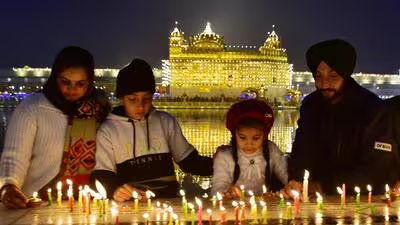
The court was hearing the PIL by All India Shiromani Singh Sabha, a registered charitable and religious organisation. Senior counsel Vikas Singh, representing the organisation, had argued that the lack of a statutory framework for declaring public holidays leads to arbitrary and discriminatory decisions by governments. Singh further urged that, having regard to Guru Gobind Singh Ji’s immense contribution to the nation’s spiritual and moral fabric, his birth anniversary (Prakash Parv) ought to be accorded the status of a nationwide gazetted holiday.
But the bench refused to direct the Union government to declare Guru Gobind Singh Ji’s Prakash Parv as a nationwide holiday or to frame uniform guidelines for such declarations, holding that these are matters squarely within the executive’s domain.
“The declaration of public holidays is…a policy decision, requiring a careful balancing of factors such as administrative efficiency, continuity of essential services, economic implications, and accommodation of the country’s diverse sociocultural practices,” it said.
The court added that “any indiscriminate addition would adversely impact governance and public productivity,” further noting that classification of public holidays is shaped by administrative exigencies and regional sociocultural considerations.
Rejecting the plea under Article 32, the court emphasised that its jurisdiction is confined to enforcement of fundamental rights and cannot be stretched to standardise cultural or commemorative practices.
“The jurisdiction under Article 32…cannot be expanded to convert this Court into an authority for standardising cultural or commemorative practices across the country,” it held.
The bench also dismissed the argument that the absence of a uniform holiday policy violates the right to equality under Article 14, noting that India’s federal structure permits variations based on regional and administrative considerations. “Divergence in approaches…does not, by itself, amount to arbitrariness or discrimination,” the court said.
The court further clarified that while the Constitution guarantees freedom of religion, it does not extend to seeking state recognition of a religious occasion as a compulsory nationwide holiday. The plea’s reliance on Article 25 (religious rights) was “misplaced”, the bench said, adding that such claims, if entertained, could open the floodgates for similar demands across communities.