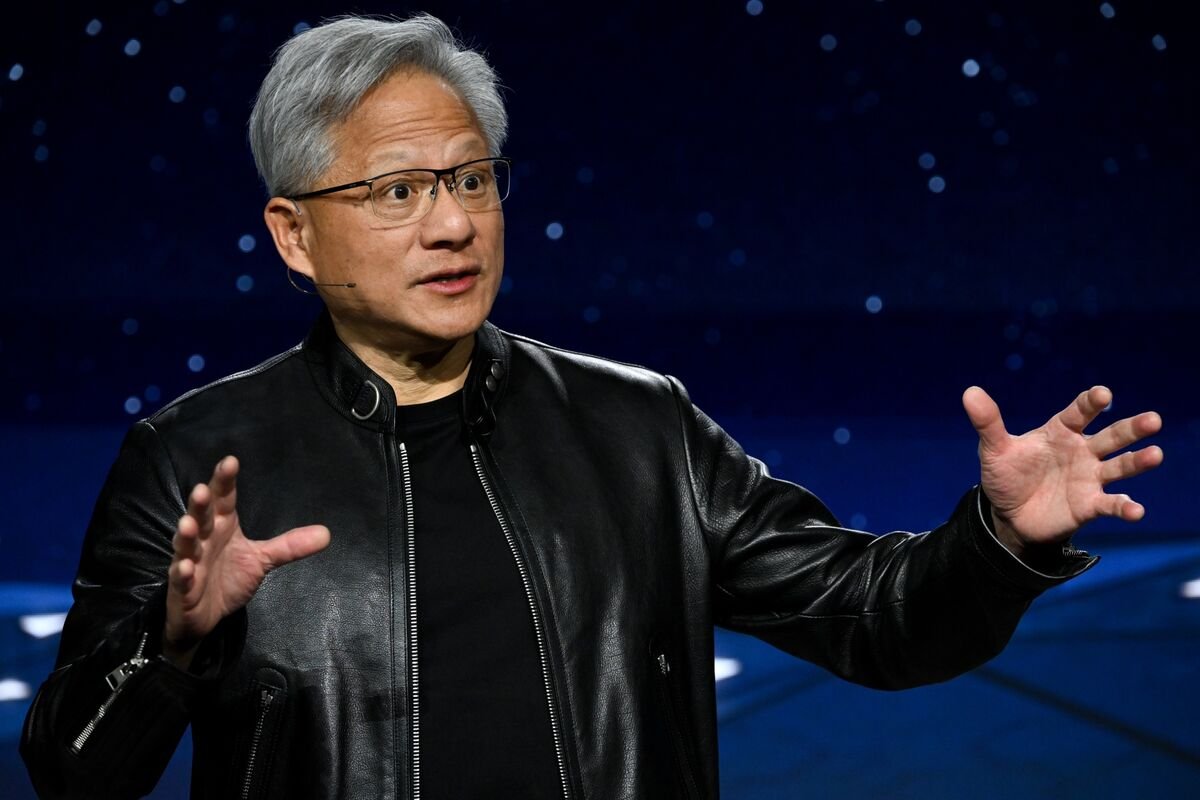
On Tuesday, Nvidia (NVDA) CEO Jensen Huang expanded on his prediction that his company would see upward of $1 trillion in data center revenue through 2027.
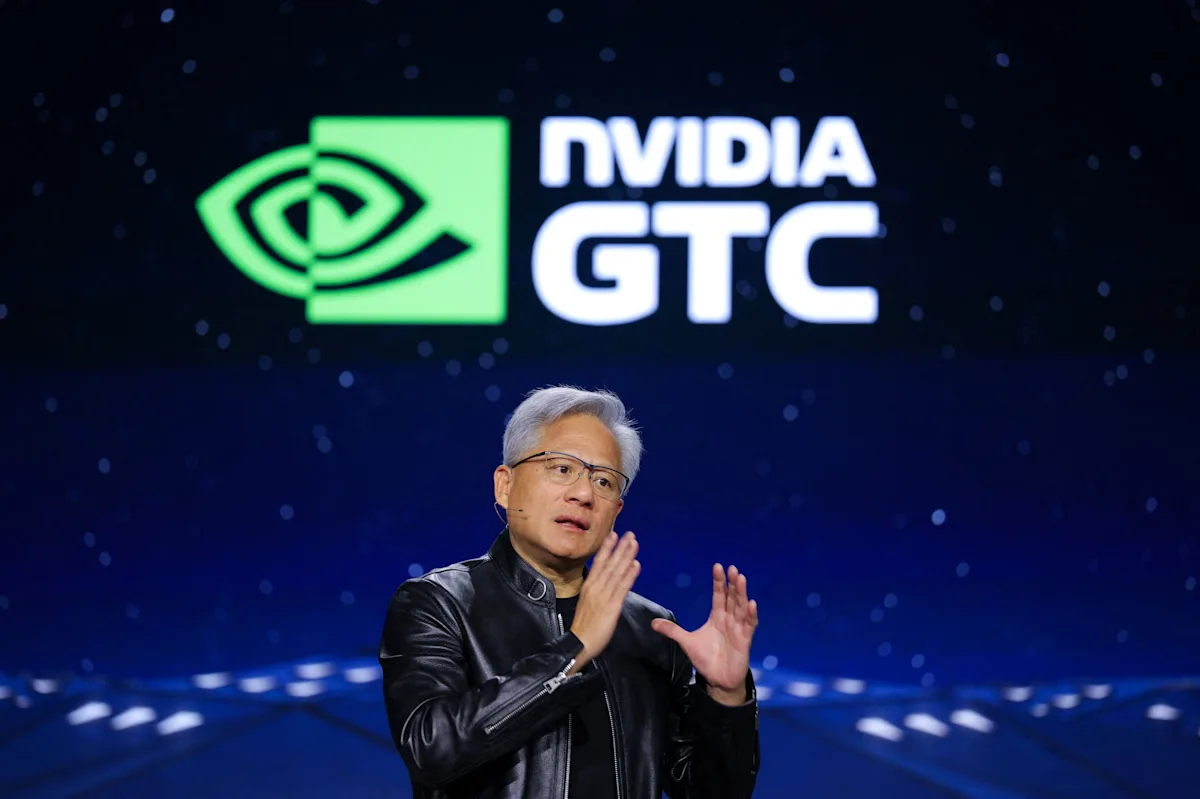
During a press Q&A session a day after Huang’s keynote at the company’s GTC event in San Jose, Calif., the CEO said that the $1 trillion figure only refers to sales of Nvidia’s Grace Blackwell and Vera Rubin chips, and that the final result will likely be higher.
It didn’t, in other words, include potential revenue from the sale of the platforms Nvidia debuted on Monday, including its new Groq 3 chip and Groq LPX rack, Vera CPU rack, or storage rack system.
The company’s Groq 3 and Vera chips are designed to assist with AI inferencing, or running AI, and agentic AI. Both inferencing and agentic AI are becoming increasingly important across the AI industry as more users begin using the technology and putting AI agents to work in both enterprise and consumer settings.
Read more: The latest tech stock news and updates
Huang said he initially provided the $1 trillion amount so that he had an apples-to-apples comparison to a projection he made during Nvidia’s GTC event in Washington, D.C. During that show, Huang said the company had a through-line to $500 billion in revenue by the end of 2026.
But, he explained, adding the anticipated revenue from its Vera, Groq 3, and storage rack will push that amount well beyond $1 trillion.
Huang went on to add that he didn’t initially include the additional projected revenue from Nvidia’s new products out of fear that it would confuse investors and give the impression that Blackwell and Vera Rubin weren’t responsible for the vast majority of those sales.
While Huang didn’t provide an estimate for how much more revenue the latest products would add beyond $1 trillion, he pointed to a theoretical amount of $1.25 trillion.
In a note to investors on Tuesday, Bernstein analyst Stacy Rasgon said that Nvidia CFO Colette Kress broke down the $1 trillion revenue further, saying that while roughly 60% of those sales will come from hyperscalers like Amazon, Google, Meta, and Microsoft, the remaining 40% will come from neocloud providers, industrial and enterprise use cases, and sovereign AI.
Nvidia generated $215.9 billion in its fiscal 2026, which ended Jan. 25, a 65% year-over-year increase.
In addition to providing insights into Nvidia’s future sales, Huang also noted that the company has received purchase orders from customers in China and is firing up its supply chain to meet demand.
Nvidia has been at the center of a tug-of-war between the US and China over whether the US government should allow the country’s most sought-after chip to power AI platforms in China that could end up benefiting that country’s military.