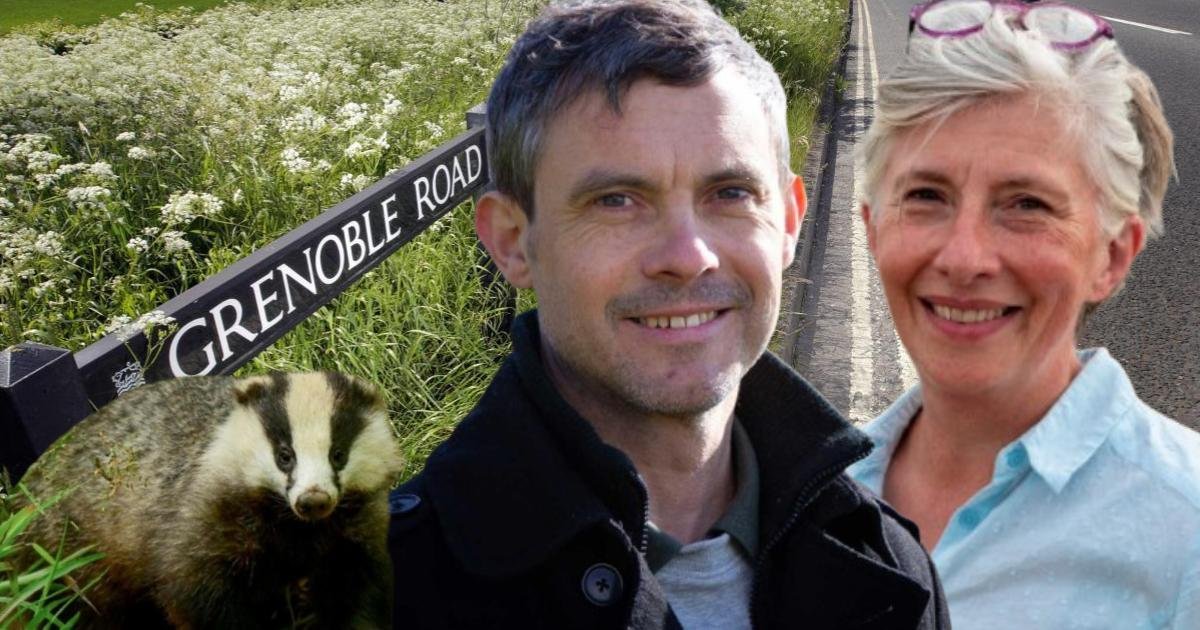
Developers are in early stages of submitting plans for the new South Oxford Science Village south of Grenoble Road in Blackbird Leys.
The development would fall just outside of Oxford City Council’s boundaries and into area covered by South Oxfordshire District Council, which would have the final say on a planning application.
So far, an environmental impact assessment has been sent to the local authority by the developers to identify the likely significant environmental effects that need assessing.
It also allows relevant parties to raise their own concerns or what would be needed from the developers to satisfy all needs and requirements.
South Oxfordshire district Green party leader Robin Bennett (Berinsfield ward) said there are “major questions” that need to be answered.

“The biggest of which is the sewage works, both in terms of capacity and smell,” Mr Bennett said.
“We don’t want a situation where new homes cannot be connected to mains sewerage.”
Thames Water, one of three owners of the site in which building could be, said assessments must be carried out for the “potential impact of odour on future residents” from the nearby sewage treatment works.
READ MORE: Pothole compensation claim payouts rise by 545 per cent
The utility company called for a full sample survey consisting of source measurements at all sources and added: “We don’t support such methods as the use of sniff tests.”
Green leader Mr Bennett added that it is “inevitable” the site would be developed at some point given it’s been in the local plan for some time.
He also called on community infrastructure and connections to be put in place, including a “long-awaited” walking and cycle connection to Berinsfield along the historic Roman Road.

Sam Casey-Rerhaye, Green district councillor for Sandford, added: “I do have concerns about the infrastructure, and impact, as have most of the existing residents.
“I also want to ensure the mature trees and hedgerows are preserved and added to, particularly around the southern edge of the site where the local plans includes substantial woodland edge.
“We’re glad to see the developers engage with the local community and want to make sure this will translate into a development that meets local needs, including the urgent need for social housing.
“There are some real opportunities to make this a modern, sustainable new suburb using heat recovery from the sewage works for energy for the site for example.
“I’ll keep up pressure on the developers as much as I can so this translates into action.”

Berkshire, Buckinghamshire and Oxfordshire Wildlife Trust has raised concerns about the potential presence of otters, water voles, skylarks and bats.
South Oxford Science Village would border the Sandford Brake Local Wildlife Site, a designated area for the presence of priority habitat lowland mixed deciduous woodland.
Woodland in the area ranges from dense and dry to wet and is a breeding ground for many species of animals including an array of bird.
Badger and bat activity has also been recorded along the western edge of Sandford Brake, the wildlife trust said.
Nicky Warden, the wildlife trust’s planning officer, said: “There is very little remaining woodland in the area.
“Building close to the Local Wildlife Site would almost certainly cause a decline in the Local Wildlife Site’s ecological value due to increased recreational use, domestic pet impacts and anti-social behaviour.
“The Local Wildlife Site is already subject to recreational disturbance and littering particularly within northern extents and is also highly vulnerable.”

She urged the developers to set out how loss, deterioration or harm to the site will be avoided or set out how the benefits of the development outweigh the harm.
Peter Addyman, chairman of the Sandford-on-Thames Parish Council, said: “We have discussed the site on a number of occasions and the consensus has always been that the existing woodland areas must be preserved.”
Dawn McGiveron, chairwoman of nearby Baldons Parish Council, wanted to know more about the light pollution on Toot Baldon which is a designated dark skies village.
She also raised concern about noise from the area, saying match days at the Kassam can even be heard from the village hill.
Agents for the developer said in planning documents: “The majority of the site comprises arable farmland, characterised by large field parcels mostly bounded by native hedgerows of variable composition and structure.
“The grassland habitats within the site are limited in extent and ecological value, comprising amenity or agriculturally improved grassland.”

They added: “There are a small number of badger setts that are occasionally active but no main setts present.
“No reptiles, water voles or otters have been recorded. Brown hare have been noted, while suitable habitat for priority species such as toad and hedgehog is present, albeit limited in extent.”
As well as providing up to 3,000 homes (some of which would be deemed ‘affordable housing’ and others would be for old people), the new village would include up to 10 hectares of land to be used for employment as an extension to Oxford Science Park.
The site south of Grenoble Road has been earmarked for development since 2019, when an agreement was made with Oxford City Council and Oxford University’s Magdalen College.
As green belt land, the site was incorporated into South Oxfordshire District Council’s Local Plan 2035 in 2020 as a ‘strategic allocation’ for thousands of new homes.
But one stipulation of the deal was that at least half of them need to be of affordable tenure.
Cabinet members on the city council previously said they hoped a planning application would be submitted by the end of 2023, but the long-awaited proposal is only beginning to emerge now, three years later.