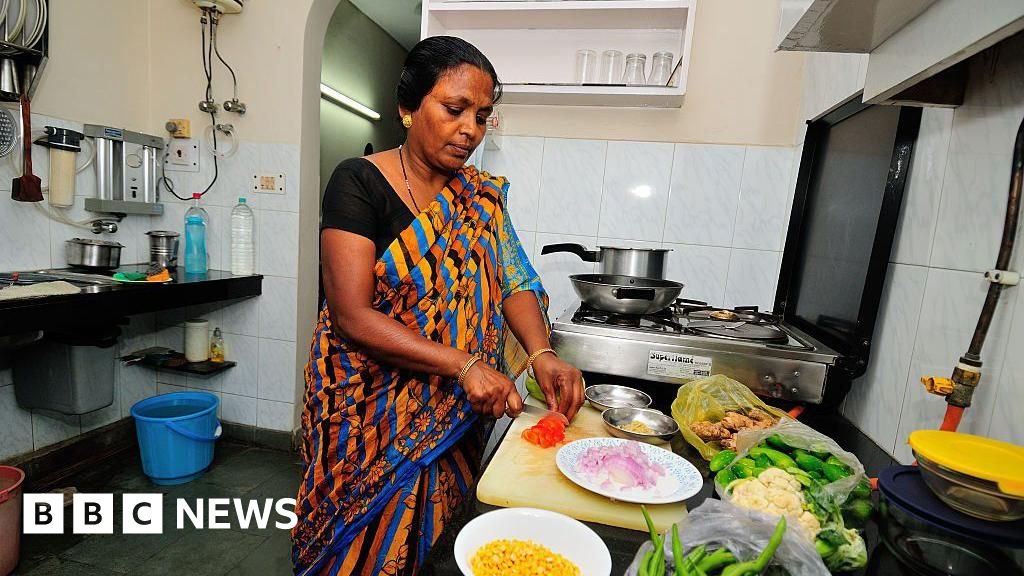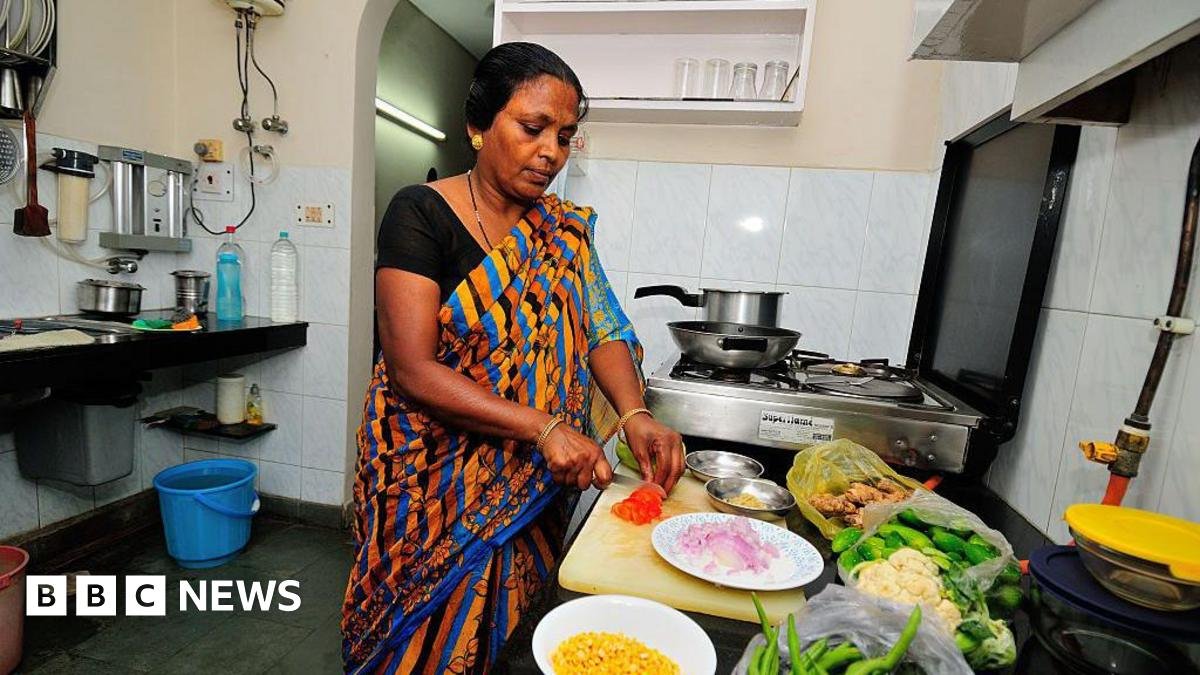
Before joining the platform, Seema worked at a garment factory, earning between 10,000 ($108; £81) and 14,000 rupees a month.
She left the job last year after hearing that Urban Company was hiring.
“I now make around 20,000 rupees a month,” she says, adding that the income helps her support her two children.
But the new system brings pressures she never faced before. After each job, she asks for a good rating – crucial for future work. A low score can reduce her visibility or bookings, she says.
Unlike traditional arrangements, platform work is governed by algorithms that assign jobs, track performance and impose penalties.
But traditional domestic work is far from ideal.
Inside private homes, the work can sometimes mean long hours, unclear duties, delayed pay and even abuse, with little protection. The informality of the arrangement leaves workers vulnerable.
Seema says she earns about 25,000 rupees a month on paper, but takes home less after fines for cancellations, low ratings and delays.
“I have made the full amount only once, when I did not take any leave and worked for at least eight hours everyday.”
Delays beyond her control can also cost her. “We often have to walk from one location to another. Sometimes security guards hold us up at the gate while they verify our entry into the building,” she says. “That makes us late and then we are penalised – even if it is by five minutes.”
Another user in Gurgaon, speaking on condition of anonymity, said her home-service maid arrived slightly late and was fined 10 rupees by the provider – something the maid showed her on the app.
The BBC contacted Urban Company, which did not comment on late penalties. Pronto said it does not penalise workers for late arrivals.
Reviews add another layer of pressure. A helper who broke a curtain rod urged the user to not give her a “negative rating”.
“It will hurt my prospects,” she said.
Labour rights activists argue that such time-bound expectations can be unrealistic.
“It is inhuman to expect that someone can simply be summoned within 15 minutes,” says activist Akriti Bhatia. “These are people, not automated systems.”
The pressure is not just about speed – it affects pay too. Platforms vary from fixed incomes to per-task models with incentives, making earnings unpredictable and shaped by ratings and algorithms.