KANSAS CITY — Bread hasn’t been exempted from the “protein mania” that has rolled across virtually all sections of the grocery store.
In the bread aisle and on category displays, product packaging and signage are emblazoned with claims of “more protein,” “extra protein” and quantified protein contents per serving. And food industry analysts say that’s with good reason: Shoppers are looking to raise their protein consumption.
“As health and wellness comes to the forefront, consumers consistently tell us they are trying to get more protein in their diets,” said Rebecca Elkinson, director of client insights for Chicago-based Circana. “Manufacturers across the store are leaning into this demand with high-protein innovations. Protein is one of the fastest-growing health claims across food and beverage.”
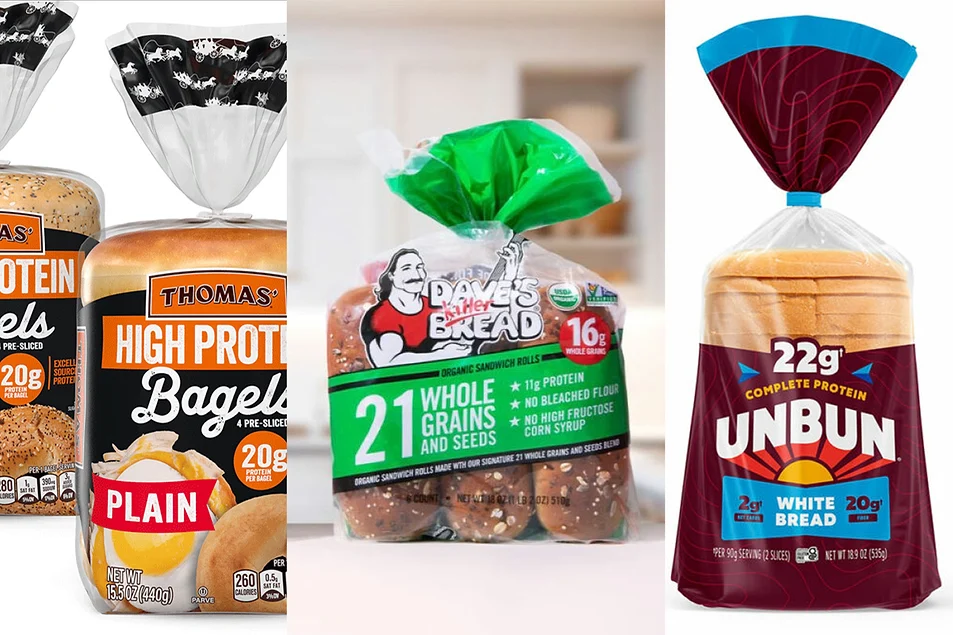
There has been no shortage of packaged bread brands introducing protein-focused products over the last year, analysts noted. Elkinson cited Nature’s Own Life Wheat+Protein loaf (22 grams of protein per two slices), Lewis Bakeries’ Better Way Protein loaf (11 grams of protein per slice), Thomas’ High Protein Bagels (21 grams of protein per bagel) and The Sola Co.’s Sola Protein soft white loaf (10 grams of protein per slice).
“Sola, a brand that had focused on low net carbs, released a protein soft white bread that delivers 10 grams of protein in every slice,” she said. “We are seeing brands enter better-for-you bread with high-protein offerings, as well as existing better-for-you and diet bread brands expand their portfolios to offer high-protein options.”
Other rollouts of higher-protein bread products include David’s Deli Protein Bagels (16 grams of protein per bagel) from Crystal Farms Dairy Co., a Post Holdings subsidiary; Realgood high-protein flour tortillas (10 grams of protein per serving) from The Real Good Foods Co.; and UNBUN Complete Protein White Bread (22 grams of protein per slice and gluten-free) from clean label brand UNBUN Foods.
“Protein is everywhere today, from toaster pastries to beverages and supplements,” said Anne-Marie Roerink, president of San Antonio-based 210 Analytics. “In many ways, this is the logical extension of the low-carb diets we’ve seen for years. Those were kick-started by the Atkins diet and, over time, evolved into approaches such as ketogenic diet or simply watching carbohydrate intake.
“Over the past five years or so, we’ve seen a move away from the ‘no-no’ diets that demonized nutrients such as fat or carbs. Instead, protein has been gaining strong momentum across categories throughout the store, including packaged bread. Added-protein callouts are typically part of a broader better-for-you positioning, often paired with other claims such as organic or clean label.”
Protein stands as a “major theme across the grocery store today,” said Ama Auwarter, vice president and category lead for snacks, bakery and cookies at The Campbell’s Co., whose brands include Pepperidge Farm.
“In bread, we see the consumer demand around protein as part of the broader nutritional role bread plays in a meal,” Auwarter said. “Bread often serves as the foundation for protein-forward foods like eggs, meats, cheeses or nut butters, making it a versatile base for balanced eating. We’re also seeing growth in segments like buns and rolls, which pair naturally with protein-forward meals such as chicken sandwiches and breakfast sandwiches, both of which continue to gain popularity with consumers.”