On certain mornings, when the light is still foggy, one remembers Nirmal Verma. Not as a towering figure in Hindi literature, but as a presence. A rearrangement of air.
He was born on April 3, 1929, in Shimla, a town that was never entirely Indian nor entirely British, but something in between. Perhaps that is where it began. This condition of being somewhat elsewhere.
The man who stepped aside
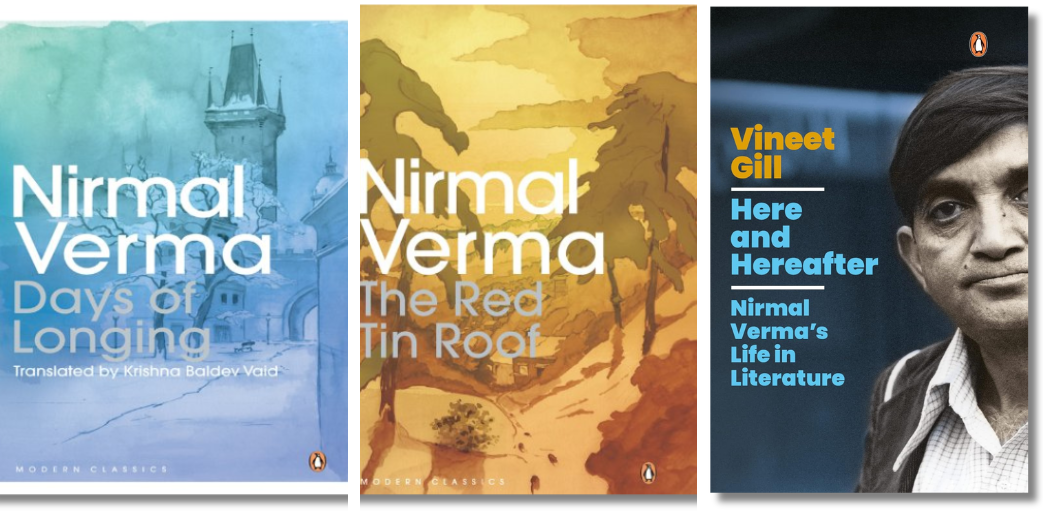
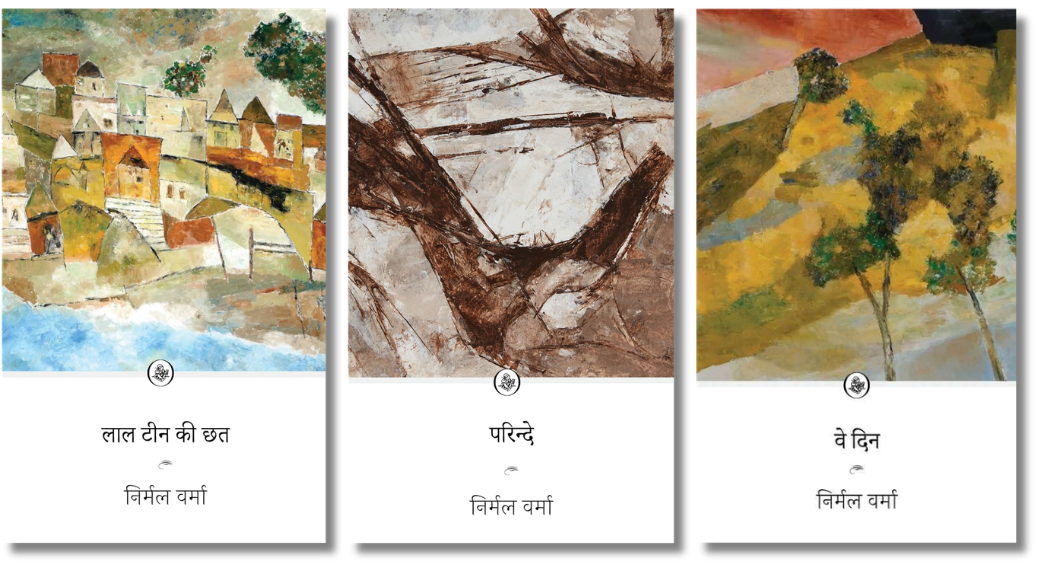
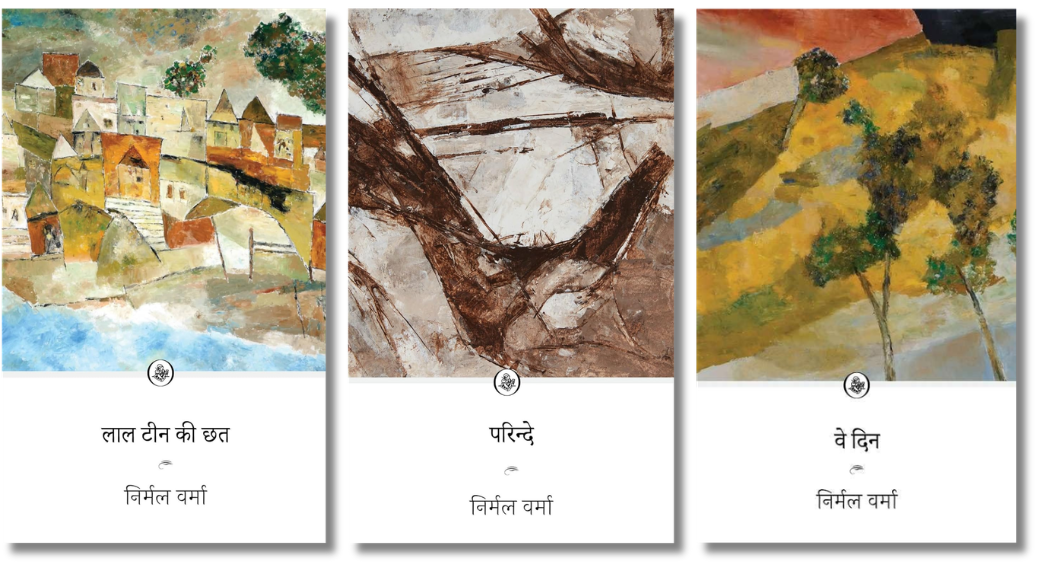
In the 1950s, when Hindi literature was learning to speak in new forms, Verma emerged alongside the Nai Kahani writers. His first collection, Parinde, did something unusual. It did not describe life, but hovered around it, like a bird unsure of where to land.
Others wrote about society, class, and upheaval. Verma wrote about the moment before a word is spoken – about the space between two people sitting in a room, aware of each other’s loneliness but unable to bridge it.
He was briefly part of the Communist Party. He attended Gandhi’s prayer meetings. History brushed past him, insistently. But Verma did not stay. When the Soviet Union invaded Hungary, he left the Party.
Verma’s life can be read as a series of withdrawals, from ideology, from noise, from fixed belonging. And each withdrawal brought him closer to something else. Something that resists naming.
In 1959, he went to Prague. It sounds almost romantic, until you remember the Prague of that time was watchful, where even silence felt observed.
He worked at the Oriental Institute, translating Czech writers into Hindi. Not English mediating Europe, but Hindi meeting it directly. A different intimacy. A different unease.
Europe did not “influence” Verma. That is too simple. It unsettled him. It made visible the fractures he already carried.
His novel Ve Din is not about Prague. It is Prague – its suspended time, its drifting people, its sense of being held captive.
Verma’s Europe is not a destination. It is a condition of exile.
And exile, in his writing, is not geographical. It is interior.
To describe Verma’s work is to risk betraying it. His novels, Lal Teen Ki Chhat, Ek Chithara Sukh, Raat ka Reporter, Antima Aranya, do not move in straight lines. They circle. They return. They stay with an emotion until it begins to reveal its edges, and sometimes even then, they refuse closure. There is no anxiety to conclude. Only a quiet fidelity to experience.
His early work, especially Parinde, already signalled this shift. Away from the social exterior toward the interior life. From event to perception. Later, in Ve Din, this deepens into suspended time, where characters seem to exist between memory and presence, unable to fully inhabit either.
His stories are even more elusive. In Kavve aur Kala Pani, for which he received the Sahitya Akademi Award, the narrative feels less like construction and more like erosion. Not of events, but of certainty. In collections like Jalti Jhaadi and Dedh Inch Upar, the world appears tentative, almost provisional, as if reality itself is still forming.
Very little “happens” in his fiction.
And yet, everything does.
A glance. A pause. A half-finished sentence. A memory that refuses to settle. These become the real events.
His essays extend this inward gaze with remarkable clarity. In Shabd aur Smriti and Kala Ka Jokhim, Verma reflects on memory, art, and the ethical burden of writing, not through argument but through attention. The essay, in his hands, becomes a space of thinking that does not rush toward conclusion.
His celebrated essay on the Kumbh Mela is a case in point. Where others might see spectacle, scale, or faith as performance, Verma notices something else. The anonymity of devotion. The inwardness within the crowd. The way millions gather, and yet each remains alone with their belief. It is not the event that interests him, but the silence within it.
Similarly, in Dhalan Se Utarte Hue, there is a quiet meditation on descent. Not merely physical, but existential. A slowing down. A coming to terms with time, memory, and convictions.
These are essays that must be read, not for what they say, but for how they teach us to see.
Verma witnessed the violence of Partition. He saw it closely. And then he chose not to write about it.
This absence is not accidental. It is a decision.
It is his refusal to make suffering legible, consumable, complete. In withholding, Verma preserves something that language might otherwise exhaust.
To read Verma, then, is not to follow a story, but to enter a field of attention, where meaning gathers slowly, in pauses, in absences, in what remains unsaid.
A necessary bridge
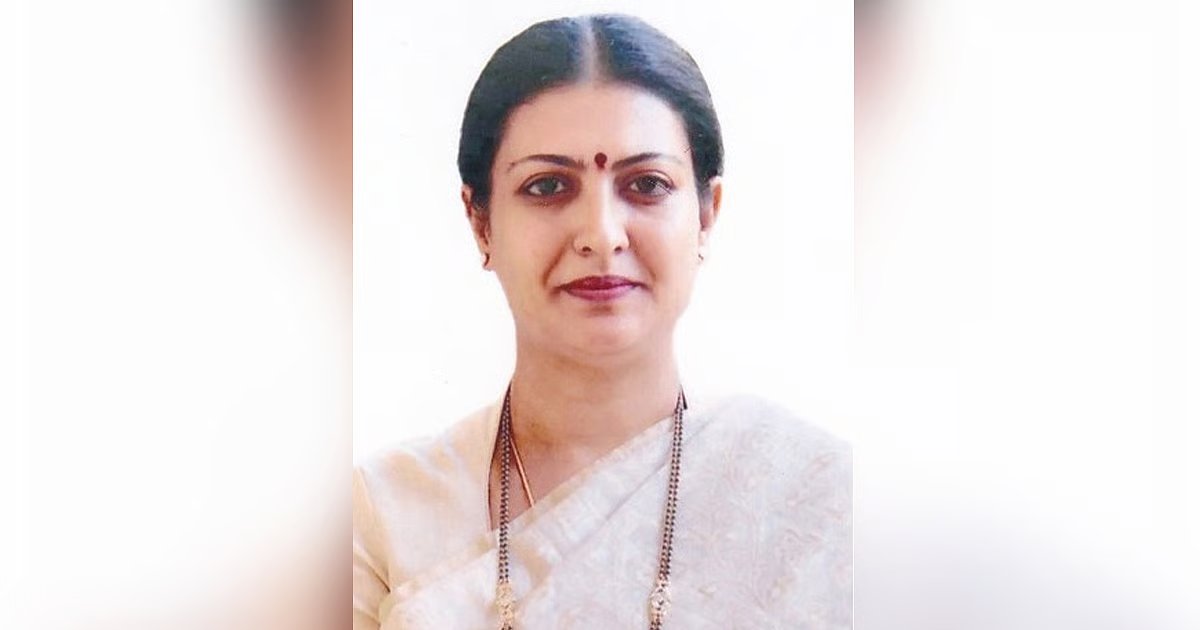
Verma was married to Gagan Gill, a major voice in contemporary Hindi poetry. Their companionship brought together two distinct yet resonant literary sensibilities, each marked by introspection and a deep engagement with the inner life.
To read this relationship directly into Verma’s fiction, however, would be reductive. His work resists biographical mapping. It does not draw straight lines between life and literature.
What we encounter instead is a carefully held interiority.
There is another story running parallel to Verma’s own. A quieter one. It is about how a writer, who seemed to recede into silence, is brought back into attention through reading that is patient, attentive, and precise.
To understand the depth and clarity of Verma’s inner solitude, one must turn, almost inevitably, to the presence of his elder brother, Ram Kumar, the celebrated painter. Between the two existed a quiet, almost imperceptible dialogue, one that relied less on words and more on shared sensibility.
What Ram Kumar held on his canvas, Verma attempted in language. There is, in both their works, a similar restraint. A refusal to overstate.
The hesitant, withdrawn characters that inhabit Verma’s stories often seem to emerge from the same inward landscape that Ram Kumar’s paintings evoke. It is as if both were circling the same truth, approaching it from different directions, one through lines, the other through sentences.
In Here and Hereafter: Nirmal Verma’s Life in Literature, Vineet Gill approaches Verma without trying to resolve him. The book does not move like a conventional biography. It reads, pauses, returns. It treats Verma not as its subject but as a presence to be engaged with.
Gill’s strength lies in restraint. He does not stand between Verma and the reader. Instead, he opens a space where Verma can be encountered, fragment by fragment.
What emerges is not just a life, but a sensibility. The Prague years, the translations, the distance from ideology. The interior of a writer emerges thus.
Importantly, Gill brings Verma into English without flattening him. The hesitations, the silences, the unresolved tensions remain intact. This is rare.
In contrast, Akshaya Mukul, in Writer, Rebel, Soldier, Lover: The Many Lives of Agyeya, offers a richly archival and historically grounded account. Where Gill is interior, Mukul is expansive. Where Gill lingers, Mukul maps.
Together, these works do something significant.
They begin to reduce the long-standing distance between Hindi and English literary worlds by creating a shared space of reading, where writers are not confined to linguistic silos but are encountered across languages.
We live in a time of relentless articulation. Opinions must be immediate. Reactions must be visible. Silence is mistaken for absence.
In such a time, Verma’s work feels all the more important.
He teaches us to wait. To listen. To accept uncertainty. To pay attention to the fleeting, the fragile, and the small shifts in human experience that often go unnoticed.
He reminds us that not every occurrence needs to be confined to a word.