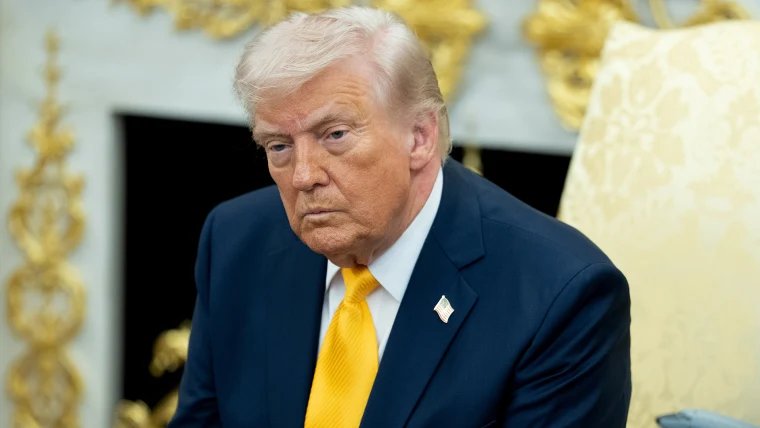
U.S. stocks surged Monday, after President Donald Trump announced that he was postponing all military strikes on Iranian power plants for a five-day period.
Trump said the U.S. and Iran had engaged in what he called “very good and productive conversations regarding a complete and total resolution of our hostilities in the Middle East.”
Reporting about the nature and timing of these “conversations” evolved over the course of the day, and included conflicting accounts from various stakeholders.
But for markets, the talks offered a glimmer of hope that a path toward the de-escalation of the conflict — and the oil crisis it created — were within reach.

Iranian state media responded to Trump’s post by saying the U.S. president has “backed down” after Iran’s firm response.
Trump, however, said that Iran had “called” to discuss trying to resolve the war diplomatically.
“They want to make a deal, and we are very willing to make it,” Trump told reporters before boarding Air Force One in Florida.
The Strait of Hormuz, a crucial transit point for global oil supplies, could be “open very soon,” Trump added, but he provided few details.
Experts and analysts quickly pointed out that even if the fighting were to end this week, it would still take months for the strait to reopen.
The S&P 500 and Nasdaq 100 futures initially soared about 3% on Trump’s post shortly after 7 a.m. ET. By the time the closing bell rang, both indexes still recorded significant gains, but less than futures had indicated early in the morning. The S&P 500 closed up 1.1% and the Nasdaq Composite ended the day higher by 1.4%.
The gains were also broad based, with every S&P sector ending the day higher.
The Dow Jones Industrial Average also shot higher immediately after Trump’s statement. By the end of the trading session, the Dow was higher by 631 points, and the Russell 2000 index closed up 2.7%.
It was the best day for the S&P, Nasdaq and Dow since Feb. 6.
Oil prices plunged around 11% and U.S. crude oil settled for the day at $88.13 per barrel. International Brent crude oil fell to $99.94 per barrel, settling under $100 per barrel for the first time since March 11.
Still, crude oil prices have risen more than 30% since the war began on Feb. 28, and more than 50% since the start of the year.
Trump’s Monday announcement on social media came after the president on Saturday said that he had given the Iranian regime 48 hours to “fully open, without threat, the Strait of Hormuz.” That ultimatum was set to expire Monday night.
U.S. natural gas prices dropped 6% Monday, European natural gas futures slid 9% and heating oil prices dropped 12%. Heating oil futures can also be a proxy for the price of jet fuel.
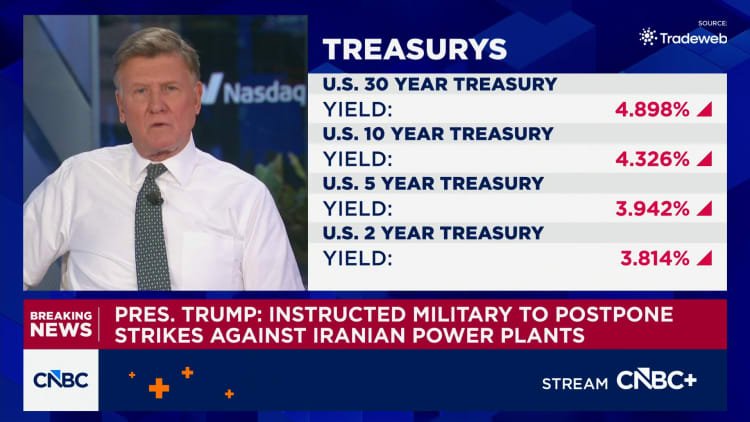
U.S. Treasury bonds also rose in the minutes after Trump’s comments, and the yields which guide borrowing rates for consumers dropped after posting big moves higher on Thursday and Friday on rising inflation fears stemming from soaring energy prices. Yields were down only slightly in mid-morning trading after the statements from Iranian media and Trump.
Investors were already grappling with how to trade headlines about the war before Monday’s volatility.
“Investors have two related problems in pricing risks around the Gulf war,” UBS economist Paul Donovan said in a note on Monday before Trump’s post. “Statements from top U.S. administration officials give different and at times contradictory assessments of the war; in the absence of measurable objectives, this is all markets have to respond to. The result is volatility.”