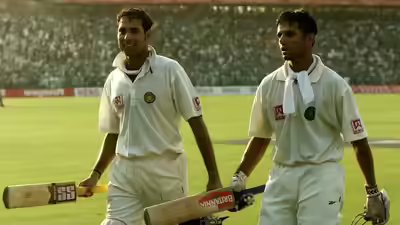
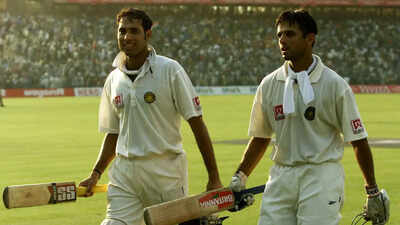
In the cauldron that was the Eden Gardens in March 2001, John Wright — the first foreigner to coach India — witnessed the ebb and flow of the Test, with all its drama, emotion and sheer improbability. Twenty-five years later, the New Zealander tells TOI from Christchurch, of the pressure, the tactical decisions and the far-reaching impact of beating Australia.When you look back at that Eden Gardens Test, 25 years later, what stands out the most for you?
I can’t believe it’s 25 years already! I had never seen crowds like that before. It was packed to the rafters. Things looked bleak for us on Day 3. But then came that incredible turnaround over the next two days, thanks largely to that sensational partnership between VVS Laxman and Rahul Dravid. It eventually culminated in Harbhajan Singh’s bowling heroics on the final day. The pressure on us was enormous. Australia were the world champions and they had been winning everything.What were the circumstances around the Indian team before that match?It was still my early days as the first foreign coach of the Indian team, and Sourav Ganguly was also a relatively new captain. The odds were stacked against us. Before the series we had a preparatory camp in Chennai with our physio Andrew Leipus. The big question we kept asking ourselves was simple: how do we beat Australia? I think we prepared extremely well for that challenge.How did the absence of Anil Kumble shape the team’s plans?Our most experienced spinner, Anil Kumble, was injured and unavailable. The selectors had identified a young off-spinner named Harbhajan Singh, and this series ended up defining his career. Looking back, I would rank this series with the 2004 series win against Pakistan in terms of its importance.The turning point of the Test was VVS Laxman’s promotion up the order. How did that decision come about?After the first innings we were asked to follow on, but Laxman had already batted beautifully and scored 59. We were also trailing 1–0 in the series, so in a sense we had nothing to lose. I remember listening to Ian Chappell on television commentary. He’s one commentator whose views I value greatly. Ian suggested that India should promote Laxman up the order because he was in terrific form. What he said made a lot of sense.We wanted someone who could play aggressively and put pressure on Glenn McGrath and Shane Warne. Sourav and I sat down after the first innings and agreed that promoting VVS (Laxman) was the best way forward. I’ve always believed that the captain is the central figure in a team. The coach is more on the periphery. But in this case, our collective decision worked perfectly.What made VVS Laxman’s innings so remarkable?What fascinated me the most was the way he played Shane Warne. He often played him against the spin and also got to the pitch of the ball so effortlessly. It was a masterclass on how to play spin. After tea that day he played two glorious off drives on the up: one against McGrath and the other off Jason Gillespie. I remember thinking: how on earth does he play like that? It was so regal.Apart from his batting, how else did Laxman contribute to the team’s dynamics and development?Laxman was the bridge between the younger players and the seniors in the squad. If I remember correctly, he was sharing a room with Zaheer Khan. We had a policy at the time where a bowler would room with a batter. Laxman spent a lot of time giving Zak (Zaheer) advice on his batting. During my early stint as coach, Sourav and I focused on three key areas: improving close catching, sharpening running between the wickets, and raising overall fitness levels. We also wanted the lower order to contribute more so that we wouldn’t collapse after being 200/5. The only thing missing in that squad was a genuine all-rounder.How crucial was Rahul Dravid’s contribution?Absolutely. Rahul deserves enormous credit. He was pushed down to No.6 in the second innings. It was a demotion, but he was a sport. His 180 was monumental. Laxman and Dravid were a terrific pair. They were also involved in another remarkable partnership against Australia in Adelaide in 2003. Rahul was in an incredibly productive phase of his career then. Whether it was Headingley in 2002, Adelaide in 2003 or Lahore in 2004. He was truly our rock.Harbhajan Singh’s bowling on the final day was legendary. Who were the other unsung heroes?Harbhajan’s performance, including that famous hat-trick, is rightly remembered. But we shouldn’t forget Sachin Tendulkar’s spell either. He picked up three crucial wickets. The pitch was gripping on the final day, and it was a masterstroke from Sourav to give Sachin the ball. I also remember SS Das taking two outstanding catches. There were contributions from everyone in that match.What do you recall about that manic final day?It was incredibly tense. I watched from a distance as the drama unfolded. Eden Gardens had turned into a cauldron. The ebb and flow made it riveting. I’ve always believed India has the best cricket fans in the world and they deserved every bit of the entertainment they got.How important was that win for the team?The victory at Eden Gardens gave us enormous confidence heading into the third Test in Chennai, which we also went on to win. It also extended my tenure as Team India’s coach. I stayed with the team for another four years. If we had lost that series, I would have packed my bags and returned home. At the time, everything was happening so quickly that you didn’t fully absorb it. Looking back, I think that victory injected self-belief in the team. It also paved the way for the overseas successes that followed.