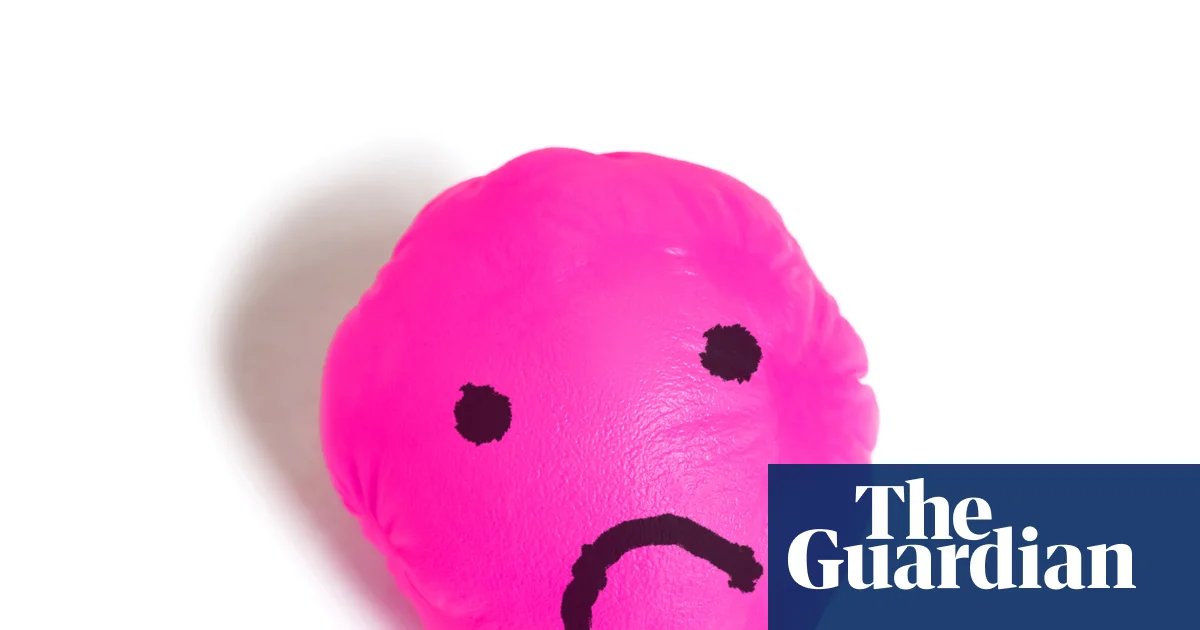
I remember, as a child, hanging on to one specific party balloon for what seemed like years. I don’t remember how or where I acquired it, but it had initially floated high, bobbing against the ceiling, and, over time, lost its buoyancy, coming to rest on the carpet. Yet, when a family friend asked if they should pop the now sad-looking balloon, I assumed they were joking – like when an adult asks, teasingly, if they should eat your last slice of birthday cake – and was distraught when they followed through. I didn’t care that it had become grubby and partly deflated – I’d had that balloon for what felt like for ever.
This, it turns out, is the problem with many balloons. Not that clingy young children might become over-attached to them, but that they are often a single-use plastic – and even biodegradable alternatives such as latex balloons do not decompose quickly, meaning they can pose a significant risk to wildlife and the environment. In 2019, scientists found that balloons eaten by seabirds are more likely to kill them than other kinds of plastic – yet they do not seem to have been earmarked in the same way as, for example, plastic straws. If anything, balloon-based decor has become more popular in recent years, with balloon arches or tunnels deployed not just at birthdays but at events ranging from baby showers to shop openings. Balloon drops are used at New Year’s Eve celebrations and graduation parties, and balloon releases have also endured – particularly at funerals, where the unleashing of helium-filled balloons signifies the letting-go of a loved one.
But there has been some pushback against the balloon boom – even from those within the industry. In February balloon seller Naomi Spittles, who runs Balloons by Naomi in Lincoln, cited environmental concerns when she refused to fulfil an order for 200 balloons – for which she could have charged about £600 – that were to be released at a memorial. “What goes up must come down, and they don’t go to heaven,” she told the BBC, while calling for balloon releases to be banned in the UK.
“A lot of people ask: ‘How do you know if your balloons are being used for a balloon release?’” Spittles says. “But if someone is ordering for a birthday, they’re going to order number-shaped balloons or a pretty display – they’re not just going to order 50 helium balloons. I get that people are not in the correct headspace when they’re grieving, but when I explain to them the reasons that I don’t do balloon releases, they’re usually like: ‘Oh my God, I didn’t even realise.’”
To raise awareness of the balloon release problem, Spittles posted about her decision on Instagram: “I had a lot of farmers message me to say thank you,” she says – as livestock can ingest or inhale balloons. “I had a woman message me to say her yorkshire terrier choked to death on a balloon in the garden. You have no control over where the balloons land.” Helium balloons are thought to be able to reach a height of 10 km and can travel significant distances: in 2012, one launched in Derby, England, was found in Sydney, Australia, having travelled 10,000 miles.
When it comes to marking the loss of a loved one, Spittles sometimes suggests, “getting a couple of bubble machines instead, or spending the money on a memorial bench, or planting a tree – something that will make a difference”.
While not everyone in the balloon industry might be keen to switch to bubbles, the National Association of Balloon Artists and Suppliers advises members to “say no to balloon releases” in the interest of safeguarding the environment. “To help address the issue of balloon waste, we have partnered with TerraCycle to offer our members heavily subsidised recycling boxes specifically for balloon and party waste,” says a spokesperson. “This waste is turned into materials from which projects such as playground equipment are created.”
There is no nationwide ban on balloon releases in the UK (although plastic balloon sticks have been banned), but they have been outlawed by almost 100 local authorities, and, in order to release more than 5,000 balloons, you would require permission from the Civil Aviation Authority. In the US and Australia, several states have banned or restricted the releasing of balloons, while in countries such as Denmark and Finland, balloon releases are prohibited under littering laws.
Like party poppers and champagne, balloons have long been associated with a sense of ceremony – but this wasn’t always the case. The first rubber balloons were made by scientist Michael Faraday in 1824, who invented them for laboratory use – he used them to contain the gases with which he was working, although he also noted that his hydrogen-filled balloons had “considerable ascending power”. A year later, balloons were on sale to the general public – albeit as a kind of DIY kit comprising two circles of soft rubber, the edges of which were rubbed together until they stuck, so the inner section could be inflated.
By 1873, however, the New York Times was predicting that beyond their meteorological and military uses, balloons “will always be an interesting addition to the amusements of popular gatherings”. A deep dive by Slate into how balloons became a go-to party accessory surmised it was largely because “they’re cheap and colourful, and people like watching things fly away”.
Balloons have also played a significant role in popular culture, from Nena’s 99 Luftballons – a song reportedly inspired by balloon releases at a Rolling Stones concert – to being wielded by Stephen King’s creepy Pennywise clown and powering a house into the sky in Pixar’s film Up.
“The popularity of balloons has definitely grown – just because celebrities have them,” says Spittles. In 2021, Khloe Kardashian celebrated her daughter True’s third birthday by filling a bedroom chock-full of pink balloons – the same year that footballer Harry Kane wished his partner a happy Valentine’s Day posing next to a balloon arch. In August last year, Selena Gomez shared pictures from her bachelorette party in Cabo, surrounded by balloons – and almost every reality TV star seems to have shared photos of impressive pneumatic displays in recent years. No wonder the general public are following suit. “People have them for gender reveals now, engagement parties – that never used to be a thing,” says Spittles. “But people see celebrities on TikTok and Instagram having big events and they want to be like that.”
It wasn’t until the late 1970s that foil (or Mylar) balloons were invented, made from a thin sheet of nylon coated with a metallic layer of polyethylene. These are the lightweight, shiny balloons that are most commonly used to create shapes, such as numbers and love hearts. They have also come under significant criticism, since not only are they not biodegradable, but they can also conduct electricity and interfere with power lines if released.
Spittles is not alone in wanting to see a complete ban on balloon releases. Sisters Danielle and Chelsea Vosburgh set up the non-profit Balloons Blow 15 years ago, after noticing a significant rise in balloon litter during family beach cleans in Florida. Their Instagram now has more than 16,000 followers, and their website provides a portal through which members of the public can report planned releases in the US, as well as a resource for those looking to learn more about the environmental impact of balloons. “PLEASE try to stop the balloon release yourself before contacting us,” reads a note above the online contact form. “We receive so many reports, we cannot keep up with them all.”
The Vosburghs liken balloon releases to “tossing death traps into the environment”. “Latex balloons are falsely marketed as biodegradable. Made with added chemicals and dyes, they last years,” says Danielle. “Their burst remnants mimic food sources to animals on land and in the sea. The balloons cause blockages in the digestive tract, causing a slow death by starvation.”
They also point out that helium, which is used in any balloon that is intended to float, is a finite resource – and one that is required for the operation of MRI scanners, among other uses. They cite Cambridge University chemist Peter Wothers, who called for an end to helium-filled party balloons in 2012, saying: “I can imagine that in 50 years’ time our children will be saying: ‘I can’t believe they used such a precious material to fill balloons.’”
In 2020, researchers found that balloons advertised as “100% biodegradable” did not meaningfully degrade after 16 weeks in industrial compost – remaining recognisable in shape, colour, and consistency – and so continued to pose a threat to wildlife. “Because the balloons did not break down, marketing latex balloons as ‘biodegradable’ amounts to greenwashing,” says Morgan Gilmour, who co-authored the study. “Released balloons can travel hundreds of miles on air currents to remote regions of land as well as the ocean, where they can’t be cleaned up, and where they become trash and marine debris.”
The study says: “What most consumers don’t realise is that to shape milky natural rubber latex sap into the product we know as a balloon, many additional chemicals need to be added. These chemicals include antioxidants and anti-fogging (to counteract that cloudy look balloons can get), plasticisers (to make it more flexible), preservatives (to enable the balloon to sit in warehouses and on store shelves for months), flame retardants, fragrance and, of course, dyes and pigments … so the balloons can’t be ‘100% natural rubber latex’.” Gilmour does not buy balloons herself, believing bubbles to be “much more fun”.
And, of course, bubbles don’t pollute beaches. “Our State of Our Beaches 2025 data found that nearly 40% of surveyed UK beaches had discarded balloons,” says Lizzie Price, beachwatch manager at the Marine Conservation Society (MSC). So the MSC suggests a range of balloon alternatives, including colourful streamers, flags and banners, which also have the advantage of being reusable. When it comes to bubbles, the MSC recommends shining torches on the bubbles as they float away: “The effect is spectacular.”
The Balloons Blow website also warns people away from other forms of commemorative release – namely sky lanterns, butterflies and doves – which, though they don’t affect the environment in the same way, do cause other problems. Instead, its suggestions include ribbon dances, drumming, paper pompoms and distributing wildflower “seed bombs”.
“There is no need for any type of balloon to contribute to the already overflowing landfills,” says Danielle Vosburgh. Perhaps it’s time to let go of balloons once and for all – just not literally.
Do you have an opinion on the issues raised in this article? If you would like to submit a response of up to 300 words by email to be considered for publication in our letters section, please click here.