Good news: Oil traders are betting the Iran war will end fairly soon. Bad news: They’re also betting the economic damage from the war could last for years.
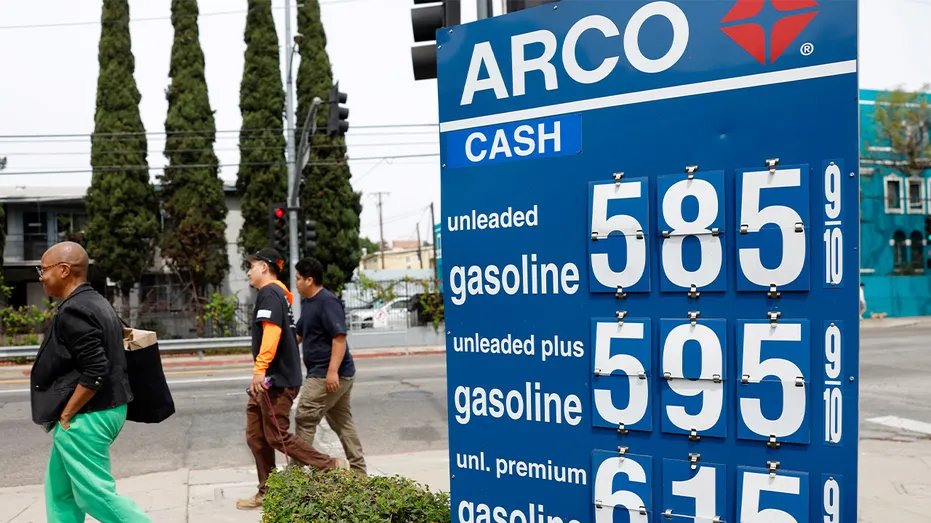
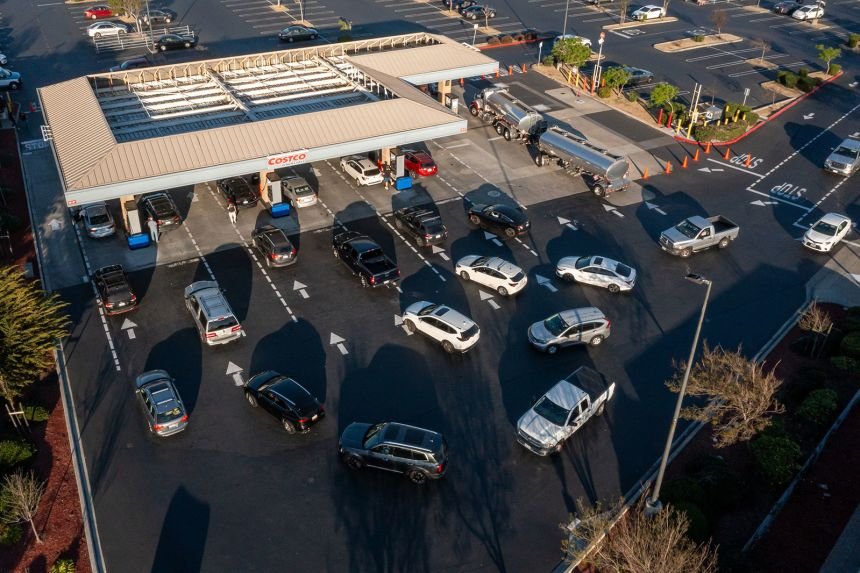
Crude has surged above $110 a barrel, making $4-a-gallon gas and $5.40 diesel a painful reality in the United States.
But when we say “crude is trading above $110 a barrel,” that’s not the full story: Oil trades on a market where investors buy barrels of oil to be delivered sometime in the future – months or even years later. Right now, oil for April delivery is at $110, but the further out the oil is set for delivery, the cheaper it gets.
That’s atypical; usually oil gets more expensive the further out it’s to be delivered. And that tells us something important: Markets expect a sharp decline in crude prices over the next few months, but oil won’t return to its pre-war level for years.
In other words, even if the war ends tomorrow, the fallout will be with us for some time. Get used to high energy prices.
At present, oil for May delivery is trading just below $110. Oil for June is at $100. You get into the $80s by August and back into the high $70s by March 2027. Oil is expected to return to $70 a barrel in 2031.
That doesn’t mean that’s exactly what oil will cost; it’s a bet oil traders are making about the future. But it’s an indication that no one thinks the pre-war “normal” is achievable anytime soon.
“That’s more problematic for the economy that you might think,” said Rob Haworth, senior investment strategy director at US Bank. “That’s going to be a real burden for the consumer.”
Oil can’t just go back down below $70 for a number of reasons.
The closed Strait of Hormuz left nowhere for the region’s producers to put their oil, so many were forced to shut down production. If the strait were to reopen, production could take weeks to come back online – it’s not like turning on a light switch.
That’s assuming facilities even work at all: Iran and Israel have inflicted significant damage to liquefied natural gas facilities and oil refineries in the Middle East. Qatar said its Ras Laffan liquefied natural gas port — the world’s largest — would take years to fully come back online.
That’s why it will probably be three to four months after hostilities end in the Middle East before oil and gas production approaches anything close to pre-war production levels.
“There’s a lot of oil in the world; right now it’s just locked up,” said Rob Thummel, senior portfolio manager at Tortoise Capital.
High gas prices represent a real burden for Americans. But it could get a whole lot worse.
Macquarie Research analysts on Monday predicted that a war lasting through June could push oil to hit $200 a barrel, which could correlate to gas prices at around $7 a gallon. That’s not their base case – but it’s within the realm of possibility.

At that level, many Americans simply won’t be able to afford to live their lives without making significant changes. Some won’t be able to get to work. Others won’t be able to afford to eat. Some will have to give up their homes. And businesses, many of which have paused hiring, may need to lay people off.
But oil wouldn’t need to get to $200 a barrel by June to tip the US economy into a recession. Heather Long, chief economist at Navy Federal Credit Union, believes one more month of triple-digit oil prices could be enough. Joe Brusuelas, chief economist at RSM US, said US oil would need to rise to $125 a barrel – about $25 higher than it is today – to sink the economy.
The longer the war lasts, the longer this biggest-ever global oil supply shock lasts. Every hour the war continues raises the risk for a recession.