With Trump calling $100 per oil barrel “a small price to pay” to justify the attack on Iran, we’ve dug into the true costs for people and planet that the conflict is already unleashing

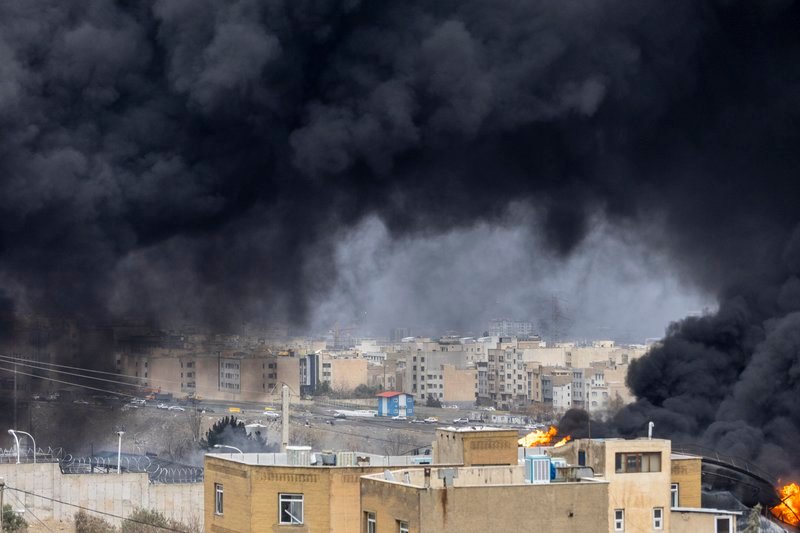
Black smoke rises over Tehran, Iran, in the wake of overnight airstrikes on oil depots in the area on 8 March. Majid Saeedi / Getty Images
More than 1,500 people have been killed in Iran and Lebanon, including hundreds of children, since the US-Israeli war on Iran was launched 10 days ago.
Iranian response attacks have killed dozens and led to the closure of the Strait of Hormuz, the channel through which 20% of the world’s oil transits.
The resulting disruption has seen oil prices surge past $100 per barrel, and gas prices have hit multi-year highs amid fears of prolonged interruption to global supplies.
US President Donald Trump said on 8 March that surging prices were “a very small price to pay…for USA, and World, Safety and Peace.”
But every day that the conflict persists inflicts an extremely heavy price on the millions of Iranians and Lebanese civilians under fire. There are now growing signs that the worldwide burden of the war will be profound.
Oil and gas prices rocket
The world’s oil benchmark, known as Brent, surged briefly on Monday to nearly $120 a barrel – prices not seen since Russia’s full-scale invasion of Ukraine in 2022. Crude oil is now over 40% more expensive than it was before the US and Israel launched their attack on Iran on 28 February.
Prices fell slightly on the news that G7 ministers were set to meet to discuss coordinating tapping into their respective strategic reserves – something the industry watchdog has only done five times in its history.
The conflict is also affecting European gas prices. European gas futures jumped 14% on Monday after shooting 67% higher last week when leading exporter QatarEnergy announced it was ceasing production at its largest field.
Analysts have warned that spiralling wholesale gas prices could raise the UK energy price cap to £2,500 per household, a drastic increase from the £1,641 cap set at present.
In the US, gasoline prices at the pump are up 14% compared with before the attack, according to the AAA motor group.
But it is in Iran and its neighbours – whose economies are largely dependent on revenue from oil and gas exports – where the price of the US-Israeli war is heaviest. Qatar’s energy minister has even warned that the conflict could “bring down the economies of the world.”

Farm workers work outside as black smoke billows overhead following attacks on oil facilities in Tehran, Iran. Majid Saeedi / Getty Images
Attacks on oil facilities harm people and the environment
In Iran itself, US-Israeli strikes on oil storage facilities in and around Tehran ignited towering infernos that saw oil rain from the sky.
Tehran residents have described the black smoke-filled air as “apocalyptic”, with some reporting difficulty breathing and burning in their eyes and throat.
Experts have warned that chemical reactions in the sky could produce acid rain, and that exposure to the airborne compounds could increase the risk of cancer, skin and eye irritation, and cardiovascular conditions.
If the pollutants in the rain make their way into water sources, then aquatic life and drinking water supplies could also be affected by this toxic pollution.
That’s not to mention the climate impacts that war already has, even without attacks on oil infrastructure. The first 12 months of Russia’s invasion of Ukraine, for example, emitted 120 million tons of carbon dioxide into the atmosphere.
Oil raining down on Tehran is likely only the first tell of the environmental damage – and the impact that that has on people’s health – that the US and Israel’s war will cause.
Vulnerable energy systems disrupt the markets
All the disruption linked to fossil fuels has seen stock markets routed globally: while the FTSE100 has only dipped a few percentage points since 28 February, Asian markets are particularly rattled. South Korea’s Kospi index fell 6.2% and Japan’s Nikkei 225 dipped 5.2%.
This is a reflection of Asian markets receiving roughly half of their imported oil via the Strait of Hormuz. In the US, which is a net exporter of fossil fuels, markets have started to fall over fears of wider inflation linked to the war.
Rystad Energy, an industry data provider, predicts that oil could settle at $135 a barrel if the conflict lasts for four months.
Global Witness analysis of Rystad Energy data suggests that more than 10 million barrels equivalent of oil and gas a day is now impacted, mainly due to shutdowns in production and infrastructure damage in the region.
Goldman Sachs says it cannot rule out oil reaching $150 a barrel, warning that the current level of disruption to global energy supplies is 17 times larger than that precipitated by Russia’s invasion of Ukraine.
In the wake of Russia’s attack in February 2022, the EU and Britain in particular spent hundreds of billions in an attempt to wean their economies off Russian fossil fuels. Russian-piped gas was replaced, at enormous cost, with ship-bound LNG imports, mainly from the US.

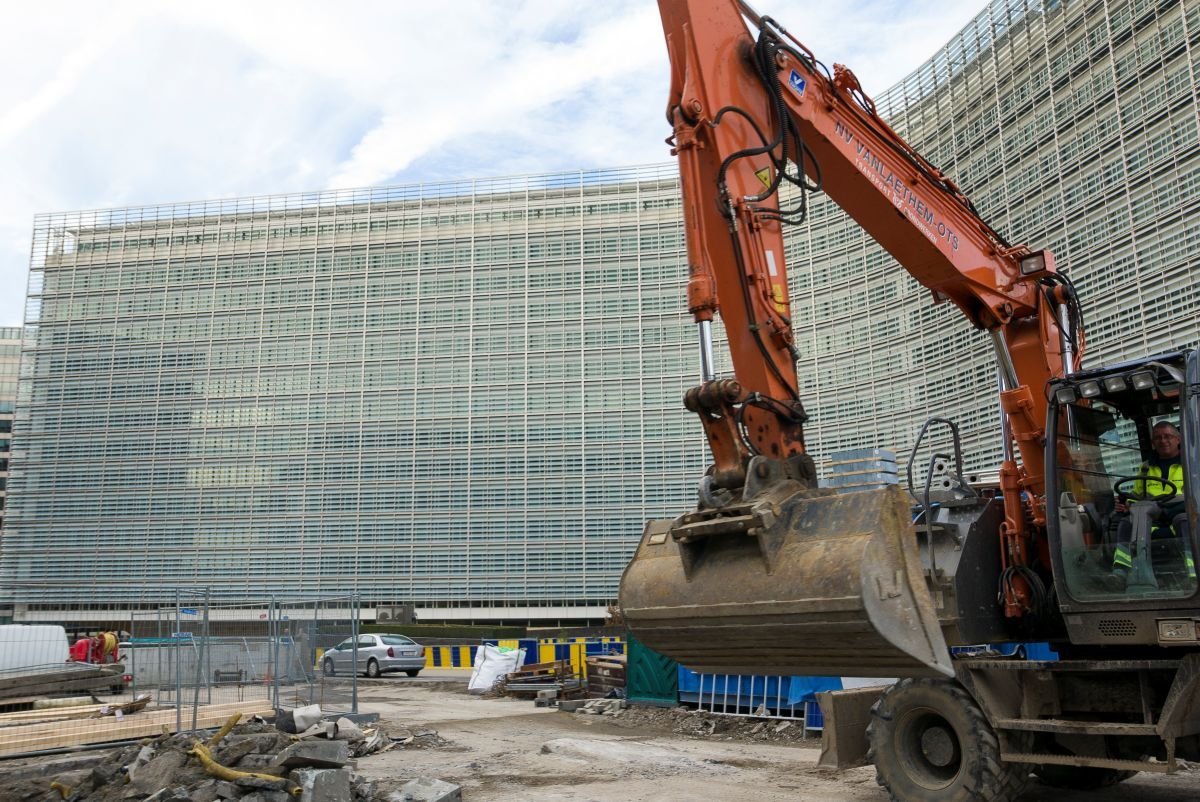
Global Witness joined Ukrainian campaigners in calling on EU countries to stop buying Russian oil and gas in Brussels, Belgium, in September 2022. Matthew Barton / Global Witness
This coincided with a period of record profits for large producers – a recent Global Witness analysis found that the Big Five fossil fuel majors have pocketed nearly half a trillion dollars collectively since 2022.
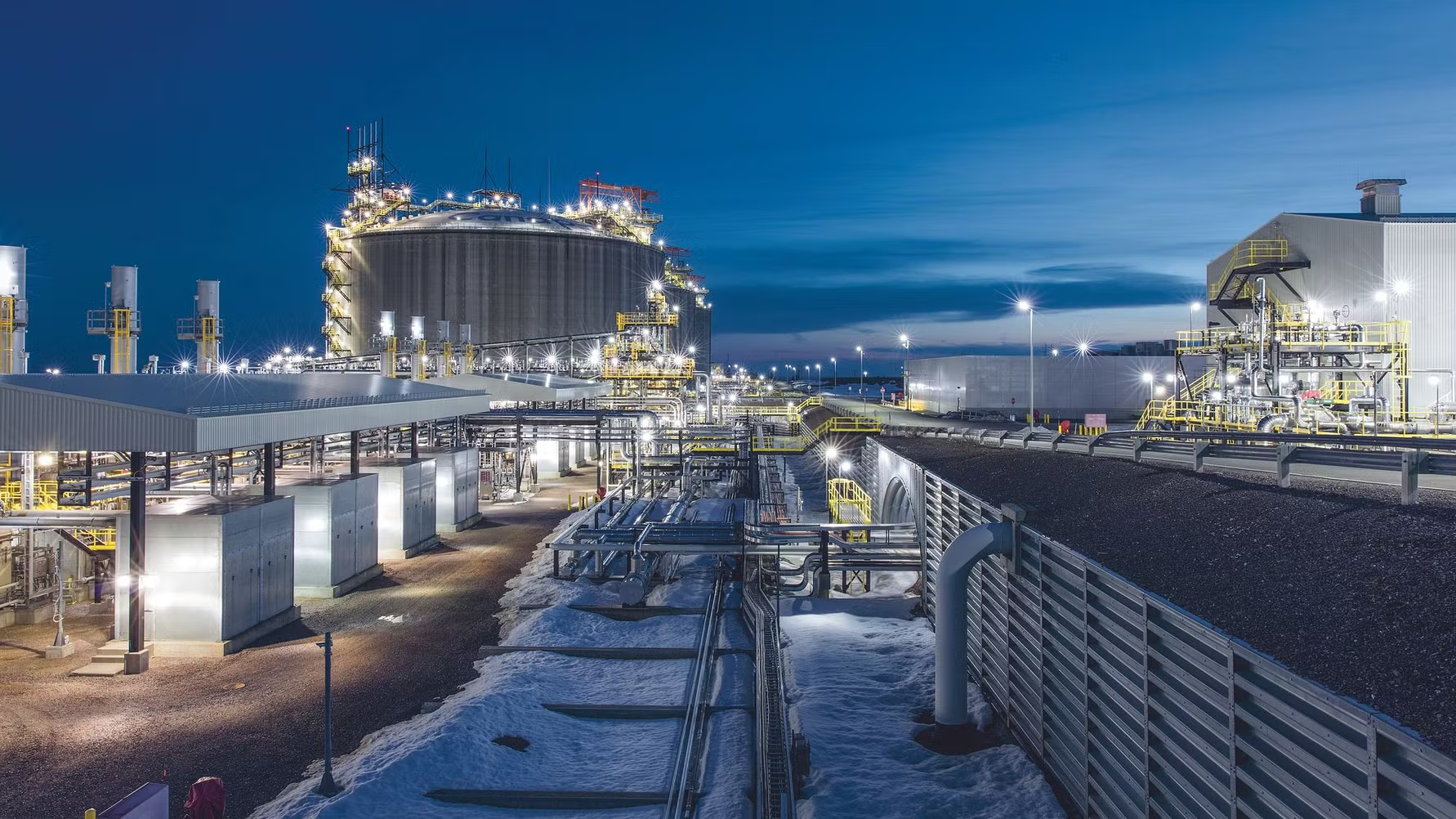
Once again, fossil fuel producers and shippers are taking advantage of the wild swing in oil and gas prices. US-based producers are rushing to get their products to sea while oil and gas prices are so inflated. Shares in supermajors such as Shell and bp have jumped since the beginning of 2026.
While fossil fuel giants are having an excellent crisis, the rest of the world is, for the second time this decade, grappling with inflationary pressure linked to oil and gas price volatility. The precise level of cost that is passed on to consumers will vary according to how reliant a country is on imported oil and gas.
The UK currently imports around 40% of its oil and 60% of its gas, although much of this is piped from Norway and therefore unaffected by the Middle East crisis.
The link between oil prices and the cost-of-living worldwide
Petrol prices have already increased since the start of the Iran conflict. In the last fossil fuel-driven cost-of-living-crisis, food prices jumped, and they could well do so again. The International Energy Agency estimates that oil and gas prices contribute up to 50% of food price variability.
The war is once again exposing the systemic risk that our governments are taking by continuing to rely on oil and gas extracted far away and shipped around the world.
The globalised nature of oil and gas trade means that, even though the US is now the largest exporter of LNG in history, supply can be disrupted as major Asian users, such as China, rush to plug the gap left by Middle Eastern LNG, diverting fuel flows away from the UK and Europe.
This is why it is more urgent than ever to transition away from fossil fuels in a rapid and just manner, in line with the best available climate science. Wind power in the UK alone has already saved the taxpayer more than £100 billion, and decarbonising our energy systems could save trillions more.
Until governments make the switch and divert the trillions they provide yearly in handouts to fossil fuels towards renewables, we shall – all of us – continue to be held hostage to geopolitics and the caprices of strongmen.