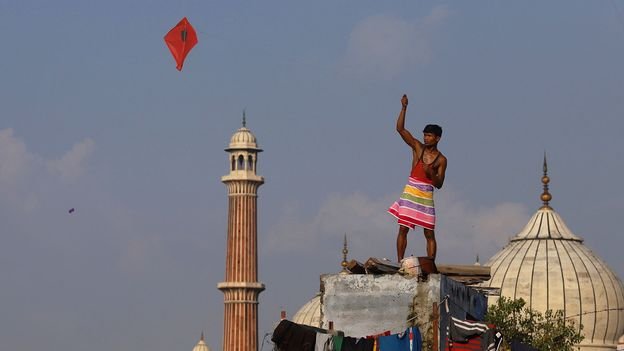
Both Jamaluddin and his elder brother inherited a love of kite-flying from their famous father. They travelled to various countries, competing and promoting the sport – just as he had done in India.
Bhai Mian, who founded the Delhi Kite Flying Association in 1985, always called kite-flying a “serious business”. But life caught up with his sons, who are both jewellers, so they struggle to find the time to do much kite-flying these days. “We became involved in our work and we couldn’t indulge in it anymore,” says Ahmad. “Kite-flying is time-consuming and if you devote your time to it, there is going to be financial difficulty when you have a family to feed.”
Many people find it hard to invest their time and money in kites. The kite-sellers of Lal Kuan, a wholesale market in Old Delhi, know this all too well. There used to be more than 20 kite shops here. Now, just five remain.
“It was good in the beginning. There was a good sale of kites back in those days,” says Mohammad Khalid, a kite seller in the market. His shop, opened by his father in 1972, is stuffed full of colourful kites, some with cartoon figures on them. But now, he says, his business seems to decline with each passing day. “Only during festivals, especially during Independence Day, do people come here to buy kites. It has become an occasional thing now.”
“Mobile, internet, and TV” are to blame, he adds. But so too are rising temperatures in India, a symptom of climate change. Heatwaves increasingly force people to shelter indoors, says Khalid. It’s no weather for flying kites.