
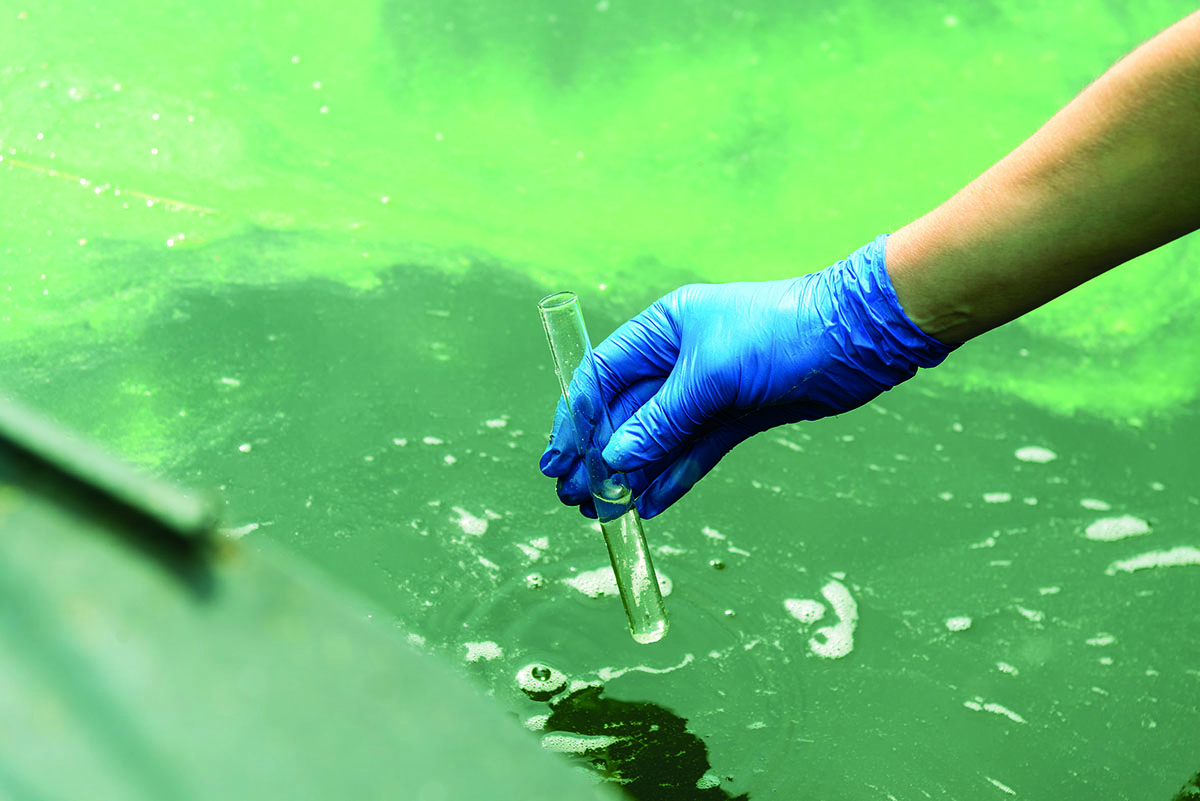
The latest data from what is possibly the UK water industry’s most ambitious chemical monitoring programme suggests targeted policy, collaborative science, and source control can successfully tackle forever chemicals. UK Water Industry Research (UKWIR)’s1 Chemical Investigations Programme (CIP) represents the UK water industry’s most comprehensive scientific response to tackling chemical substances in the water environment. (Words: UKWIR).
Through consistent monitoring, shared methods, and collaborative working, the programme is supporting greater transparency and earlier, better-informed action. It is a prime example of the system-wide, joined-up approach called for in the Government’s recent white paper on water sector reform.
Findings from the CIP3 Trend Monitoring Project (2020-2025) showed downward trends in concentrations for all but one of the chemicals monitored including perfluorooctane sulfonate (PFOS) and lead. The report provides definitive evidence that national and international source control measures, such as product bans and phase-outs, alongside upgrades to the treatment process, are successfully reducing hazardous substances in water systems.
By strengthening the evidence base on chemicals and helping to pinpoint the factors driving impacts in different places, CIP supports the white paper’s call for more targeted interventions, clearer prioritisation, and sustained progress towards cleaner rivers and seas. In addition, by evidencing effective source control and targeted measures, CIP helps focus investment where it delivers the greatest benefit, supporting better value for water company customers.
“The water industry isn’t the source of these chemicals, and our data shows that when there is rigorous source control, the environment heals without the need for carbon-heavy, expensive interventions from utilities,” explains Jenni Hughes, strategic programme manager, UKWIR. “This evidence-based approach is providing a blueprint for how the UK can tackle emerging compounds without defaulting to end-of-pipe solutions that would cost bill-payers significant sums.”
Trend monitoring
The recent Trend Monitoring Project, which collected four-and-a-half years of data across England and Wales, is the proof that banning harmful substances at manufacturer level works. Launched as a partnership between water companies and regulators – including the Environment Agency, Defra and Natural Resource Wales – in 2010, the CIP is currently in its fourth phase (CIP4).
“You can’t control what you don’t measure,” says Mark Craig, Severn Trent Water’s long term asset strategy lead and UKWIR co-lead for wastewater. “With this trend monitoring, we have the power to show what is actually happening in our environment.”
“It proves that for many substances, if the source control measures are in place and working as they should, concentrations in sewage effluent decline significantly.”
Analysis of monitoring data from 2020–25 shows significant downward trends for 19 of the 20 substances of high regulatory concern, including:
Tributyltin (TBT): Historically used as a highly effective biocidal antifouling paint on ships hulls, TBT is a potent endocrine disruptor in marine life. Following a global ban in 2008, environmental levels have plummeted. This approach remains a gold standard in environmental policy, proving that strictly enforced international bans can successfully mitigate legacy pollutants.
PFOS: Part of the per- and polyfluoroalkyl substances (PFAS) family of highly persistent ’forever chemicals’, PFOS was primarily used as a stain repellent in textiles and firefighting foam. While data from UK water monitoring sites, such as those owned and operated by Severn Trent Water, show significantly declining concentrations in effluent, they still exceed the EU’s Environmental Quality Standards (EQS) in some rivers. PFOS remains a challenge due to its extreme persistence and tendency to leach from sources such as historical landfill sites into groundwater.
The only exception to the downward trend for chemical concentrations in the substances investigated was for dissolved mercury, which the CIP3 Trend Monitoring Project shows has had an increasing presence in the environment over time. Mercury enters the environment through a combination of geological and industrial processes such as mining, fossil fuel combustion, and waste incineration.
Crucially, the report identifies substances likely to cause future failures of the EU’s Environmental Quality Standards (EQS), allowing companies to prioritise catchments for investigative or remedial action.
Scientific safety net
As UKWIR moves through CIP4 from 2025-30, and CIP5 from 2030-35, the framework is designed to be agile, with different chemicals coming under investigation as deemed necessary, based on the scientific and environmental evidence.
“We work collaboratively with the Environment Agency to write the scope and will continue to do so over the coming stages of the programme,” says Mark Craig. “We bring chemicals onto the list and take them off once we’re satisfied, they no longer pose a risk. It’s a programme that’s designed to be flexible and futureproof.”
By focusing on keeping chemicals out of the sewer system in the first place, UKWIR is committed to ensuring that the path to a cleaner environment is both scientifically sound, environmentally sensitive, and economically responsible.
Notes
[1] UK Water Industry Research (UKWIR) is a not-for-profit company that facilitates and manages a collaborative, impartial, research programme for the UK and Irish water industries. Its mission is to provide the evidence base for the water industry to make sound decisions on behalf of its customers, the environment, and society.