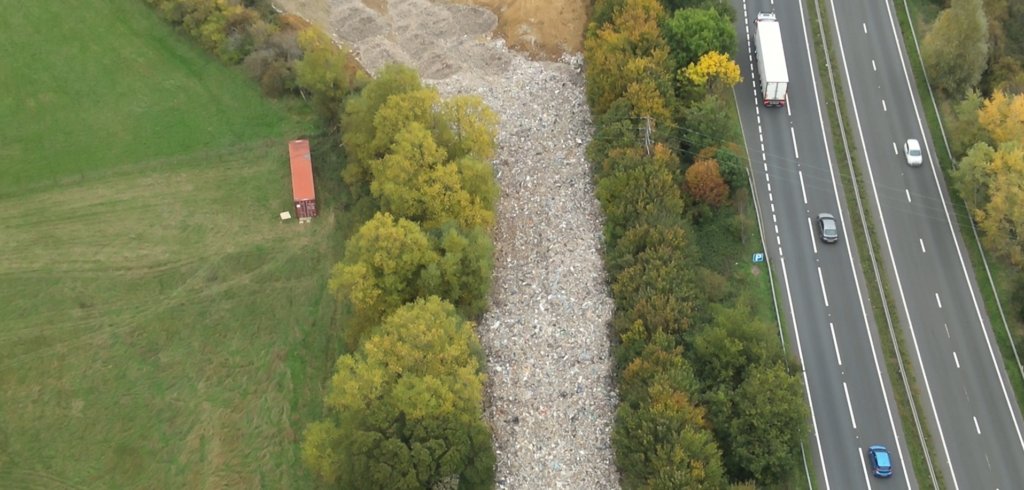
Defra and the Agency have also committed to cleaning up three large-scale waste dumping sites.
The plan sets out what ministers describe as a “zero-tolerance” approach to illegal dumping across England, aiming to tackle illegal activity at its source, close regulatory loopholes, and strengthen the ability of enforcement bodies to intervene earlier.
Waste crime is estimated to cost the English economy around £1 billion annually, with roughly 20% of waste thought to be handled illegally.
Recent figures from the Environmental Services Association (ESA) indicate the cost may be as much as £2 billion.
Officials say criminal networks involved in the sector are becoming increasingly sophisticated, undercutting legitimate operators while causing environmental harm and financial losses to the public purse.
Secretary of State for the Environment, Food and Rural Affairs, Emma Reynolds said: “Waste criminals have been damaging our communities, countryside, environment and economy for too long.
“This Action Plan sends a clear message: dump illegally and you will face the full consequences.”
What is included in the Waste Crime Action Plan?
Central to the plan is an expansion of enforcement activity and penalties.
The EA will receive the additional £45 million over the next three years – raising its enforcement capacity well above its £10 million budget in 2024/25.
This funding is intended to support earlier intervention at illegal sites and more consistent enforcement action.
Among the measures set out in the Waste Crime Action Plan, include:
- “Clean-up squads” for offenders: Courts could order fly-tippers to complete up to 20 hours of unpaid work clearing waste, as well as repay the full cost of site clean-ups
- Police-style powers: Agency officers may be granted powers under the Police and Criminal Evidence Act, enabling them to search premises, seize assets and make arrests without a warrant
- Restriction notices: The EA will increase use of powers to shut down illegal operations immediately, with breaches of such notices resulting in up to 51 weeks in prison
- Permit crackdowns: Operators found to be handling waste illegally risk having permits revoked or registrations cancelled, effectively shutting down their activities
- Penalty points for fly-tipping: Courts will be given powers to add points to offenders’ driving licences, with the most serious cases potentially leading to disqualification
- Naming and shaming: Illegal operators will be publicly identified for the first time, with information shared across the sector
- New intelligence unit: A dedicated Operational Waste Intelligence and Analysis Unit will use tools such as aerial surveillance and financial data to identify risks earlier
- Landfill Tax rebate system: A rebate scheme for landfill tax will be developed to support local authorities clearing illegal sites
The government will also directly fund the clean-up of some of the most severe illegal waste sites, including locations in Wigan, Sheffield and Hyndburn, where a combined 48,000 tonnes of waste has been dumped.
‘Our response needs to move up a gear’
The Action Plan builds on existing government efforts to tackle waste crime, including the expansion of the Joint Unit for Waste Crime to 20 specialist officers.
Chief Executive of the EA Philip Duffy added: “Waste crime is not a new issue, but the threat is evolving and our response needs to move up a gear.
“We will act earlier, faster and smarter by shutting down illegal sites before they become established, using our powers decisively to strip rogue operators of their permits, and working with police, HMRC and councils to go after criminal assets.
“These measures will ensure we stay one step ahead of waste criminals and protect the communities, businesses and environment that they blight.”
The latest proposals come amid rising levels of enforcement activity against fly-tipping. Local authorities carried out around 572,000 enforcement actions in 2024/25, an 8% increase on the previous year.
This included the issuing of approximately 69,000 fixed penalty notices, up 9% year-on-year.