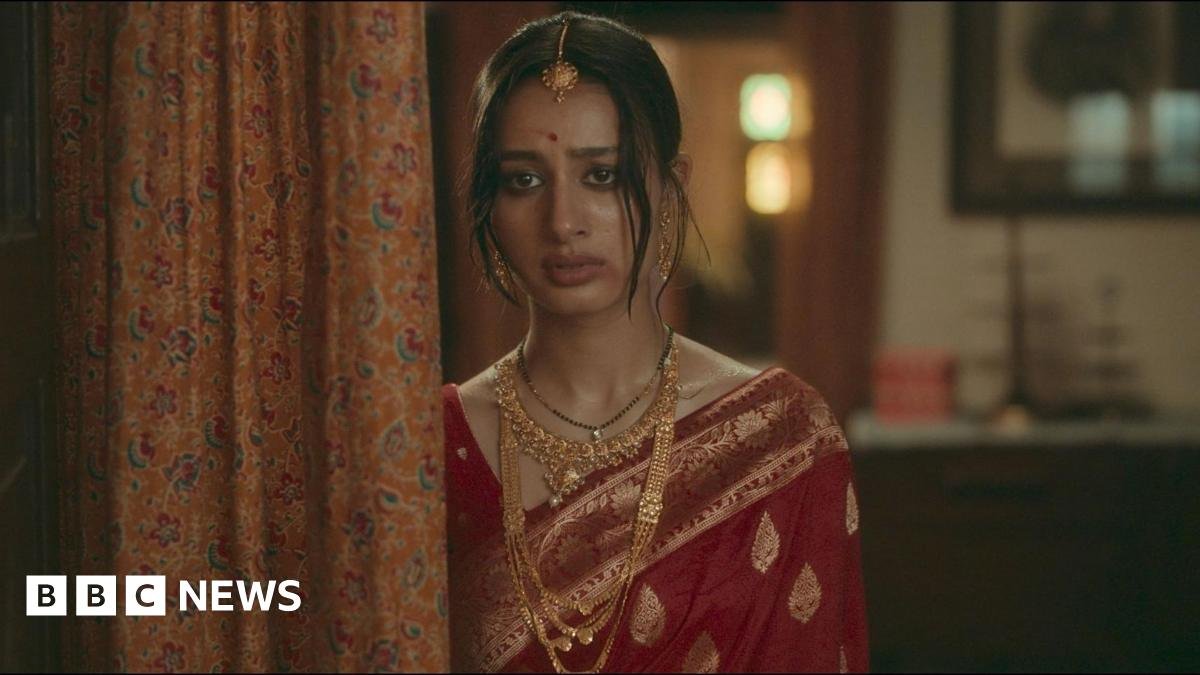
Dutta says the show is about consent, “specifically in a marriage, which is considered a very, very special bond”.
“Marital rape is very difficult to talk about. Every woman who goes through it thinks it’s just her story. She thinks if she speaks about it, there will be social stigma, the harmony of the house will be disrupted,” she tells the BBC.
In the show, when a battered and bruised Pooja speaks up about how Arun is treating her, she is advised by everyone, including her mother, to adjust, as talking about it would only bring them shame.
Kamlesh starts off believing consent for sex is implicit in the marriage, Dutta says.
But as the series progresses, her thought process begins to change when she is forced to decide between her “comfort zone” or “to hold the hand of a woman she’s not really fond of”.
“She comes to choose the right path,” Dutta says, becoming a dependable ally of Pooja.
According to Indian government data,, external 6.1% ever-married women have experienced sexual violence. But despite years of campaigning by activists, India remains among three dozen countries – along with Pakistan, Afghanistan and Saudi Arabia – where marital rape is not outlawed.
Activists have filed a number of petitions in recent years in the Supreme Court calling for marital rape to be criminalised. But the government, religious groups and men’s rights activists oppose any plans to amend the Colonial-era law, which exempts a man for having forced sex with his wife if she is not a minor.
There was outrage last year when a man convicted of raping his wife, who died within hours of the alleged assault, was freed on appeal because, as the judge said, India did not recognise marital rape.
Sharma, Chiraiya’s scriptwriter, tells the BBC: “This injustice is happening within our homes, in our neighbourhoods.
“What I find most troubling is that there’s no legal or social recourse. So, as a writer I felt I should do my bit about it.”