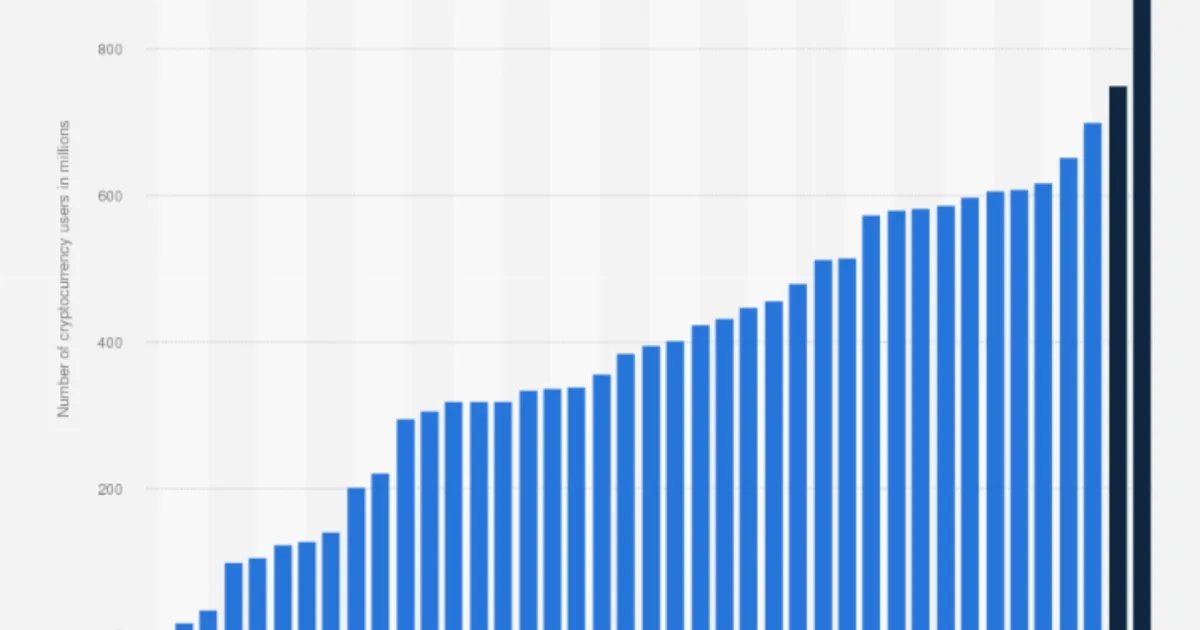
Crypto’s first decade was defined by price discovery. Bitcoin and Ethereum surged from fringe experiments to globally recognized financial assets, pulling blockchain technology into boardrooms, policy debates and institutional portfolios. By most external measures, such as market capitalization, regulatory engagement and corporate treasury adoption, the industry has matured at remarkable speed.
But beneath that growth lies a structural weakness: user understanding has not kept pace with product complexity. Multiple studies continue to show that financial literacy among crypto participants remains uneven, particularly as decentralized finance, tokenized assets and on-chain ecosystems grow more sophisticated. Increasingly, industry leaders view this knowledge gap not as a peripheral issue, but as one of the most significant barriers to sustainable mainstream adoption, which shifts the focus from price performance to education as infrastructure.
At the WEF Davos, Binance CMO Rachel Conlan discussed the importance of education as the backbone of crypto’s future, “Education is at the heart of Binance’s mission to democratize access to crypto globally. We invest heavily in accessible, multilingual educational content and programs. If crypto is going to reach the next billion users, education must evolve alongside the product.”
“The results speak for themselves: Binance now serves over 300 million users across 100+ countries. Between 2022 and 2024, Binance helped users save $1.75 billion in remittance fees by enabling $26 billion in instant crypto remittances,” continued Conlan.
Crypto’s Rise Comes Out of Necessity, but Real Knowledge is Lagging
Interest in digital assets has been on the rise in recent years. Reports suggest there are between 590 and 650 million crypto users worldwide, with around 500 million of those owning Bitcoin specifically. Ownership has increased every single year, at least since 2016.
Much of this fantastic growth is entirely organic and driven by real economic necessities. Cryptocurrencies have presented significant opportunities for diversifying investment portfolios. In addition to delivering higher returns than traditional investments, blockchain technology enables cross-border payments to be cheaper, faster and more secure.
However, according to the OECD (the Organisation for Economic Co-operation and Development), a large portion of crypto users are at risk due to high price volatility and because of the fact that, until recently, standard investor protections often did not fully apply to this space. These risks are largely due to low basic digital financial literacy.
In fact, a study by the OECD found that in 2023, only 29% of adults across 39 economies tested achieved a minimum score in digital financial literacy. For example, the investigation suggests that more than half of crypto owners mistakenly believe that digital assets are government-issued currency.
This suggests a knowledge gap with significant, immediate repercussions. But what can be done to improve the situation?
Financial Literacy Failing to Keep Pace with Crypto’s Growth
Instant success is a fantasy. However, better financial education is key. This offers individuals the tools to navigate crypto markets based on their own risk tolerance. It helps users make informed decisions and, ultimately, may be the biggest factor driving mainstream adoption.
It’s easy to get sidetracked by all the good news. According to global payments network Mastercard, 28% of Americans owned crypto in 2025. Furthermore, 4 in 10 U.S. merchants currently accept digital assets. The global crypto market cap surpassed $4 trillion last year. The traditional banking system is making moves to incorporate crypto. It seems like the world is coming on chain.
However, at its heart, crypto is a grassroots movement. Much of its early growth was driven by urgent need. For example, digital assets have been embraced in developing nations, such as Nigeria, Libya or Namibia, as a direct consequence of economic insecurity. Meanwhile, blockchain technology is contributing to the humanitarian sector by providing relief to people who often lack bank accounts or an immediate way to verify their identities.
And, it is helping to create safer, more efficient supply chains. In Jordan, for example, a World Food Program initiative allows farmers to securely record crop quality data on a blockchain ledger and earn fairer prices for their work.
Financially Savvy Crypto Users Versus Impulsive Risk-Takers
Beyond the negative implications, recent data also reveals major opportunities. For example, it’s been acknowledged that the vast majority of crypto users are young and therefore more motivated to improve their learning. It’s been noted that individuals over 44 are less inclined to invest in crypto, and that the average age of crypto users is 34.8 years.
Can it be that having a larger stake in the crypto sphere motivates individuals to learn more about it?
What is Actually Being Done Today for a Better Tomorrow? Or How Can Digital Financial Literacy Actually Be Improved?
In response, the corporate sector has acknowledged its role in improving crypto literacy. In fact, some of the largest crypto companies have made zero-cost educational content available. These include articles, guides and webinars.
Programs include Binance Academy or Binance Learn & Earn.
Financial literacy is widely regarded as a key driver of crypto’s mainstream adoption. That is why it is up to policymakers and educators to make this a priority: to explain how blockchain technology works, its potential and the risks of engaging with crypto markets.
Younger audiences tend to be the most active users in crypto. Improving access to education and accurate information is widely recognized as a key step in fostering more informed engagement in this growing industry.
Investing involves risk and your investment may lose value. Past performance gives no indication of future results. These statements do not constitute and cannot replace investment advice.
Members of the editorial and news staff of Life & Style were not involved with the creation of this content. All contributor content is reviewed by Life & Style staff.