New York
—
If you’ve been paying attention to, like, the news, you may be tempted to see Wall Street’s Monday morning 180 from despair to euphoria as a sign that stock traders are all a bunch of rubes.
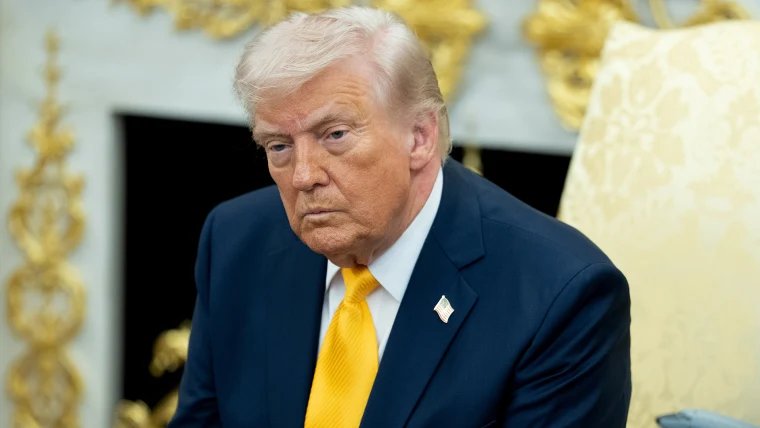
ICYMI: Over the weekend, President Donald Trump set a Monday night deadline for Iran to fully reopen the Strait of Hormuz, or else the US would start attacking Iranian power plants. But around 7:30 am ET Monday, two hours before US financial markets opened, Trump postponed that deadline by five days, citing “VERY GOOD AND PRODUCTIVE CONVERSATIONS” with Tehran toward a “COMPLETE AND TOTAL RESOLUTION” of fighting. (All-caps style his, of course.)
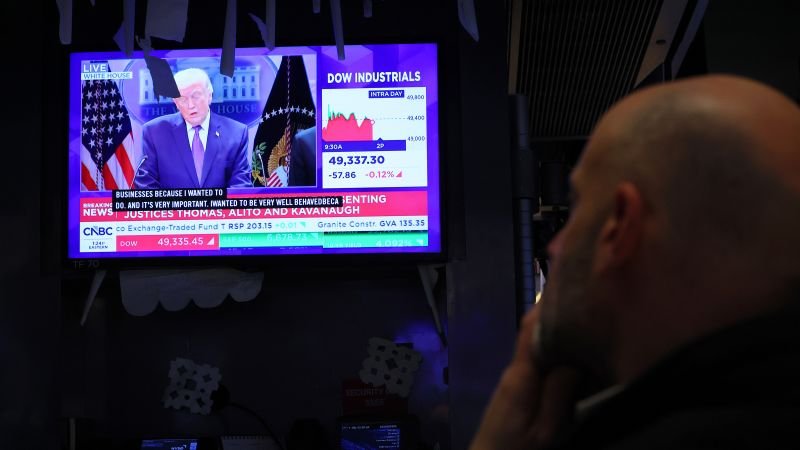
Immediately, US stock futures soared and oil prices fell. The Dow, which had been on the verge of “correction” territory last week — nearly 10% off its most recent peak — briefly surged more than 1,000 points. It ended the day 630 points, or 1.4%, higher. The broader S&P 500 gained 1.2% and the Nasdaq rose 1.4%.
Now, because you’re all a bunch of Readers of News, you might be thinking: Come on, finance folks, are you really falling for this again? This is the same Trump who, just two weeks ago, told CBS that “the war is very complete,” prompting a similar stock rally and pullback in oil. And the same Trump who so frequently says things and then walks them back that there’s an entire trading strategy — called the TACO trade, for “Trump always chickens out” — based on the behavior.
So are you guys really buying it again?
The answer: It’s complicated.
The abrupt surge was not so much a sign that Wall Street believes Trump. Rather, investors saw Trump’s statement — published just as many bleary-eyed New York traders would be bellying up to their Bloomberg terminals to start their work day — as a kind of reassurance that the president’s aversion to poor market numbers will ultimately keep him from acting on his more extreme threats.
“There’s no real fundamental reality to any of this trading — it’s just trading Trump,” Daniel Alpert, managing partner of Westwood Capital, told me.
And trading Trump is a lot of trading on vibes rather than, say, the truth. Is it true that Trump had talks about a resolution of fighting this week? Iran says no; Trump says yes. Most market participants have no way of knowing who’s right.
But who’s right might not even matter right now.
“Markets don’t trade on truth, they trade on beauty,” Alpert said, invoking John Maynard Keynes’ theory of the stock market as a kind of beauty pageant. (For anyone who, like me, snoozed through that chapter in Econ 101, the short version is: In 1936, Keynes imagined a contest in which a newspaper ran 100 photos of faces and readers were asked to pick the six prettiest. Whichever reader picked the six most popular would win the contest. The lesson is: The best strategy isn’t to pick your own personal favorites but rather those you think other people will favor.)
“If you’re trading markets, as opposed to investing, you’re focused on what other people think, what they’re likely to do,” Alpert said. “You may not think it’s good, and you may not even be sure it’s a lie, you just think that everybody else is going to think it’s good, and so you pile in with your order … When you’ve made enough money, you dump it, and that’s it, end of trade.”
And Monday’s relief rally wasn’t entirely vibes-based. Stock traders have been following oil traders’ lead in recent weeks, as oil traders have a much clearer view of what’s going on in the Persian Gulf, Steve Sosnick, chief market strategist at Interactive Brokers, told me. If oil had not fallen so sharply, but stocks had rallied anyway, then we could deride the equities folks as getting faked out by the president.
Also fueling the rally: Everyone in the market has FOMO.
“Nobody wants to miss a rally,” Sosnick added. “The slightest bit of good news, you see a very strong reaction, if not potentially an overreaction, to news of this type.”