






Suffolk County Council has approved spending up to £1.35m to develop a business case for improving a congestion-hit junction on the A140 at Earl Stonham, with opposition councillors raising financial, environmental and community concerns about the scheme.

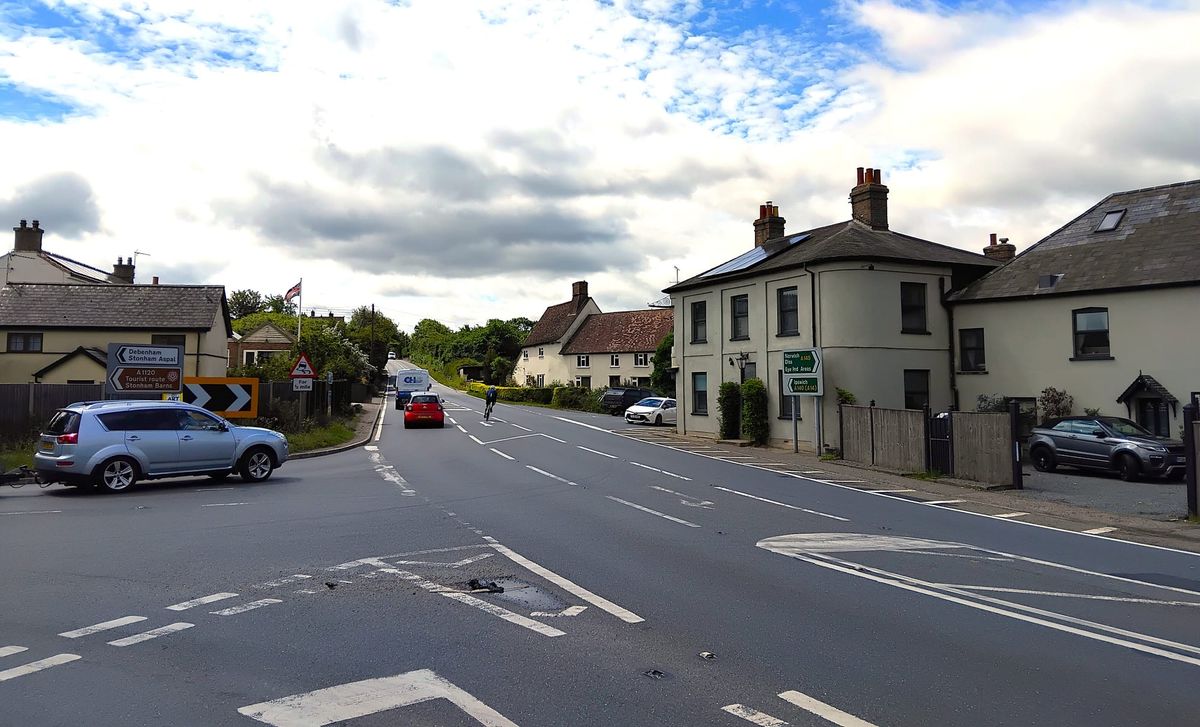
Why it matters: The A140/A1120 junction at Earl Stonham is a staggered crossroads with a long-standing reputation for congestion, road safety issues and poor provision for pedestrians, cyclists and public transport. The approval — made at cabinet on Tuesday, 16 June — is one of the first infrastructure decisions of Reform’s new Suffolk County Council administration since being elected last month.
The details: The £1.35m will fund development of an Outline Business Case to be submitted to the Department for Transport (DfT), with the aim of securing funding for a full scheme estimated to cost £6.46m in total.
- Up to 85% of the total cost would be funded by the DfT, with the remaining 15% — around £969,615 — met through the Local Transport Grant.
- The outline scheme would route A1120 traffic through a new link road, leaving a short section of redundant road to be enhanced for buses, walking and cycling.
- The scheme will also include enhanced crossing points on both the A140 and A1120.
- Because the scheme requires additional land, the cabinet has also approved the potential use of Compulsory Purchase Order powers if voluntary agreements with landowners cannot be reached.
For context: The A140 is one of Suffolk’s most important transport corridors, forming the primary link between the A14, Norwich and North Norfolk. It is part of the national Major Road Network (MRN), which makes it eligible for additional DfT funding. The council began developing its scheme in 2021, submitting a Strategic Outline Business Case to the DfT in February 2025. In February this year, the DfT confirmed the scheme could progress to the Outline Business Case stage.
What they’re saying: Councillor Christopher Hudson, Suffolk County Council cabinet member for transport and highways, said: “This decision is very good news for Suffolk. The A140 is a key route in this county and by investing in it we improve connectivity for traffic and also support the local community with better provision for local accessibility.”
The other side: The Green group — the official opposition at Suffolk County Council — has raised serious concerns. Robert Lindsay, Green group spokesperson for transport and highways, said: “There is both a financial and an environmental risk. The county is spending £1.35m up front, partly to buy private land for a new link road, with no guarantee that the project will proceed. They are hoping that the Department for Transport will eventually reimburse two thirds of that with a grant. But that’s not a done deal.”
Lindsay also warned of environmental concerns: “There is a very ecologically sensitive parcel of land likely to be close to where they want to build this that contains rare orchids.” He added that the new road “runs the risk of increasing traffic on the A1120 through Stowupland and other villages, while it only bypasses a dozen or so dwellings,” and that “any travel time saved [is] likely to be counted in seconds.”
He also cautioned that if the DfT approves the full business case, “the Government contribution will be firmly capped while any cost overrun will have to be met by Suffolk County Council or the new unitary authority that takes over from it in May 2028,” adding that “cost overruns beyond the business case projections are a frequent occurrence in Suffolk.”
Conservative councillors also questioned whether the scheme represented the right long-term solution. Councillor Matthew Hicks, county councillor for Thredling Division, said: “This junction has been a problem for many years and has been on Suffolk County Council’s radar for a long time. Local residents deserve clarity on the proposed timetable, the options that were considered, and what compensation and support will be available to those directly affected.”
Councillor Joe Mason, Conservative spokesman for highways, transport strategy and property, said: “I’m not convinced this scheme alone will deliver the improvements that residents and road users want to see. If it does proceed, we must also take the opportunity to address longstanding speeding concerns, including through improved road markings and the reinstatement of a speed camera.”
What’s next: The next stage of work will include assessing how much additional land is required for construction. The full business case will then need to be submitted to and approved by the DfT before any works can proceed.
The bottom line: Reform UK’s new Suffolk administration has backed £1.35m to progress the long-running road improvement scheme, albeit with questions from opposition parties over environmental risks, community impact and the prospect of uncapped cost overruns.
Don’t forget: If you enjoy our content, please add Ipswich.co.uk as a “preferred source” on Google so you can easily find more of the content you value.
This article cost us ~£34 to produce
It’s free for you to read thanks to the generous support of our partners. Please support us by supporting them.