










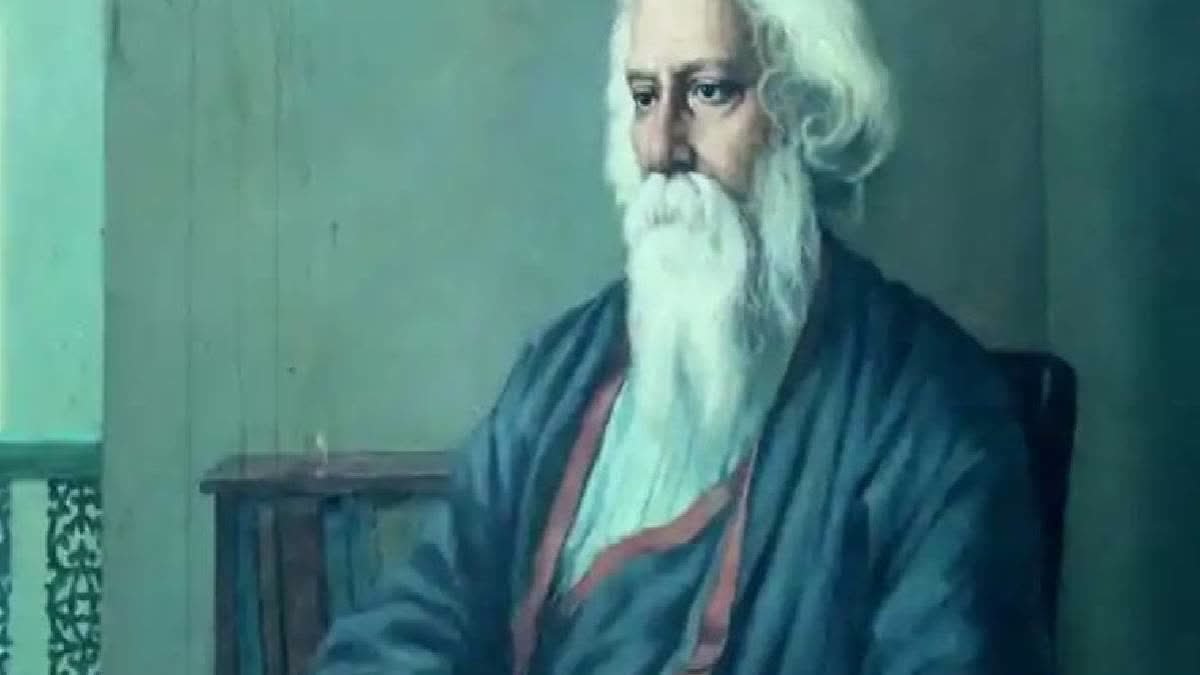
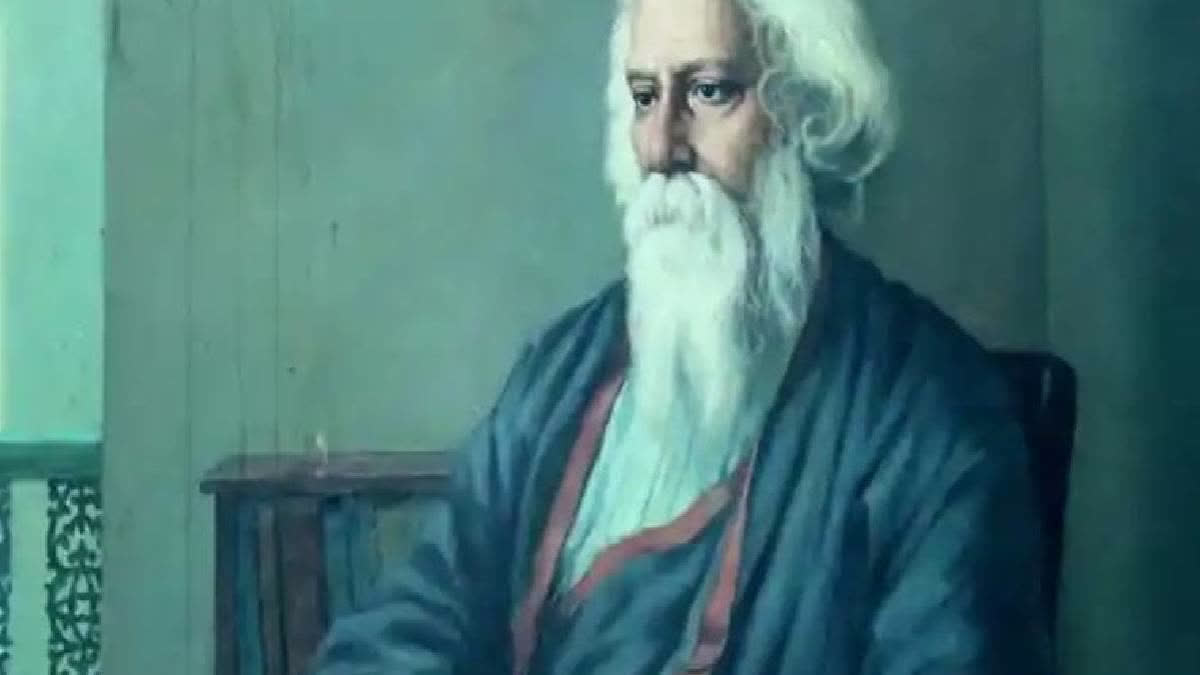
Rabindranath Tagore (ETV Bharat)
Hyderabad: Rabindranath Tagore was not just a poet or writer; he was a cultural force whose stories, songs, and ideas shaped generations across India and beyond. Born on May 7, 1861, Tagore became the first Asian to win the Nobel Prize in Literature in 1913 for Gitanjali. He also wrote India’s national anthem, Jana Gana Mana and Bangladesh’s Amar Sonar Bangla, leaving behind a legacy that continues to inspire artists even today.
Over the decades, Indian cinema has often turned to Tagore’s rich literary world for inspiration. His stories explored human emotions, loneliness, social pressure, love, morality, and freedom in ways that still feel relevant. While Bengali cinema has produced several celebrated adaptations of his works, Hindi cinema too has brought many of his timeless stories to the screen.
On Rabindranath Tagore’s 164th birth anniversary, here’s a look at five memorable Hindi films inspired by his literature.
Kabuliwala (1961)
One of the most iconic adaptations of Tagore’s work, Kabuliwala, remains a deeply emotional film even decades after its release. Directed by Hemen Gupta, the movie was based on Tagore’s famous short story of the same name.
The film follows an Afghan dry-fruit seller living in Kolkata who forms a touching bond with a little girl because she reminds him of his daughter back home. Balraj Sahni delivered one of the finest performances of his career in the lead role. The film beautifully captured themes of fatherhood, separation, and humanity that were central to Tagore’s writing.
Do Bigha Zamin (1953)
Though not a direct adaptation, Bimal Roy’s classic Do Bigha Zamin was reportedly inspired by Tagore’s poem Dui Bigha Jomi. The film told the heartbreaking story of a poor farmer struggling to save his land from a greedy landlord. Starring Balraj Sahni and Nirupa Roy, the film reflected Tagore’s concern for social injustice and rural hardship. It became one of the most important films in Indian cinema and won international recognition for its realistic storytelling.
Uphaar (1971)
Directed by Sudhendu Roy, Uphaar was adapted from Tagore’s short story Samapti. The film starred Jaya Bhaduri and Swarup Dutta in lead roles. The story revolved around a carefree village girl whose life changed after marriage. Like many of Tagore’s female characters, the protagonist is strong-willed, emotional, and layered. The film explored relationships, maturity, and personal growth with simplicity and warmth.
Lekin… (1991)
Gulzar’s haunting drama Lekin… drew inspiration from Tagore’s story Kshudita Pashan (The Hungry Stones). Produced by Lata Mangeshkar, the film starred Vinod Khanna, Dimple Kapadia, and Hema Malini. Set against the backdrop of Rajasthan, the film blended mystery, loneliness, and longing. Gulzar’s poetic storytelling style matched beautifully with Tagore’s emotional depth. The film’s music by Hridaynath Mangeshkar remains unforgettable even today.
Kashmakash (2011)
Directed by Rituparno Ghosh, Kashmakash was based on Tagore’s novel Noukadubi. The Hindi film starred Prosenjit Chatterjee, Raima Sen, Riya Sen, and Jisshu Sengupta. The story revolves around mistaken identities after a tragic boat accident separates newlywed couples. Through romance and emotional conflict, the film explored duty, love, and social expectations, themes often seen in Tagore’s work.
Tagore’s stories have continued to inspire filmmakers because they speak about emotions that never grow old. Whether it is loneliness in Kabuliwala, social struggle in Do Bigha Zamin, or emotional conflict in Lekin…, these films prove that Tagore’s writing still connects deeply with audiences. Even after more than a century, Rabindranath Tagore’s literary world remains alive through cinema.