








India Deepens Ties with Israel Amidst Gaza Conflict and International Scrutiny
NEW DELHI – India’s relationship with Israel has significantly deepened, shifting from a major customer of Israeli weaponry to a key contributor to its defense supply chain, even as Israel faces mounting international isolation and condemnation for its military campaign in Gaza. This evolving bond, particularly under Prime Minister Narendra Modi’s leadership, marks a notable departure from India’s historical support for the Palestinian cause.
The Guardian’s "This Is India" newsletter highlights this transformation, citing Indian foreign policy expert Stanly Johny, who serves as the international affairs editor at The Hindu. Johny notes that this isn’t merely a political or diplomatic shift but also extends to strategic and defense levels.
A recent Amnesty International investigation provides the most comprehensive account to date of India’s increased involvement since the conflict in Gaza began. The report reveals that Indian companies, including state-owned enterprises, have supplied Israel with drone warheads, artillery shell casings, small arms parts, and military vehicle components. This supply chain exists despite the substantial risk that these components could be used in weapons deployed in Gaza, a territory largely in ruins with over 70,000 Palestinian casualties, many of whom are children.
Amnesty’s analysis of publicly available shipment data traced hundreds of thousands of weapons components from Indian factories to Israeli military suppliers between October 7, 2023, and November 30, 2025. These included 390,516 small arms parts, 564,970 parts of explosive ordnance, and 298 military vehicle components.
This revelation comes as many Western nations, including Britain, have restricted or banned arms sales to Israel due to concerns over potential violations of international humanitarian law. This is in stark contrast to the United States, which remains the primary arms supplier to Israel.
International bodies have also voiced strong concerns regarding Israel’s actions. An independent United Nations commission of inquiry concluded in September that Israel had committed genocide in Gaza, with another commission finding earlier this year that Israel is deliberately targeting Palestinian children. Furthermore, the International Criminal Court has issued an arrest warrant for Israeli Prime Minister Benjamin Netanyahu, accusing him of war crimes.
Despite these grave allegations and international backlash, the Amnesty report has not ignited widespread public debate or political condemnation in India. Stanly Johny attributes this to the strong support for Israel among Modi’s voter base, suggesting an "ideological confluence between Hindutva and Zionism." He explains that within right-wing circles, both in India and globally, Israel is increasingly perceived as a bulwark against the expansion of Islam.
This admiration for Israel among Hindu nationalists is not new. Author Pankaj Mishra, in a 2017 essay, described how some high-caste Hindus viewed Israel as a model for dealing with Muslims "in the only language they understood: that of force and more force."
Public opinion in India also reflects this trend. A Pew Research survey in June found that 32% of Indians view Israel favorably, compared to 28% unfavorably. This contrasts sharply with declining support for Israel in many Western countries, including the United States, since the onset of the war.
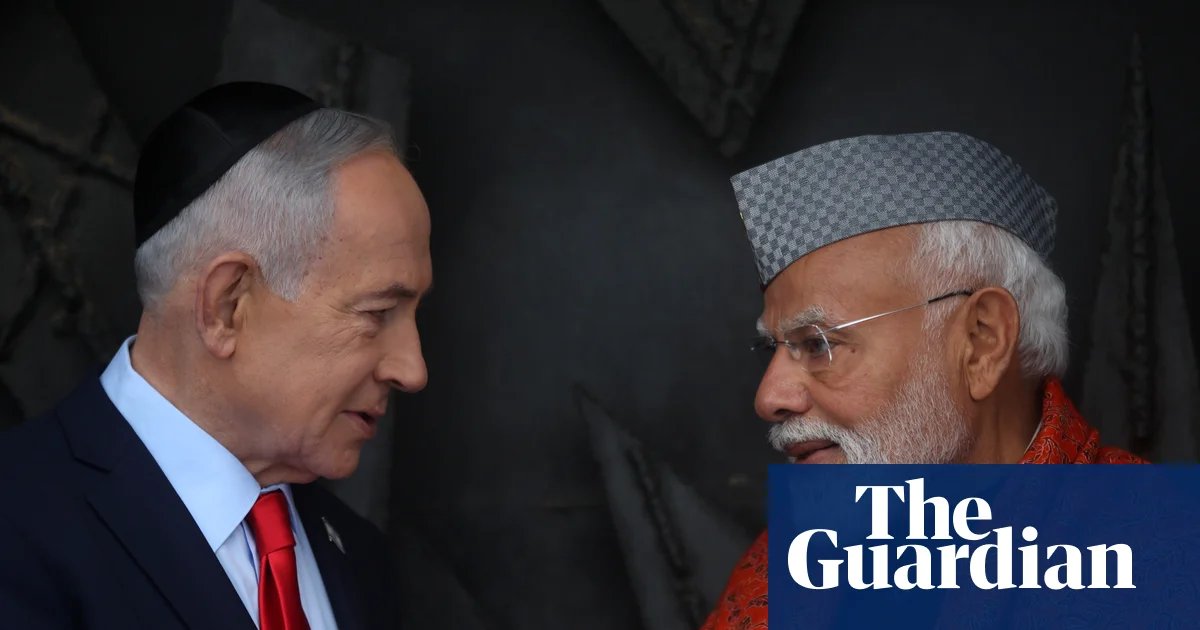
Prime Minister Modi has actively cultivated a personal relationship with Netanyahu, becoming the first Indian prime minister to visit Israel in 2017. A more recent visit by Modi to Israel, just 48 hours before Israeli and US attacks on Iran, and India’s notably muted response to the outbreak of the war, underscored New Delhi’s stance. This alignment was acknowledged by Netanyahu, who, after a rebuke from US Vice-President J.D. Vance, countered, "We have some other friends, like a small country called India. It has 1.4bn people, and boy, do we have tremendous support there."
The Indian government has remained reticent on the issue of arms supplies to Israel. In 2024, External Affairs Minister S. Jaishankar declined to provide direct answers in parliament, stating that information on military exports is not in the public domain and is guided by "national interest." Amnesty identified three state-owned Indian companies—Munitions India Limited, India Optel Limited, and Advanced Weapons and Equipment India Limited—as suppliers, warning that this could expose India to accusations of "complicity in ongoing genocide in Gaza." Foreign Ministry spokesperson Randhir Jaiswal responded by asserting that India’s exports are governed by national laws and international obligations.
While human rights activists, student bodies, trade unions, and left-leaning parties, including the Congress party, have expressed opposition, legal avenues for recourse have been limited. In 2024, the Supreme Court dismissed a petition by civil servants, activists, and academics to halt military exports to Israel, ruling that the matter falls within the executive’s discretion.
Johny concludes that the lack of public anger in India regarding its relationship with Israel, despite the allegations against the Israeli government, indicates a stripping of moral concern from foreign policy debates in India.
Beyond weaponry, India has also facilitated the migration of thousands of Indian workers to Israel, many of whom are replacing Palestinians barred from entering the country since October 7, 2023. An agreement signed in November 2023 saw over 20,000 Indian workers in construction and caregiving move to Israel.
Conversely, India has continued to rely on Israel for its own defense needs, being Israel’s largest defense customer between 2021 and 2025, accounting for 29% of its total arms sales, according to the Stockholm International Peace Research Institute.
However, Johny warns that India’s increasing closeness to Israel is not without cost. The conflict in Iran threatens India’s energy security and could lead to wider economic repercussions in the Gulf, home to a large Indian diaspora. He emphasizes the need for India to restore balance to its approach to West Asia and forcefully defend its own interests.
Other Developments in India:
Assam Floods: Devastating floods in the northeastern state of Assam have claimed 100 lives and displaced tens of thousands. Sivasagar, Charaideo, and Jorhat districts are among the worst-hit. The Indian Express suggests that deforestation, excavation, and extreme rainfall exacerbated by climate change are contributing factors to the unprecedented flooding.
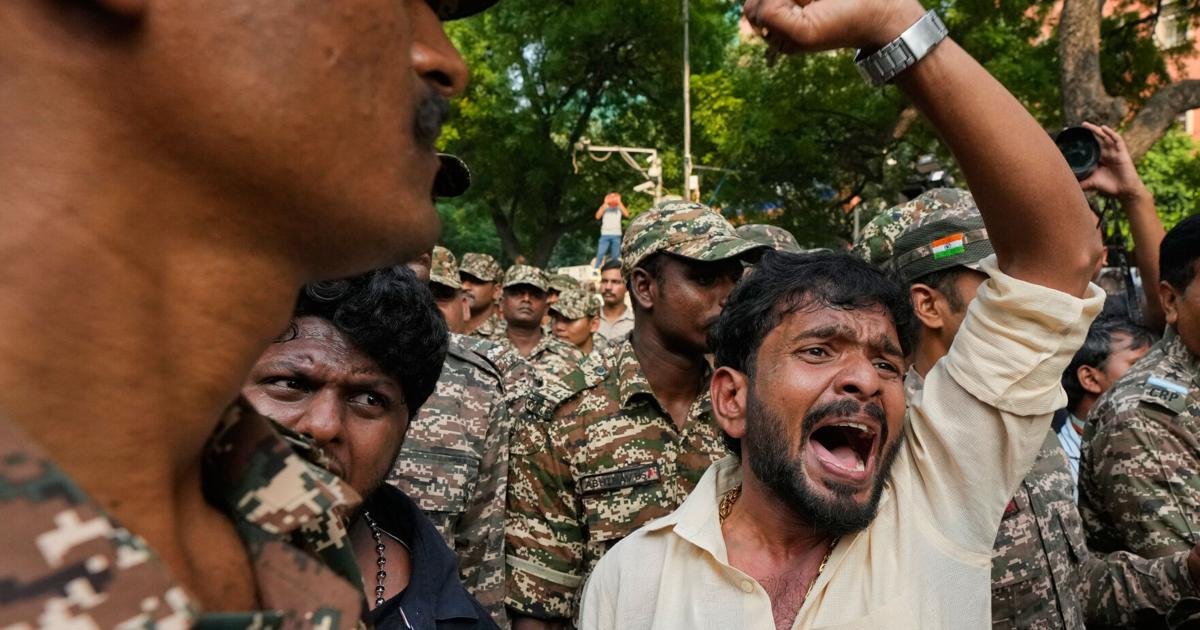
Student Protests in Jharkhand: Following nationwide protests over examination paper leaks, fresh demonstrations have erupted in Jharkhand regarding alleged irregularities in state recruitment exams. Students marching to the State Assembly faced tear gas, water cannons, and baton charges. The state government has since agreed to scrap three exams, which will be re-administered.
Skims Enters Indian Market: Kim Kardashian’s shapewear brand, Skims, is set to launch in India through a partnership with Reliance Brands, with stores planned for Delhi and Mumbai. Founded in 2019, Skims was valued at $5 billion last year after raising $225 million in capital.
Mumbai Monsoon Photography: Mumbai-based photographer Yash Sheth (@yashsheth3) captures the raw impact of the monsoon season on the city’s residents. His striking images depict the logistical challenges and health hazards posed by failing infrastructure during the rains, while also hinting at the inherent magic of the season. More of his work is available on his Instagram page.
Music Recommendation: Singer and songwriter Ankur Tewari (@ankurtewari) recommends "Funk You, Pay Me" by Dhanji and Karan Kanchan, featuring a sample by RD Burman, praising its infectious groove and Dhanji’s captivating flow. Ankur’s new album, "Mr Faarigh," is scheduled for release on August 20.
Uttar Pradesh’s Advertising Spending: The Yogi Adityanath-led government in Uttar Pradesh has spent approximately £530 million (Rs. 6800 crore) on advertisements and publicity since taking office eight years ago. An analysis by Newslaundry indicates this figure surpasses the central government’s advertising expenditure over a longer period.
As India prepares to celebrate Independence Day on Saturday, the "This Is India" team invites readers to reflect on the meaning of freedom and share their thoughts by emailing thisisindia@theguardian.com for possible inclusion in future issues.